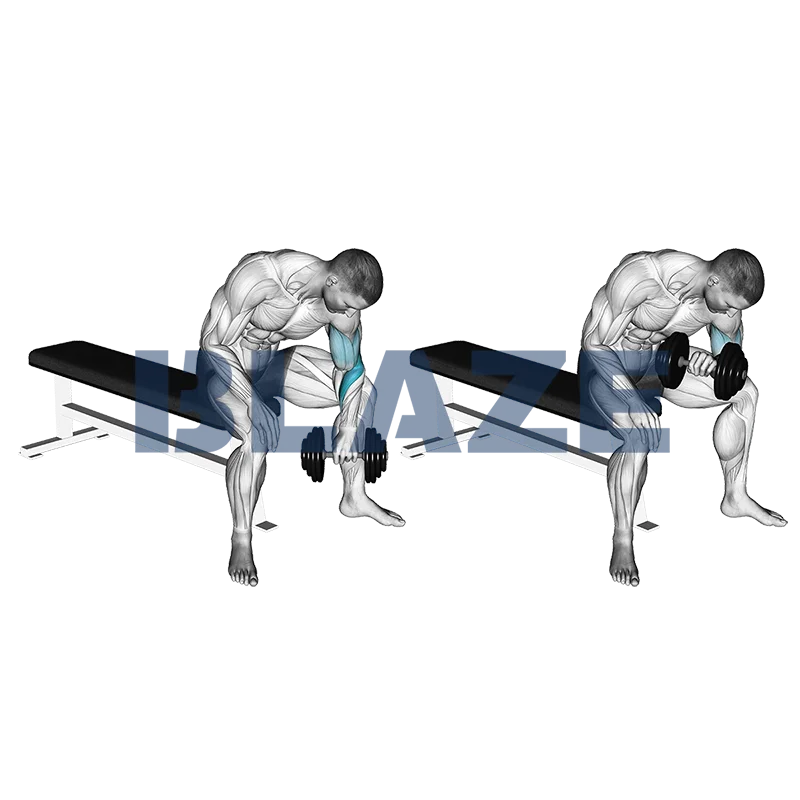
Concentration curl with dumbbell and reverse grip
The concentration curl with dumbbell and reverse grip targets the brachialis and brachioradialis muscles, enhancing arm strength and endurance. By focusing on one arm at a time, it ensures balanced muscle development and isolates the biceps for increased effectiveness. Athletes benefit from improved grip strength, crucial for sports requiring hand and forearm power. Additionally, the seated position reduces momentum, ensuring proper form and maximizing muscle engagement. Ideal for refining arm definition and boosting overall arm functionality.
| Primary muscle group: | Arms |
| Exercise type: | Dumbbell |
| Exercise goal: | Strength |
| Key metric: | Weight |
Community Averages
7kg
Avg. weight
16lbs
Avg. weight
Rating
* Based on data from the Blaze community
Description
- 1Sit on a bench with your legs apart, holding a dumbbell in your left hand.
- 2Rest your left elbow against the inside of your left thigh, with your left arm almost fully extended.
- 3Pronate your wrist so that your palm faces backward.
- 4Rest your right arm on your right thigh for support. Exhale as you curl the dumbbell up towards your shoulder.
- 5Hold the contraction for a count of two and squeeze your biceps.
- 6Inhale as you slowly lower the dumbbell to the starting position.
- 7Repeat for desired reps.
- 8Switch to your right arm and repeat the steps.
Tips & Tricks
Keep Your Elbow Secure: Make sure to keep your upper arm snug against the inside of your thigh. This will ensure that the entire movement is concentrated in the biceps and lower arm muscles.
Use a Supination Grip: Maintain a supinated (palms-up) grip throughout the exercise. This grip specifically targets the brachialis muscle, which lies underneath the biceps.
Focus on Muscle Activation: Concentrate on engaging your biceps and brachialis throughout the entire lift. Visualization can help increase muscle activation and results.
Maintain Proper Posture: Keep your back straight and your abs tightened. Avoid the temptation to lean backward or hunch forward during the exercise.
Control the Movement: Perform the exercise slowly and with control. Avoid using momentum; instead, focus on a steady and controlled range of motion.
Don't Overload: Select a weight that allows you to complete the exercise with good form. Overloading can compromise your technique and increase the risk of injury.
Breathe Correctly: Exhale as you curl the weight upwards and inhale as you lower it back down. Proper breathing will help you maintain stability and control.
Rest the Opposite Hand: Use your opposite hand on your thigh for additional support and stability during the exercise.
Avoid Fully Locking the Elbow: When lowering the dumbbell, avoid fully locking out your elbow. This keeps tension on your muscle and reduces stress on the joint.
Keep Exercising Balanced: Make sure you perform the same number of repetitions on both arms to maintain balance and symmetry in your biceps development.
Warm-Up Properly: Always ensure to warm up your biceps and forearms before attempting this exercise to prevent strains or injuries.
Gradually Increase Weight: As you become more comfortable with the exercise and your strength increases, gradually increase the weight rather than making big jumps.
Track in the Blaze App
Download Blaze Workout Tracker to log this exercise with sets, reps, and progress tracking.