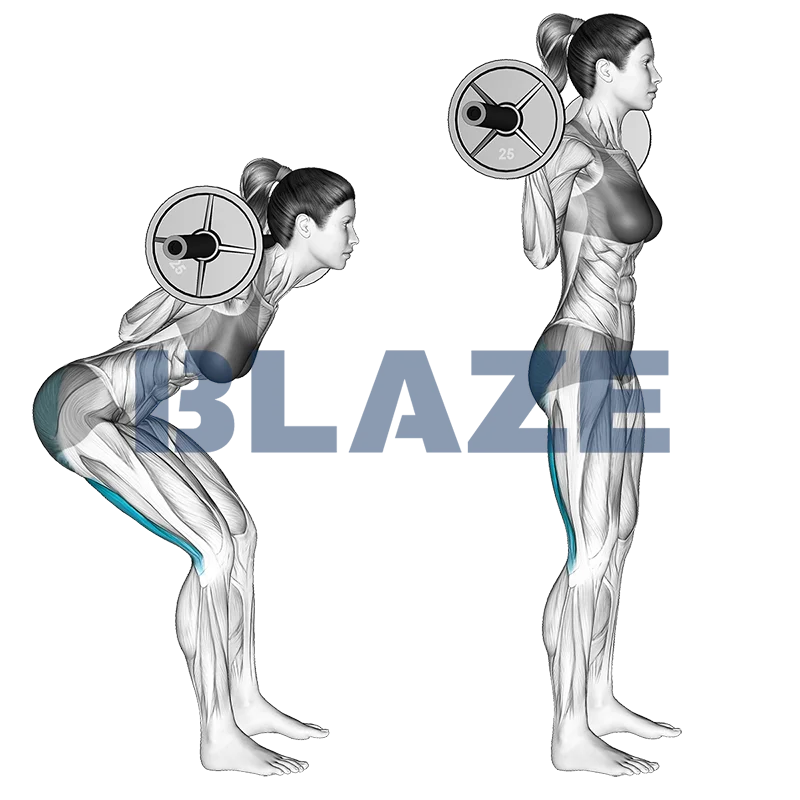
Good morning with barbell
The barbell good morning is a powerful exercise primarily targeting the hamstrings, glutes, lower back, and core. It offers several benefits, including improved posterior chain strength, enhanced hip hinge mechanics, and increased flexibility in the hamstrings. Athletes can gain better posture, reduced injury risk, and augmented performance in lifts and sports that require strong hip and back muscles. This exercise aids in developing a robust lower back, essential for overall stability and strength in various athletic movements.
| Primary muscle group: | Back |
| Exercise type: | Barbell |
| Exercise goal: | Strength |
| Key metric: | Weight |
Community Averages
31kg
Avg. weight
68lbs
Avg. weight
Rating
* Based on data from the Blaze community
Description
- 1Position the Barbell: Stand with a barbell on the back of your shoulders, gripping the barbell at each side. Ensure that your hands are slightly wider than shoulder-width apart.
- 2Set Your Stance: Keep your feet shoulder-width apart, your knees slightly flexed, and maintain a neutral spine and neck position.
- 3Prepare to Lower the Torso: Inhale deeply, brace your core, and hinge at the hips to lower your torso forward. Keep lowering until your torso is close to or fully horizontal.
- 4Raise Your Torso: Exhale as you extend your hips and raise your torso back up to the starting position.
- 5Repeat: Continue the motion in a controlled manner until you complete the desired number of repetitions. Focus on maintaining proper form throughout the exercise.
Tips & Tricks
Proper Warm-Up: Ensure you warm up your hamstrings and lower back adequately before diving into Good Mornings to prevent any strain or injury.
Engage the Core: Always keep your core muscles engaged. This helps stabilize your spine and reduces the risk of lower back injury.
Start with Light Weights: Begin with a lighter weight to master the form before adding more weight. It's crucial to prioritize proper form over lifting heavier weights.
Foot Position: Keep your feet shoulder-width apart. This offers better balance and stability throughout the movement.
Neutral Spine: Maintain a neutral spine throughout the exercise. Avoid rounding your back to prevent undue stress on your spinal discs.
Hip Hinge: Focus on hinging at the hips rather than bending at the waist. This targets the correct muscles, primarily the hamstrings and lower back.
Range of Motion: Only lower your torso as far as your flexibility allows while keeping your back straight. Going too low can lead to form breakdown and injury.
Controlled Movements: Avoid jerky motions. Execute the exercise slowly and with control to maximize muscle engagement and minimize risks.
Breathe Properly: Inhale deeply as you lower your torso and exhale as you return to the starting position to maintain stability and rhythm.
Spotter or Mirror: If possible, use a mirror or have a spotter to ensure your form remains correct throughout the exercise. This external feedback can help correct any minor errors before they become habits.
Regular Form Checks: Periodically review your form and technique to ensure you are not developing bad habits. Consistent check-ups can help maintain efficiency and safety.
Track in the Blaze App
Download Blaze Workout Tracker to log this exercise with sets, reps, and progress tracking.