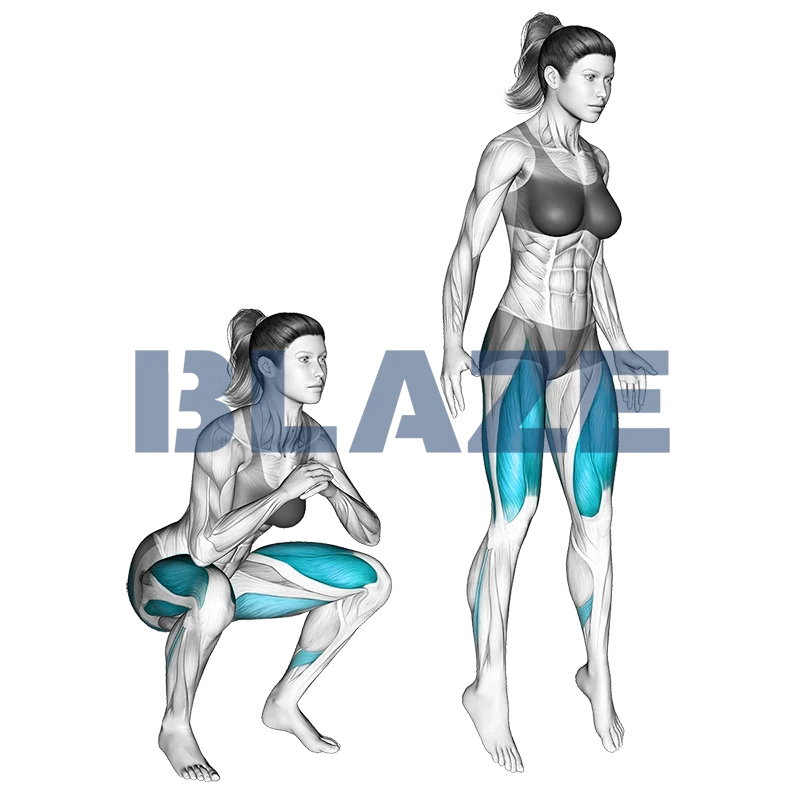
Jump squat
Jump squats are a dynamic exercise that combines cardiovascular and strength training, making them ideal for athletes. This high-intensity movement primarily targets the quadriceps, hamstrings, glutes, and calves. Additionally, the explosive nature of jump squats activates the core and lower back muscles, enhancing overall stability and power. Athletes benefit from jump squats by improving their vertical jump, agility, and endurance. The exercise also bolsters muscle coordination and promotes greater muscle hypertrophy, leading to better performance in various sports disciplines.
| Primary muscle group: | Legs |
| Exercise type: | Bodyweight |
| Exercise goal: | Cardio |
| Key metric: | Repetitions |
Community Averages
23
Avg. reps/set
Rating
* Based on data from the Blaze community
Description
- 1Stand with your feet shoulder-width apart and your arms by your sides.
- 2Keeping your torso upright, inhale as you squat down until your thighs are at least horizontal, and raise your arms horizontally in front of you.
- 3Exhale as you jump as high as possible, making sure to throw your arms downward as you rise as if to push the floor downward.
- 4When you land, flex your hips and knees to absorb the impact, and descend into another squat. Don’t forget to inhale.
- 5Exhale as you jump as high as possible again.
- 6Keep repeating the squat, then the jump.
Tips & Tricks
Land Softly: Always focus on landing softly to minimize the impact on your joints. This helps protect your knees and ankles.
Maintain Proper Form: Keep your chest up, back straight, and core engaged throughout the exercise. This ensures you're targeting the right muscles and not straining your lower back.
Depth Control: Squat to your comfort level but aim to go at least parallel to the ground. Deeper squats activate more muscles but should be done only if flexibility and form allow.
Grip Position: Keep your arms out in front of you or your hands clasped together to aid in balance and stability.
Coordination: Coordinate your arm movements with your jump. Swing your arms down as you squat and up as you jump to generate more power.
Controlled Movements: Avoid rushing through the reps. Controlled movements ensure that you are using the correct muscles and avoiding injury.
Breathing Technique: Inhale as you squat down and exhale explosively as you jump up. Proper breathing can enhance your performance and endurance.
Foot Placement: Keep your feet shoulder-width apart with toes slightly pointed outward. This provides a stable base and engages the necessary muscle groups effectively.
Starting Light: Begin with bodyweight jump squats before progressing to adding weights or resistance bands. Ensure you have the technique down before increasing difficulty.
Rest Periods: If you're including jump squats in a high-intensity interval training (HIIT) session, pay attention to rest periods to allow muscle recovery without losing the intensity.
Track in the Blaze App
Download Blaze Workout Tracker to log this exercise with sets, reps, and progress tracking.