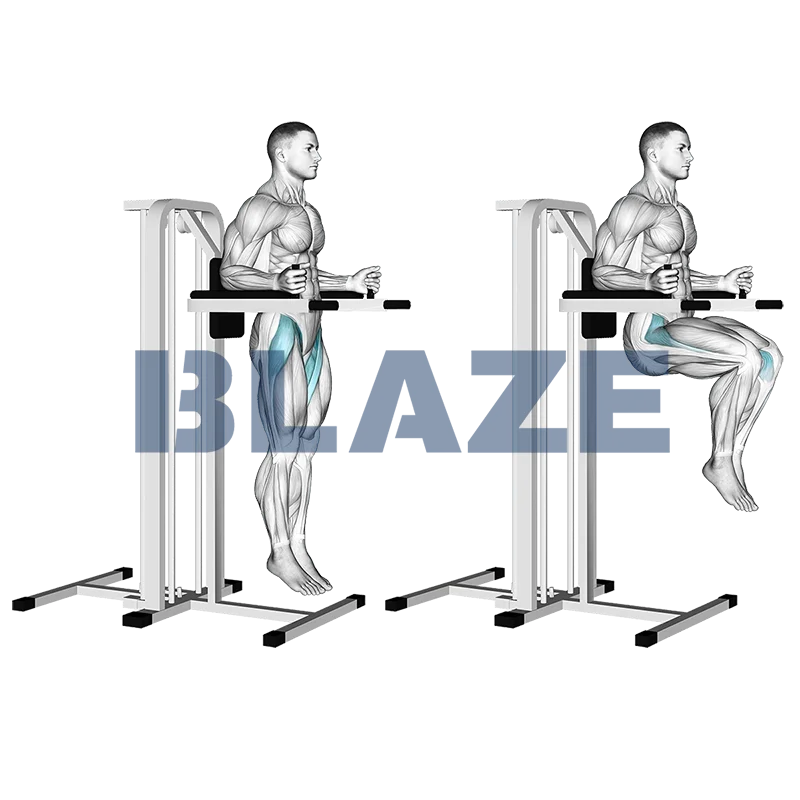
Knee raise on captain's chair
The captain's chair leg raise is an effective core exercise that offers numerous benefits. It primarily targets the rectus abdominis and obliques, while also engaging the hip flexors and stabilizing the shoulders and lower back. By incorporating this exercise, athletes enhance their core stability, which is essential for overall athletic performance and injury prevention. Improved core strength aids in better balance, posture, and efficiency in various movements, making it a valuable addition to any athlete's training regimen.
| Primary muscle group: | Legs |
| Exercise type: | Bodyweight |
| Exercise goal: | Strength |
| Key metric: | Repetitions |
Community Averages
11
Avg. reps/set
Rating
* Based on data from the Blaze community
Description
- 1Climb into the captain’s chair. Rest your forearms on the pads and grasp the handles with your hands. Your back should be against the back support and your legs hanging straight down.
- 2Press your lower back against the back support, engaging your core muscles for stability.
- 3Keep your feet together and exhale as you raise your knees towards your chest. Flex your hips and knees to bring your knees as close to your chest as possible.
- 4Hold your knees at chest level for a count of two, focusing on engaging your abdominal muscles.
- 5Inhale as you slowly lower your feet back to the starting position, maintaining control and stability throughout the movement.
- 6Repeat the exercise by exhaling and raising your knees towards your chest again.
- 7Continue to perform the exercise for the desired number of repetitions, maintaining proper form and control with each movement.
Tips & Tricks
Brace Your Core: Before you even begin the exercise, engage your core muscles. Think about pulling your belly button towards your spine to activate the muscles more effectively.
Controlled Movements: Instead of swinging your legs, lift them in a controlled manner. This ensures that you're working your muscles effectively and reduces the risk of injury.
Exhale on Lift: Breathe out as you lift your knees up towards your chest. This helps maintain stability and keeps your core engaged.
Inhale on Descent: Breathe in as you slowly lower your knees back to the starting position. Doing this helps you maintain a steady, controlled movement.
Avoid Swinging: Make sure not to use any momentum. Every lift and descent should be done slowly and deliberately to maximize muscle engagement.
Grip Firm: Keep your grip on the handles tight but relaxed to stabilize your upper body. This will help you focus more on your core muscles.
Keep Shoulders Stable: Don’t let your shoulders creep towards your ears. Keep them relaxed and down to avoid unnecessary tension.
Proper Alignment: Ensure your back is pressed against the pad and your body is straight throughout the exercise. This helps in targeting the intended muscles more effectively.
Increase Difficulty Gradually: Start with a few sets of lower repetitions and gradually increase both as you build strength and endurance.
Engage the Hip Flexors Minimal: Try to keep the engagement of your hip flexors to a minimum by truly focusing on your abs to do the work.
Avoid Excessive Arching: Try not to let your lower back arch excessively during the lifts. Keeping a slight curve is natural but avoid overdoing it.
Leg Variation: If you're experienced, you can try performing leg raises with straight legs instead of bent knees to increase the difficulty and engage different muscles.
Mind-Muscle Connection: Focus mentally on your abdominal muscles working throughout the exercise. This helps increase the effectiveness of the exercise.
Track in the Blaze App
Download Blaze Workout Tracker to log this exercise with sets, reps, and progress tracking.