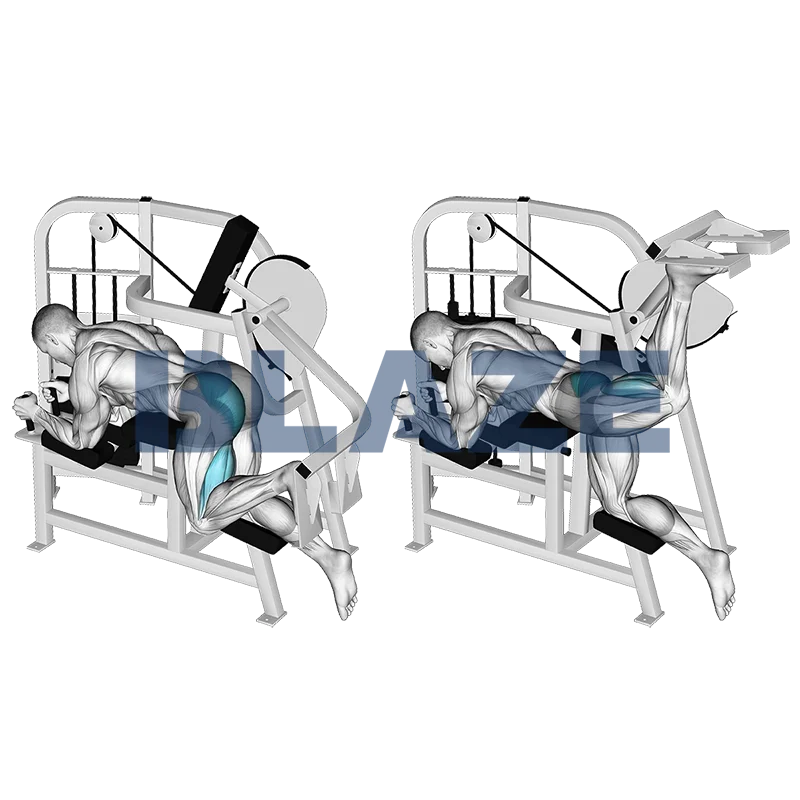
Hip extension on machine lying down
Machine hip extension offers numerous benefits, particularly for strengthening and toning the gluteal muscles and hamstrings. This exercise provides a robust activation of the lower body, enhancing muscle endurance and stability. Athletes profit from improved hip extension, better sprinting speed, and enhanced overall lower body strength. This exercise also supports injury prevention by reinforcing the muscles that stabilize the hips and pelvis, crucial for maintaining proper posture and alignment during diverse athletic activities.
| Primary muscle group: | Legs |
| Exercise type: | Machine |
| Exercise goal: | Strength |
| Key metric: | Weight |
Community Averages
38kg
Avg. weight
83lbs
Avg. weight
Rating
* Based on data from the Blaze community
Description
- 1Set up a low cable pulley. Strap the cable around your foot or ankle.
- 2Kneel on a bench, with your torso horizontal and the strapped leg extended off the side.
- 3Keeping your knee slightly flexed, pull the cable backward by extending your hip.
- 4Hold for a count of two and squeeze your glute.
- 5Lower the cable to the starting position by flexing your hip.
- 6Repeat for the prescribed number of repetitions.
- 7Repeat the exercise with your opposite leg.
Tips & Tricks
Controlled Movements: Always perform the exercise with slow and controlled movements. This maximizes muscle engagement and minimizes the risk of injury.
Focus on Squeezing: At the top of the movement, focus on squeezing your glutes. This will enhance muscle activation and help to tone and strengthen the target area more effectively.
Proper Alignment: Keep your hip, knee, and foot aligned throughout the exercise. This will help in maintaining proper form and preventing undue strain on other parts of your body.
Full Range of Motion: Ensure you are utilizing the full range of motion. Extend your hip fully to get the most out of the exercise, but avoid hyperextending to prevent strain.
Engage Your Core: Keeping your core muscles engaged will help stabilize your body during the exercise, improving form and reducing the likelihood of lower back strain.
Gradual Increase in Resistance: Start with a lighter weight to perfect your form before gradually increasing the resistance. This progression ensures your muscles adapt safely to the increased load.
Consistent Breathing: Maintain a consistent breathing pattern. Inhale while lowering your leg and exhale during the lifting phase to help maintain a rhythm and provide your muscles with adequate oxygen.
Monitor Your Posture: Make sure your back remains straight and your hips don't rotate during the exercise. Keeping a neutral spine reduces the risk of lower back injury and ensures the work is done by your glutes and hamstrings.
Close Supervision for Beginners: If you are new to this exercise, consider performing it under the supervision of a trainer to ensure correct form and technique.
Warm-up and Cool Down: Incorporate this exercise into a well-rounded routine that includes a good warm-up and cool-down to help prepare your muscles for the activity and aid in recovery.
Track in the Blaze App
Download Blaze Workout Tracker to log this exercise with sets, reps, and progress tracking.