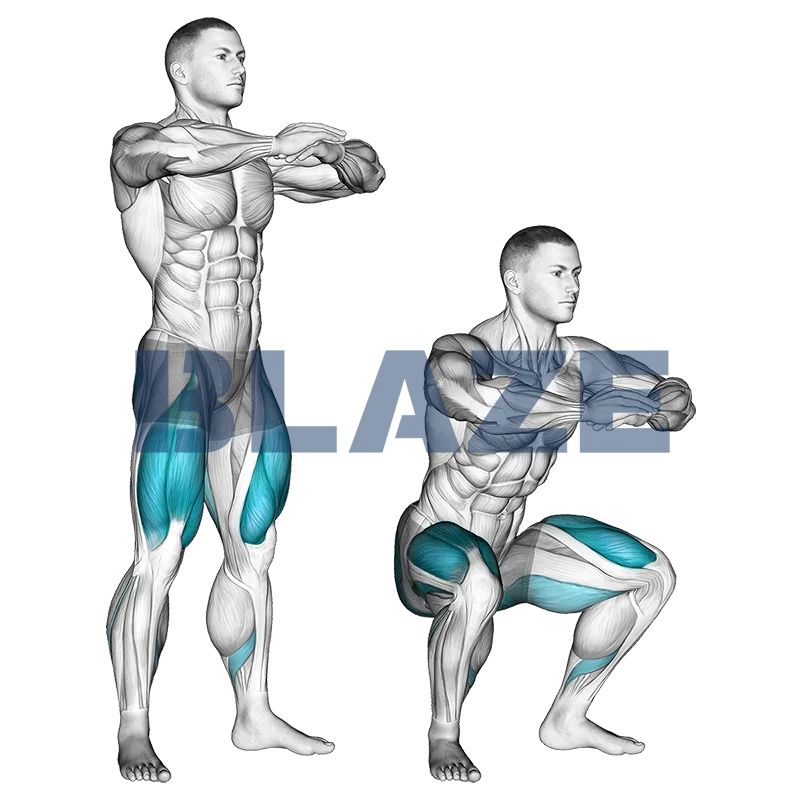
Squat without weight
Squats are a foundational exercise that offer numerous benefits, enhancing overall strength and stability. They primarily target the quadriceps, hamstrings, glutes, and lower back, while also engaging the core for stabilization. Athletes benefit from squats by increasing leg strength, improving balance, and boosting overall athletic performance. This exercise aids in better mobility and can contribute to a higher vertical jump and faster sprint times. Squats are versatile and can be modified to suit different fitness levels, making them a must-have in any athlete's training regimen.
| Primary muscle group: | Legs |
| Exercise type: | Bodyweight |
| Exercise goal: | Strength |
| Key metric: | Repetitions |
Community Averages
35
Avg. reps/set
Rating
* Based on data from the Blaze community
Description
- 1Stand with your feet shoulder-width apart. Ensure your knees and feet point in the same direction.
- 2Extend your arms out in front of you for balance or keep them by your sides to raise as you descend.
- 3Keep your head up and torso upright. Inhale deeply.
- 4Begin your squat by simultaneously bending your hips and knees. Lower your body until your thighs are parallel with the floor.
- 5If your arms are by your sides, raise them in front of you as you descend to help maintain balance.
- 6Exhale as you push through your heels to return to the starting position.
- 7Repeat for the prescribed number of repetitions.
Tips & Tricks
Maintain Proper Form: Keep your feet shoulder-width apart, your back straight, and chest up to avoid unnecessary strain on your back.
Depth is Key: Aim to squat as deeply as you can comfortably go. Ideally, your thighs should be parallel to the ground or lower if your mobility allows it.
Engage Your Core: Tighten your abdominal muscles throughout the movement to protect your lower back and improve balance.
Heels on the Ground: Ensure your heels remain flat on the ground when squatting, as this helps maintain stability and proper posture.
Knees in Line with Toes: Your knees should track in the same direction as your toes to avoid unnecessary stress on your joints.
Controlled Movements: Perform the squats in a slow and controlled manner to maximize muscle engagement and reduce the risk of injury.
Breath Control: Breathe in while lowering your body and breathe out while pushing back up to help maintain a steady rhythm and proper oxygen flow.
Focus Forward: Keep your gaze forward to maintain balance and ensure proper alignment of your spine.
Warm-Up: Always start with a warm-up to prepare your muscles and joints for the exercise, reducing the risk of injury.
Consistency: Practice regularly to improve strength, flexibility, and overall performance.
Track in the Blaze App
Download Blaze Workout Tracker to log this exercise with sets, reps, and progress tracking.