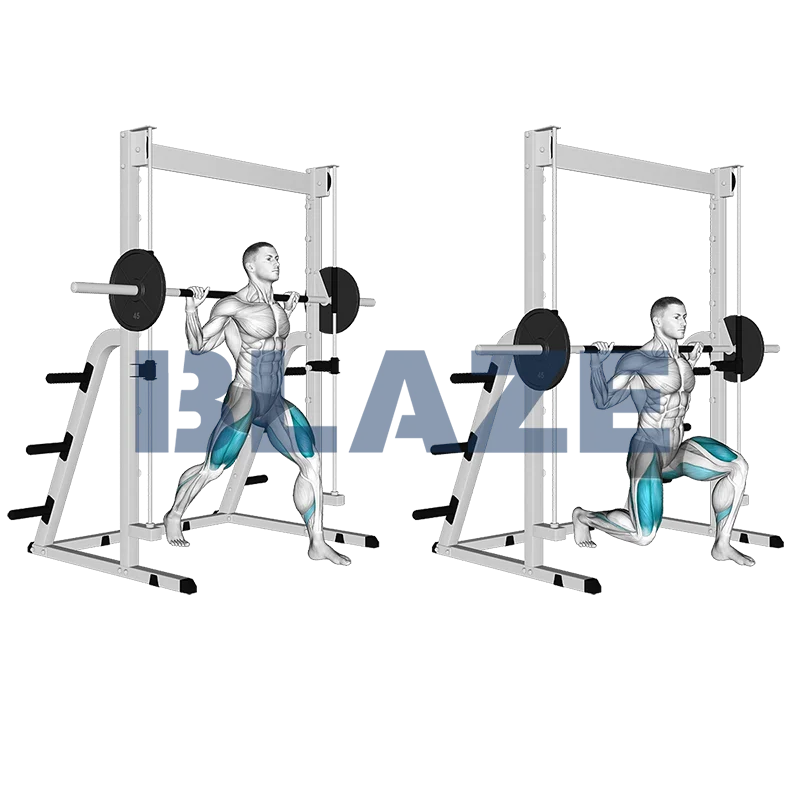
Lunge or split squat on Smith machine
The Smith machine split squat is a highly effective exercise that targets the quadriceps, hamstrings, glutes, and calves. Utilizing the Smith machine for stability, this movement enhances lower body strength, balance, and coordination. Athletes benefit from improved unilateral leg power, which translates to better performance in sports requiring explosive leg movements like sprinting and jumping. The controlled environment of the Smith machine ensures safety, making it suitable for both beginners and advanced lifters aiming to optimize their lower body workout.
| Primary muscle group: | Legs |
| Exercise type: | Machine |
| Exercise goal: | Strength |
| Key metric: | Weight |
Community Averages
19kg
Avg. weight
41lbs
Avg. weight
Rating
* Based on data from the Blaze community
Description
- 1Setup: Position yourself in a Smith machine with the bar resting on your traps (upper back). Adopt a split stance with one foot forward and the other foot back.
- 2Initiate Descent: Flex both knees simultaneously, lowering your body until your back knee nearly touches the ground directly beneath your hip.
- 3Maintain Form: Ensure your front knee stays aligned with your ankle and does not extend past your toes.
- 4Ascend: Drive through the front foot and extend the knee to return to the starting position.
- 5Repeat: Perform the movement for your desired number of repetitions.
- 6Switch Legs: Repeat the entire process for the opposite leg to ensure balanced strength development.
Tips & Tricks
Maintain an upright torso. Avoid leaning too far forward or backward as this can lead to improper alignment and strain.
Set the bar at shoulder height. Make sure your shoulders and back are properly aligned before starting the exercise.
Place your front foot slightly forward compared to a free-standing lunge. This adjustment accounts for the fixed path of the Smith machine.
Position your rear foot on its toes. Ensure that your feet are hip-width apart to provide stability.
Lower yourself in a controlled manner. Avoid dropping too quickly to reduce the risk of injury.
Drive up through your heel of the front foot. This ensures engagement of the intended muscles and helps with balance.
Aim for a lunge depth where your front thigh is parallel to the floor but not lower. This maintains muscle engagement and reduces knee strain.
Ensure your front knee does not go past your toes. Keeping the knee aligned with the ankle ensures proper form and reduces the risk of joint issues.
Keep the barbell positioned securely on your traps or upper back, not your neck. This distributes weight safely across your body.
Avoid gripping the bar too tightly. Relax your grip to maintain fluidity during the movement.
Start with a moderate weight. Gradually increase the load as you become more comfortable and confident with your form.
Focus on form over weight. Proper technique is crucial for muscle engagement and preventing injury.
Keep your core engaged throughout the movement. This provides stability and supports your lower back.
Draw your navel toward your spine to activate core muscles efficiently.
Inhale as you lower your body. This helps in maintaining control and stability.
Exhale as you push back up. Proper breathing enhances performance and muscle activation.
Track in the Blaze App
Download Blaze Workout Tracker to log this exercise with sets, reps, and progress tracking.