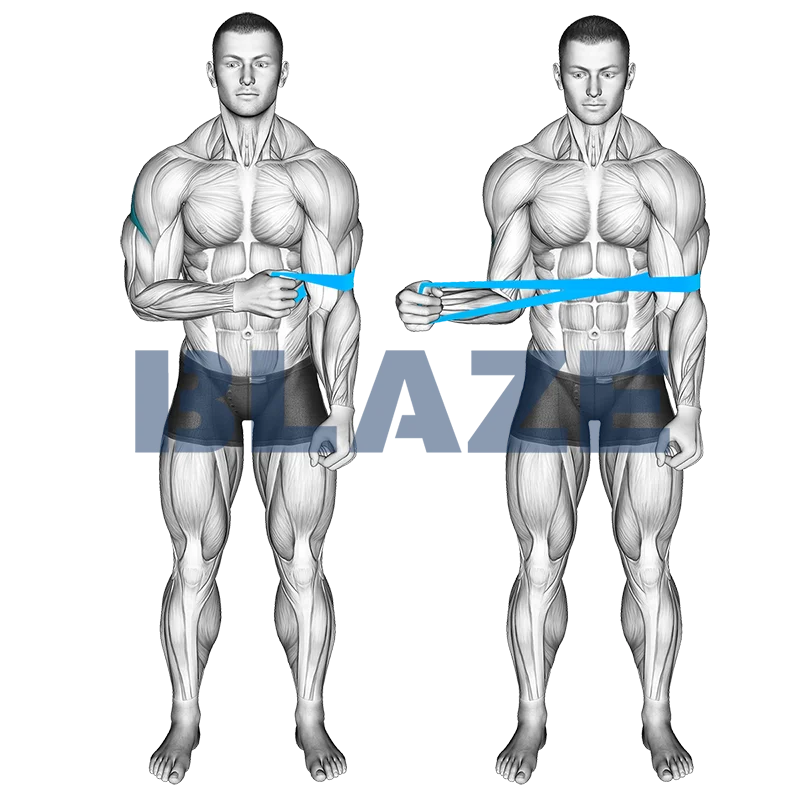
External shoulder rotation with band
Band upright shoulder external rotation is an essential exercise for shoulder health and stability. It primarily activates the infraspinatus and teres minor muscles of the rotator cuff, along with the deltoids. This movement enhances shoulder joint mobility, improves posture, and prevents injuries by strengthening the shoulder's external rotators. Athletes benefit from enhanced throwing mechanics, more stable shoulder movements, and reduced injury risk, making it crucial for sports involving overhead activities or repetitive arm motions. Incorporating this exercise can lead to better performance and longevity in athletic pursuits.
| Primary muscle group: | Shoulders |
| Exercise type: | Band |
| Exercise goal: | Strength |
| Key metric: | Repetitions |
Community Averages
18
Avg. reps/set
Rating
* Based on data from the Blaze community
Tips & Tricks
Warm-Up First: Always start with a proper warm-up to get your muscles ready. This is crucial for preventing injuries and ensuring maximum benefit from the exercise.
Posture is Key: Maintain a neutral spine and avoid slouching. Keep your chest lifted and shoulders back throughout the movement to ensure proper form and engagement of the right muscles.
Engage Your Core: Activate your core muscles to stabilize your body. This will help you maintain form and maximize the effectiveness of the exercise.
Controlled Movements: Avoid quick, jerky movements. Slow and controlled rotations will engage your muscles better and reduce the risk of injury.
Breathing Technique: Exhale as you rotate your arm outward and inhale as you bring it back to the starting position. Proper breathing helps maintain rhythm and form.
Consistent Tension: Ensure that the resistance band maintains tension throughout the movement. If the band goes slack, you’re not working the muscle effectively.
Proper Band Selection: Choose a resistance band that challenges you without compromising form. Start with a lighter band and gradually progress to higher resistance as your strength improves.
Mind-Muscle Connection: Focus on the muscles being worked, primarily the rotator cuff and shoulder stabilizers. Visualizing the movement can enhance muscle activation.
Even Range of Motion: Aim for a balanced range of motion to ensure both arms receive equal work. This helps in avoiding muscle imbalances.
Regular Assessment: Periodically check your form in a mirror or have a partner watch you to ensure you're executing the exercise correctly.
Cooldown: Don’t skip the cooldown phase. Gentle stretching of the shoulder muscles after the exercise can help in muscle recovery and prevent stiffness.
Track in the Blaze App
Download Blaze Workout Tracker to log this exercise with sets, reps, and progress tracking.