
Girlfried & Boyfriend Training
A training designed for you and your partner. This routine includes exercises that are popular with both male and female athletes, focusing on a combination of strength, toning, and overall fitness. The first day targets the upper body, while the second day focuses on the lower body. The exercises are effective for both of you, promoting balanced strength and aesthetics.
Day 1: Partner - Upper Body Strength & Tone
6 exercises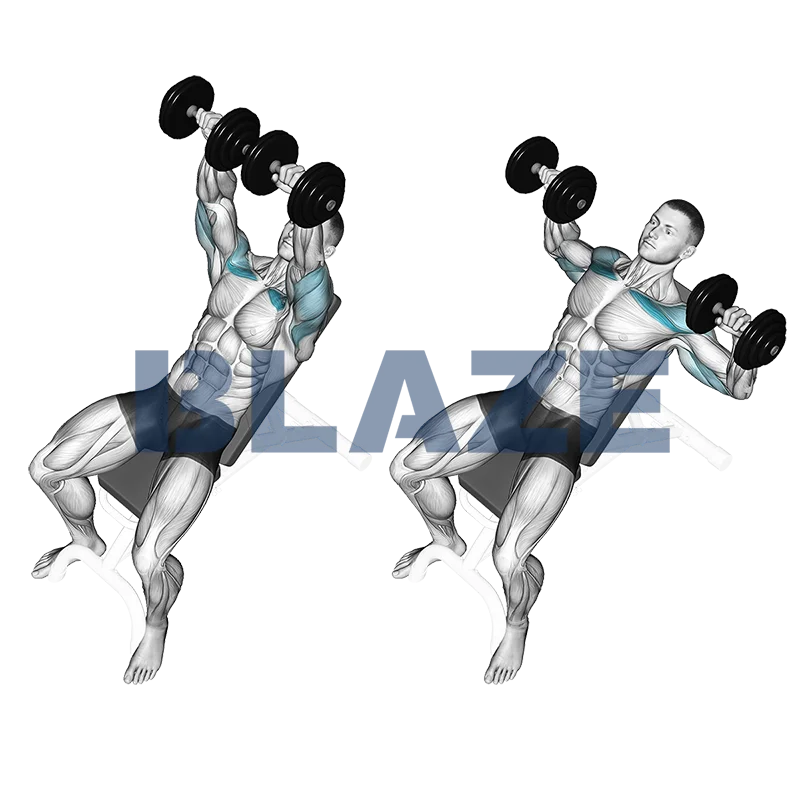
The inclined bench press with dumbbell is a powerful exercise that targets the upper chest, shoulders, and triceps, promoting muscle hypertrophy and strength. Elevating the bench to an incline angle shifts focus to the clavicular head of the pectorals, enhancing upper chest development and improving muscle symmetry. This exercise also activates stabilizing muscles, contributing to overall shoulder stability and functional strength. Athletes benefit from this exercise by gaining increased upper body power and enhanced aesthetics, which are crucial for performance in various sports.
Community Averages
38kg
Avg. weight
84lbs
Avg. weight
Rating
* Based on data from the Blaze community
Description
- 1Hold a dumbbell in each hand, sit on a bench inclined at a 45 degrees angle and rest one dumbbell on each knee.
- 2While you lie back on the bench, kick each dumbbell up into position resting on your chest, one at a time.
- 3Position the dumbbells to the sides of your chest and place your feet firmly on the ground.
- 4Exhale as you press the dumbbells upward and inward until your arms are almost fully extended and the dumbbells nearly touch above the center of your face.
- 5Inhale as you slowly lower the dumbbells back to the starting position. For an extra pump, lower the dumbbells beyond the starting position until you feel a slight stretch in your chest.
- 6You have completed your first repetition. Repeat the motion in a controlled way and count your reps.
Tips & Tricks
- •Consistent Angles: Ensure the bench is set at a 30-degree to 45-degree angle. This helps target the upper chest while minimizing strain on the shoulders.
- •Controlled Movement: Lower the dumbbells slowly and with control to maximize muscle engagement and reduce the risk of injury. Avoid letting the weights drop quickly.
- •Elbow Positioning: Keep your elbows at a 45-degree angle to your body. This helps protect your shoulder joints and place more emphasis on the pectoral muscles.
Community Averages
56kg
Avg. weight
123lbs
Avg. weight
Rating
* Based on data from the Blaze community
Description
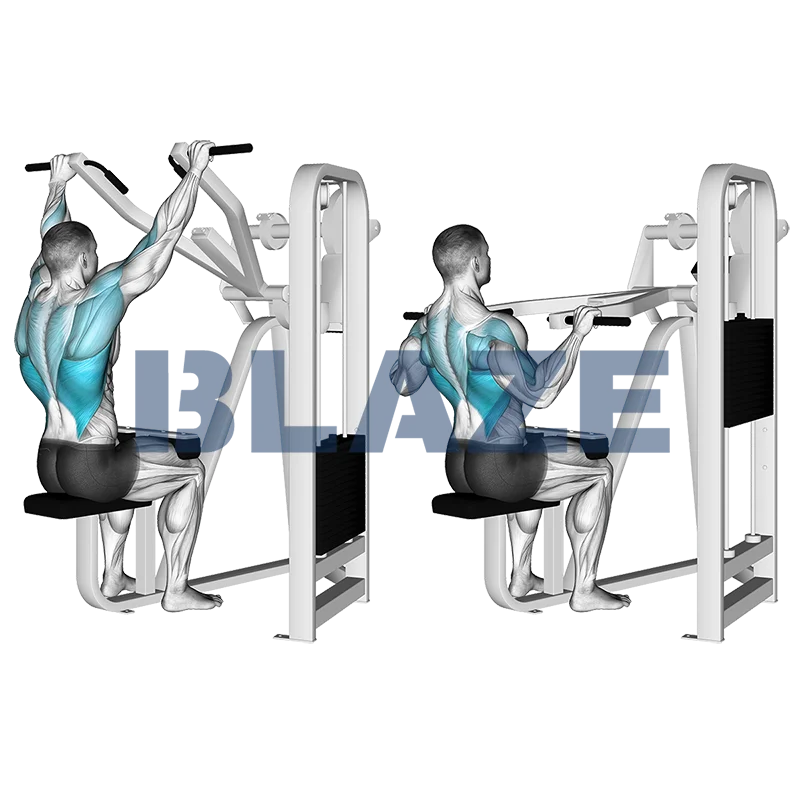
- 1Sit on the lat front pull-down machine and secure your thighs under the supports. Grasp the lever handles.
- 2Your arms and shoulders should be fully extended upward.Exhale as you pull the handles down to your upper chest.
- 3Hold for a count of two and squeeze your back muscles.
- 4Inhale as you return the handles to the starting position, with your arms and shoulders fully extended.
- 5Repeat for the prescribed number of repetitions.
Tips & Tricks
- •Grip Matters: Use a wide, overhand grip to target the outer parts of your lats. Adjusting your grip can help you engage different muscles. For example, a closer grip can shift some focus to your biceps and middle back.
- •Engage Your Core: Keep your core tight and avoid arching your back. This helps maintain proper form and reduces strain on your spine.
- •Smooth Movement: Focus on smooth, controlled movements rather than jerking the bar down. This ensures better muscle engagement and reduces the risk of injury.
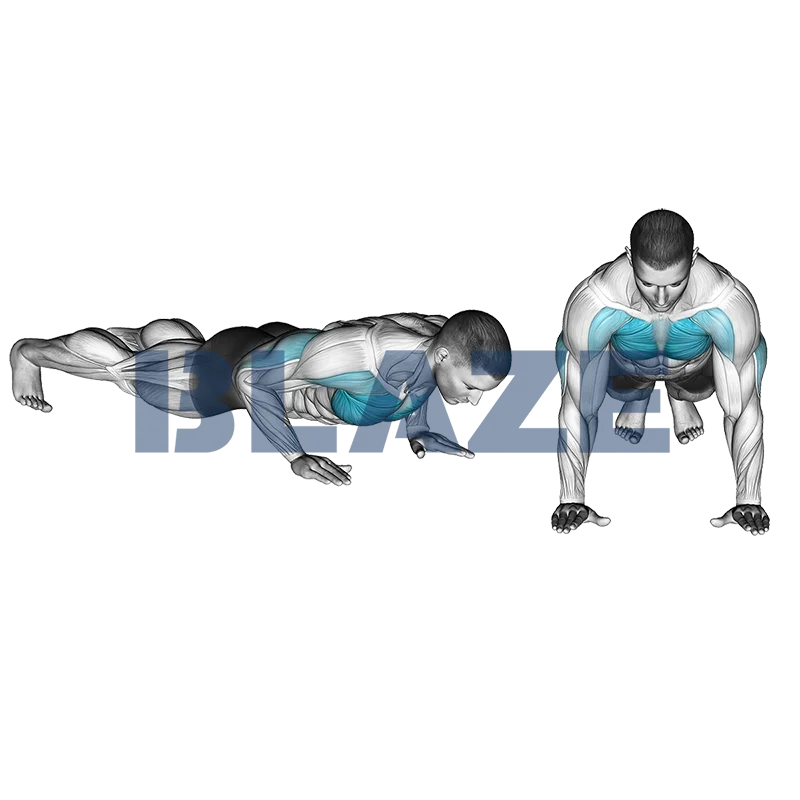
Push ups are a classic full-body exercise offering numerous benefits. They primarily target the pectoral muscles, triceps, and anterior deltoids, while also engaging the core, lower back, and legs for stabilization. This exercise enhances upper body strength, improves muscle tone, and increases endurance. Athletes profit from push-ups due to their simplicity, effectiveness, and lack of equipment requirements. They can boost overall athletic performance by enhancing functional strength, promoting muscle balance, and improving cardiovascular health, essential for various sports disciplines.
Community Averages
17
Avg. reps/set
Rating
* Based on data from the Blaze community
Description
- 1Rest your knees, feet and hands on a gym mat.
- 2Extend your feet backward and straighten your whole body so that only your toes and your hands touch the ground. Your hands should be a little bit more than shoulder width apart.
- 3Keep your body straight and your elbows slightly tucked in. This is your starting position.
- 4Inhale as you lower your chest to the floor by bending your elbows.
- 5Then reverse the movement and go back to the starting position. You have completed your first repetition. Repeat the motion in a controlled way and count your reps.
Tips & Tricks
- •Position your hands slightly wider than shoulder-width apart for better stability and muscle engagement.
- •Maintain a straight line from your head to your heels. Avoid sagging your hips or sticking your buttocks up in the air.
- •Engage your core muscles throughout the movement to protect your back and improve strength.
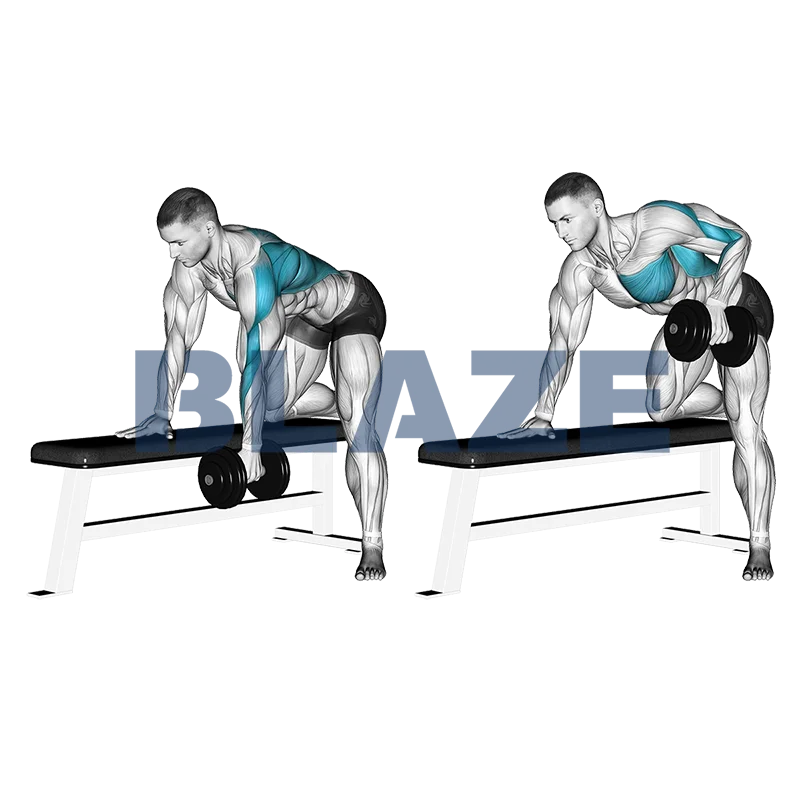
The one arm bent over row with dumbbell is a highly effective exercise for strengthening the upper body. Key benefits include enhanced muscle development, improved posture, and increased arm and back strength. This exercise primarily targets the latissimus dorsi, trapezius, rhomboids, and biceps, making it excellent for comprehensive upper body conditioning. Athletes can profit from this exercise by improving their pulling strength, which is critical in sports requiring upper body power and stability, and enhancing overall athletic performance through better muscle coordination and endurance.
Community Averages
15kg
Avg. weight
34lbs
Avg. weight
Rating
* Based on data from the Blaze community
Description
- 1Holding a dumbbell in your left hand, kneel on a bench with your right knee and support your body with your right arm.
- 2Ensure that the dumbbell is hanging straight down, with your left arm almost fully extended.
- 3Exhale as you pull the dumbbell up to the side of your waist.
- 4Hold the dumbbell in that position for a count of two.
- 5Inhale as you lower the dumbbell back down to the starting position.
- 6Repeat the exercise for the desired number of repetitions.
- 7Switch to your right arm and repeat the steps above.
Tips & Tricks
- •Maintain a Neutral Spine: Keep your back straight and avoid rounding your shoulders. This promotes better engagement of the back muscles and reduces the risk of injury.
- •Engage Your Core: Tighten your core muscles to help stabilize your torso. This not only protects your lower back but also ensures that the focus remains on the target muscles.
- •Control the Weight: Avoid using momentum to lift the weight. Focus on a slow, controlled motion, especially during the lowering phase of the movement. This increases muscle activation.
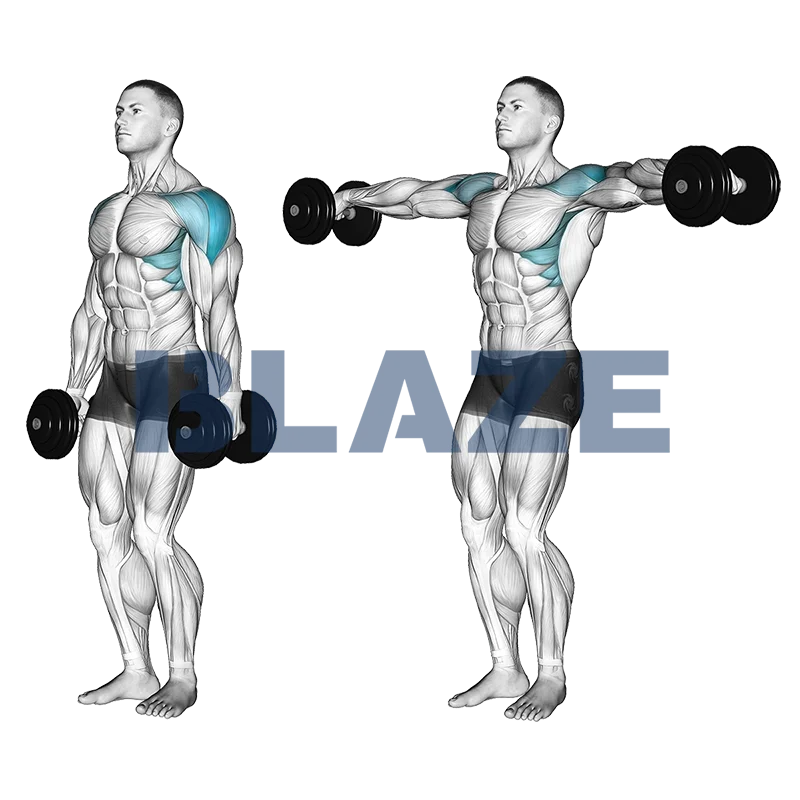
The dumbbell lateral raise primarily targets the lateral deltoids, providing definition and strength to the shoulders. Additionally, it involves the anterior deltoids, trapezius, and rotator cuff muscles. Benefits include enhanced shoulder width, improved posture, and better shoulder stability, crucial for athletic performance. Athletes profit from this exercise as it contributes to stronger and more balanced shoulder muscles, reducing the risk of injuries and improving overall upper body strength and aesthetics. It's an essential move for building a robust shoulder profile and enhancing athletic capabilities.
Community Averages
15kg
Avg. weight
33lbs
Avg. weight
Rating
* Based on data from the Blaze community
Description
- 1Stand upright and hold a dumbbell in each hand with the dumbbells hanging down by your sides. Keep your elbows slightly bent during the whole exercise.
- 2Exhale as you raise both arms to the sides until your arms form one line with your shoulders.Inhale and lower the dumbbells into the starting position.
- 3You have completed your first repetition. Repeat the motion in a controlled way and count your reps.
Tips & Tricks
- •Maintain Proper Form: Keep a slight bend in your elbows to reduce the strain on your elbow joints. This will help maintain tension in your shoulder muscles.
- •Neutral Wrist Position: Keep your wrists in a neutral position-avoid letting them bend forward or backward. This helps to protect your wrists and ensure that the focus remains on your shoulders.
- •Controlled Movement: Lift and lower the dumbbells slowly and with control. Avoid using momentum to lift the weights, which can reduce the effectiveness of the exercise and increase the risk of injury.
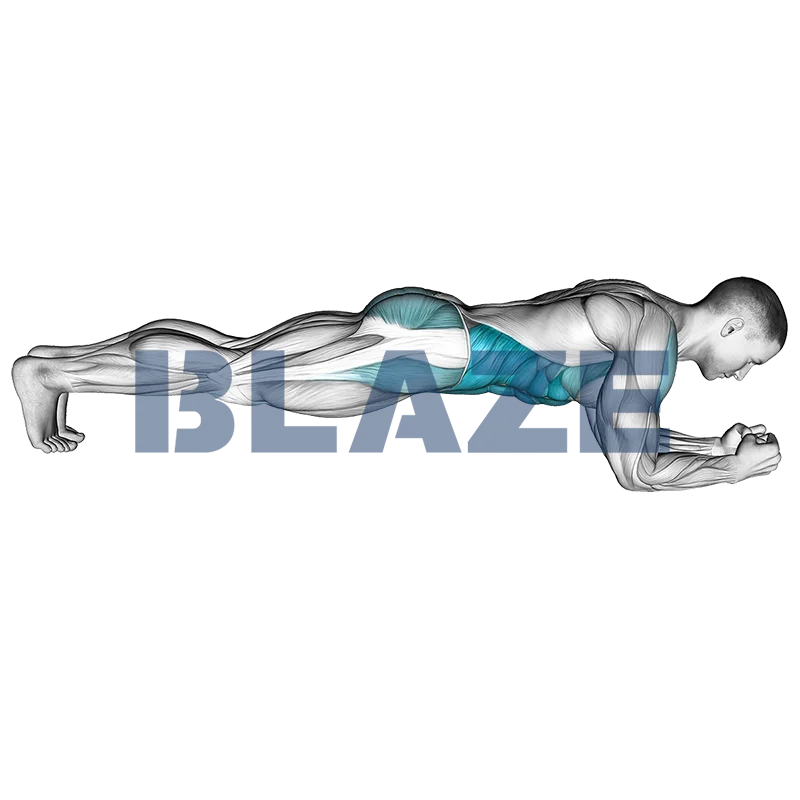
The front plank is a fundamental core exercise offering numerous benefits. Engaging the abdominals, lower back, glutes, hips, and shoulders, it enhances stability and strength in the core region. This exercise is crucial for athletes as it improves posture, reduces the risk of back injuries, and enhances overall athletic performance by providing a solid foundation for movement. Planks also bolster body awareness and coordination, essential for maintaining proper form and efficiency in various sports and physical activities.
Community Averages
0:01:25
Avg. duration
Rating
* Based on data from the Blaze community
Description
- 1Rest your knees, feet and elbows on a gym mat.
- 2Extend your feet backward and straighten your whole body so that only your toes and your elbows touch the ground. Your feet should be close together and your elbows should be positioned directly under your shoulders.
- 3Make sure that your lower back sags or your butt rises. Instead, ensure that your body is straight and rigid. Your core muscles must be contracted during the whole exercise.
- 4Hold this position for the desired period of time.
- 5Then go back to the starting position to rest. You have completed your first repetition.
Tips & Tricks
- •Maintain Proper Alignment: Make sure your body forms a straight line from your shoulders to your heels. Avoid letting your hips sag or rise too high.
- •Engage Your Core: Tighten your abdominal muscles as if bracing for a punch. This helps to stabilize your spine and maintain proper form.
- •Avoid Neck Strain: Keep your neck in line with your spine by looking at a spot on the floor just a few inches in front of your hands.
Day 2: Partner - Lower Body Strength & Sculpt
6 exercises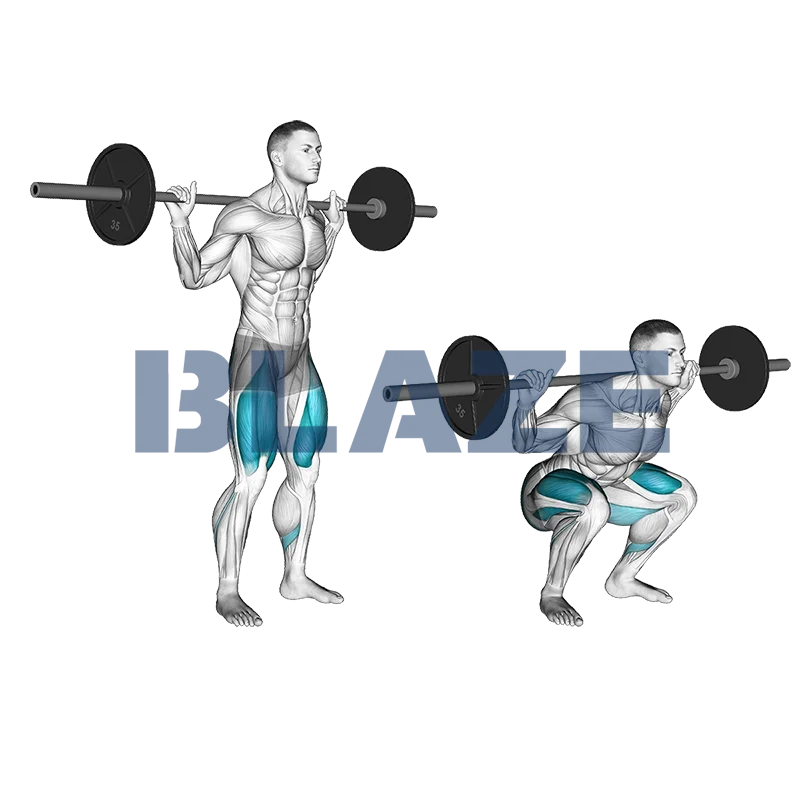
The barbell squat is a foundational exercise that offers multiple benefits, including improved strength, power, and muscle mass. Key muscle groups activated during this exercise include the quadriceps, hamstrings, glutes, and lower back. For athletes, incorporating barbell squats can enhance performance by promoting better balance, agility, and explosiveness, which are crucial for sports like football, basketball, and track. Additionally, squats improve core stability and support injury prevention by strengthening connective tissues and joints.
Community Averages
55kg
Avg. weight
122lbs
Avg. weight
Rating
* Based on data from the Blaze community
Description
- 1Load a barbell on a rack at upper-chest level. Step under the barbell so that it rests on the back of your shoulders, and grasp the bar at each side. Hands are slightly wider than shoulder-width apart.
- 2Dismount the barbell and step backward. Your feet should be shoulder-width apart and must slightly point outwards.
- 3Inhale as you squat down by simultaneously pushing the hips back and bending your knees and hips to lower the torso. Keep your torso upright, and descend at least until your knees are bent at a 90-degree angle.
- 4Be careful that your knees do not extend beyond an imaginary line drawn vertically upward from your toes. Instead, push your butt backwards to avoid this.
- 5Exhale as you push your body back up to the starting position, still keeping your torso upright.
- 6You have completed your first repetition. Repeat the motion in a controlled way and count your reps.
Tips & Tricks
- •Warm-Up Thoroughly: Always start with a comprehensive warm-up to prepare your muscles and joints. This can include dynamic stretches and light cardio to get your blood flowing.
- •Head Position: Keep your head facing forward and eyes fixed on a point in front of you. This helps maintain balance and keeps your spine aligned.
- •Chest Up: Ensure your chest is up and your back is neutral throughout the movement. Avoid rounding your back to prevent spinal injuries.
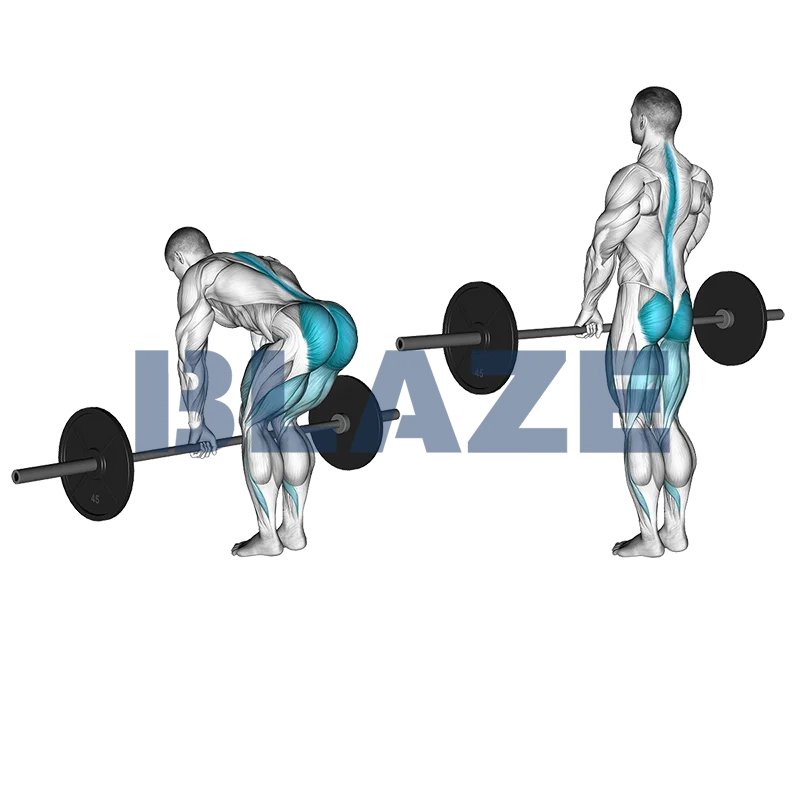
The barbell Romanian deadlift is a highly effective exercise for developing strength and hypertrophy in the posterior chain. Key muscles activated include the hamstrings, glutes, lower back, and erector spinae. This lift targets the hamstrings more intensely than the conventional deadlift, making it ideal for athletes seeking to improve jumping and sprinting performance. Benefits include enhanced hamstring flexibility, improved posture, and reduced risk of lower back injuries. This exercise is particularly valuable for athletes aiming to boost lower body strength and explosiveness.
Community Averages
60kg
Avg. weight
132lbs
Avg. weight
Rating
* Based on data from the Blaze community
Description
- 1Stand with your feet shoulder-width apart and grab the barbell using a shoulder-width pronated (overhand) grip.
- 2Ensure your arms are extended and the barbell is resting against the front of your thighs. Keep your knees slightly bent.
- 3Inhale and push your butt back, hinging forward at your hips, lowering the barbell down your thighs until you feel a slight stretch in your hamstrings.
- 4Exhale as you extend your hips and pull the barbell back up your legs to the starting position.
- 5Repeat for the desired number of repetitions, maintaining proper form throughout the exercise.
Tips & Tricks
- •Focus on the Hips: The Romanian Deadlift is all about hinging at the hips. Keep your knees slightly bent and push your hips back as you lower the barbell. This hinge movement is crucial for targeting the hamstrings and glutes.
- •Maintain a Neutral Spine: Keep your spine neutral throughout the exercise. Avoid rounding your back by keeping your shoulder blades retracted and your chest open. This helps in preventing injury and ensures proper form.
- •Engage Your Core: Tighten your core muscles to stabilize your back. This also supports the maintenance of a neutral spine and prevents any unnecessary strain on your lower back.

The Bulgarian split squat is a highly effective lower-body exercise that targets the quadriceps, hamstrings, glutes, and calves. By isolating each leg, it helps improve balance, stability, and unilateral strength. Athletes benefit from enhanced muscular endurance, increased flexibility, and reduced risk of injury due to muscle imbalances. This exercise is particularly advantageous for improving athletic performance in sports requiring strong, stable legs, making it a valuable addition to any training regimen.
Community Averages
38kg
Avg. weight
83lbs
Avg. weight
Rating
* Based on data from the Blaze community
Description
- 1Place a barbell on the back of your shoulders and grasp it firmly at both sides.
- 2Stand with your back facing the side of a bench. Place the top of one foot on the bench behind you so that only one of your feet is making contact with the floor.
- 3Keeping your torso upright, inhale as you squat down with your supporting leg until the knee of your back leg nearly touches the floor.
- 4Exhale as you push yourself back up to the starting position.
- 5Repeat for the desired number of repetitions.
- 6Repeat the repetitions with your opposite leg.
Tips & Tricks
- •Posterior Tilt for Depth: Ensure your pelvis is in a posterior tilt to help target the glutes more effectively and to achieve greater depth in the squat.
- •Position your Rear Leg Correctly: Place your rear leg on the bench or platform such that it's high enough to allow a deep squat, but not so high that it causes discomfort or balance issues.
- •Front Foot Placement: Adjust the placement of your front foot to a position where, at the bottom of the movement, your knee is at approximately a 90-degree angle to avoid undue stress on your knee joint.
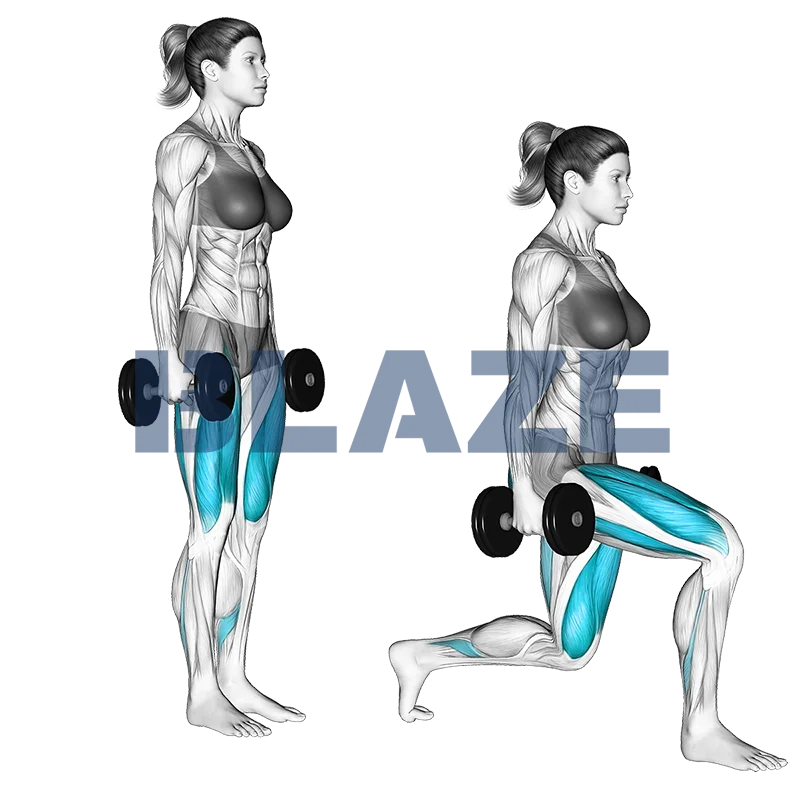
The dumbbell split squat is a powerful unilateral exercise that targets the quads, glutes, and hamstrings. This move also engages the core, enhancing stability and balance. Athletes benefit from improved lower body strength, symmetry, and injury prevention. The unilateral nature of the split squat helps correct muscle imbalances and enhances coordination. By incorporating this exercise into their routine, athletes can enhance their performance in sports requiring leg strength, agility, and power.
Community Averages
25kg
Avg. weight
54lbs
Avg. weight
Rating
* Based on data from the Blaze community
Description
- 1Hold a dumbbell in each hand and stand upright with the dumbbells hanging by your sides.
- 2Inhale as you take a large step forward with one leg and bend the knee of that leg until there is a 90 degree angle between your thigh and your calf. The knee of your other (back) leg should almost touch the floor.
- 3Exhale as you drive back up with your front leg and step back into the standing position.
- 4You have completed your first repetition.
- 5Repeat the same motion with your opposite leg. Keep alternating the leg with each lunge.
Tips & Tricks
- •Maintain Proper Posture: Keep your upper body straight, with shoulders back and relaxed, and chin up. Picking a point to focus on in front of you can help you maintain balance.
- •Engage Your Core: Engage your core muscles throughout the movement to maintain stability and support your lower back.
- •Focus on Form, Not Speed: Perform the exercise slowly and with control rather than rushing through it. This ensures proper muscle engagement and reduces the risk of injury.
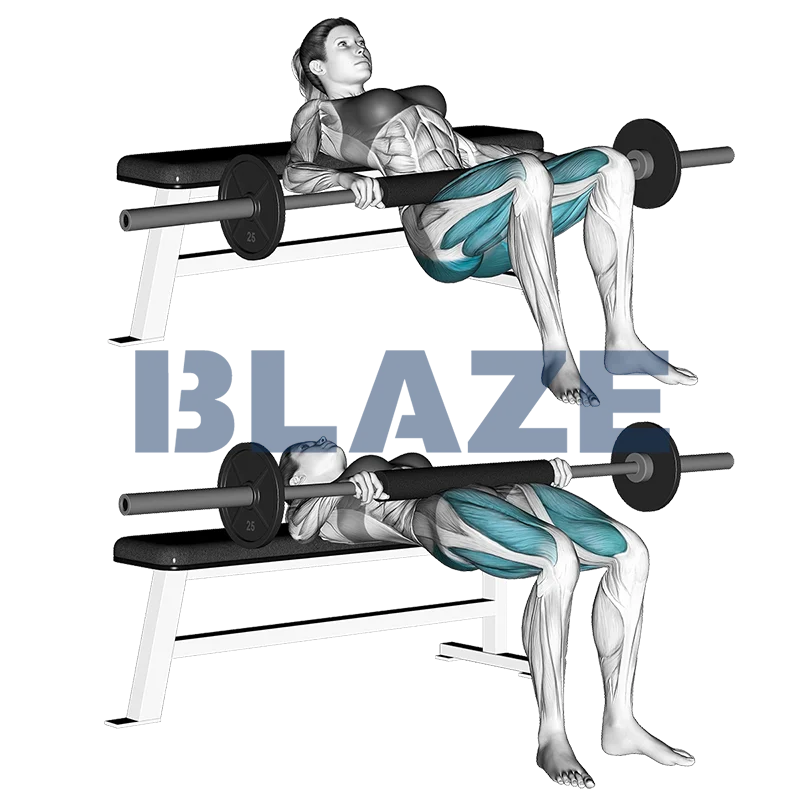
The barbell hip thrust is a powerful lower-body exercise that primarily targets the glutes, with secondary activation of the hamstrings, quads, and core. This exercise enhances hip extension strength, boosts athletic performance by improving sprinting and jumping capabilities, and aids in overall hip mobility. Benefits include increased glute size and strength, improved posture, and reduced risk of injury through better stabilization. Athletes profit from superior lower-body power, enhanced agility, and greater force production for a competitive edge.
Community Averages
75kg
Avg. weight
164lbs
Avg. weight
Rating
* Based on data from the Blaze community
Description
- 1Position a bench parallel to a loaded barbell.
- 2Sit with your back against the bench, legs extended and feet under the barbell.
- 3Grasp the barbell firmly with both hands.Bend your knees and place your feet flat on the floor, hip-width apart.
- 4Exhale as you raise the barbell by extending your hips until they are fully extended.
- 5Squeeze your glutes and hold for a count of two.
- 6Inhale as you lower the barbell by flexing your hips, keeping it above the floor.
- 7Repeat the exercise, focusing on maintaining proper form and control.
Tips & Tricks
- •Proper Foot Placement: Ensure your feet are planted firmly on the ground directly under your knees. This helps in achieving optimal glute activation and maintaining balance throughout the exercise.
- •Controlled Movement: Focus on controlled movements. Avoid using momentum to lift the barbell. This ensures that your glutes are doing the majority of the work, maximizing their development.
- •Engage Your Core: Keep your core tight and engaged throughout the exercise. This not only supports your spine but also ensures a more effective thrust.
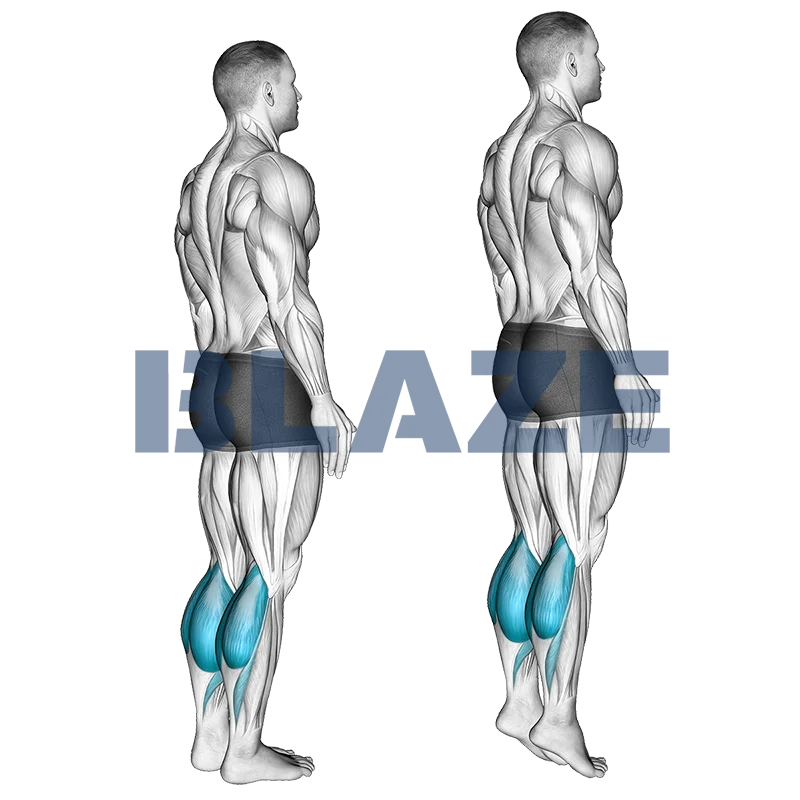
Standing calf raise is a beneficial exercise targeting the calf muscles – primarily the gastrocnemius and soleus. It enhances leg strength, improves balance and stability, and reduces the risk of lower leg injuries. Athletes benefit by achieving better sprinting, jumping, and overall lower body endurance. This exercise also supports ankle flexibility and muscle definition, making it a vital addition to any fitness routine aiming for well-rounded leg development.
Community Averages
33
Avg. reps/set
Rating
* Based on data from the Blaze community
Description
- 1Adjust the Equipment: Adjust the padded lever of the calf raise machine to match your height.
- 2Position Yourself: Place your shoulders under the pads. Position your toes facing forward (or in one of the other positions specified at the beginning of the chapter). Ensure the balls of your feet are on the calf block with your heels extending off it.
- 3Starting Position: Push the lever up by extending your hips and knees until your torso is erect. Keep your knees slightly bent, not locked. This is your starting position.
- 4Perform the Raise: Raise your heels by extending your ankles as high as possible while breathing out and flexing your calf. Keep your knees stationary and straight.
- 5Hold and Lower: Hold the contracted position for a second, then slowly lower your heels back to the starting position as you breathe in, stretching your calves by bending your ankles.
- 6Repeat: Repeat the movement for the recommended amount of repetitions.
Tips & Tricks
- •Maintain Proper Posture: Stand upright with a straight back to ensure you maximize the focus on your calf muscles without straining your lower back.
- •Controlled Movements: Focus on slow, controlled movements. Avoid bouncing or using momentum to lift your heels. This ensures that your calf muscles are doing the work.
- •Engage Your Core: Keep your core muscles engaged throughout the exercise. This helps with balance and stability, providing a solid foundation for the calf raise.
Start this workout in the Blaze app
Download Blaze Workout Tracker and follow this plan with guided sets and tracking.