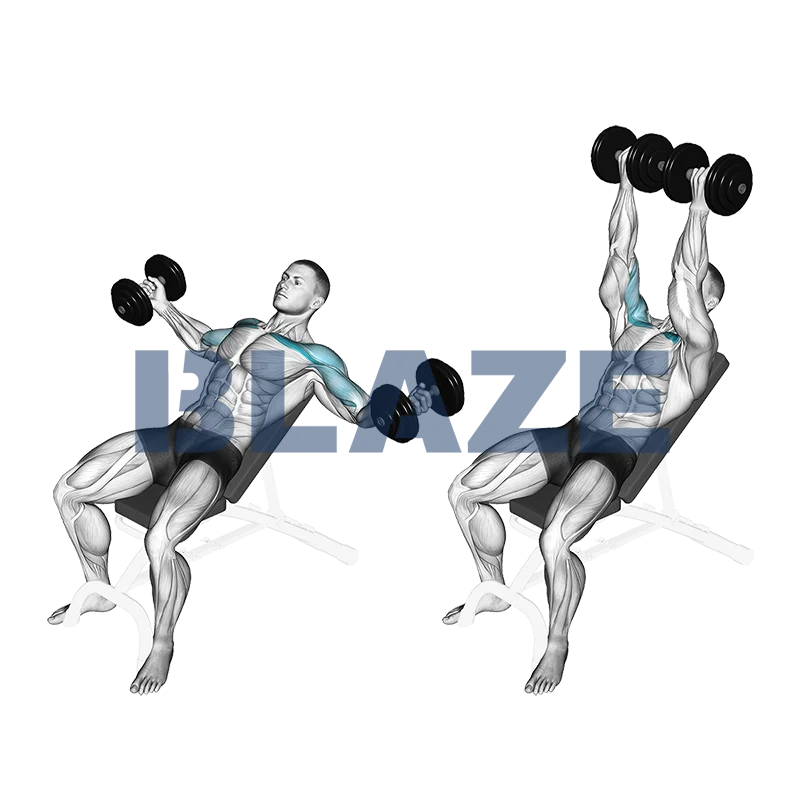
Chest fly with dumbbells twisted (inclined)
The dumbbell incline fly targets the upper chest and shoulders, enhancing pectoral definition and shoulder stability. By employing a motion that stretches and contracts the chest muscles, this exercise improves range of motion and flexibility. Athletes benefit from the increased upper body strength and muscle symmetry, crucial for sports requiring powerful chest and shoulder coordination. Additionally, the incline position reduces strain on the rotator cuffs, making it safer for both novice and seasoned lifters. Ideal for boosting upper chest aesthetics and functional strength.
| Primary muscle group: | Chest |
| Exercise type: | Dumbbell |
| Exercise goal: | Strength |
| Key metric: | Weight |
Community Averages
56kg
Avg. weight
125lbs
Avg. weight
Popularity
* Based on data from the Blaze community
Description
- 1Set Up the Bench: Adjust the incline bench to a 15-30 degree angle.
- 2Position Yourself: Lie back on the bench, ensuring your head and back are in full contact. Place your feet flat on the floor for stability.
- 3Hold the Dumbbells: Grasp a dumbbell in each hand and hold them above your chest, with your palms facing each other.
- 4Press and Rotate: Extend your arms to press the dumbbells straight up while rotating your wrists smoothly.
- 5Lower the Dumbbells: Inhale deeply as you lower the dumbbells in an arc direction until your arms are almost parallel to the ground and the dumbbells are aligned with your chest.
- 6Return to Start: Exhale while squeezing your chest muscles to push the dumbbells back up to the starting position.
- 7Repeat: Perform the motion in a controlled manner, maintaining a soft bend in the elbows throughout the exercise. Repeat for the desired number of repetitions.
Tips & Tricks
Warm-Up Properly: Start with a proper warm-up to prepare your muscles and joints. This can include dynamic stretches and light cardio to increase blood flow.
Choose Appropriate Weight: Select a weight that challenges you without compromising your form. It’s better to start lighter and focus on technique than to use heavy weights and risk injury.
Correct Bench Angle: Adjust your bench to a 30-45 degree incline. This angle specifically targets the upper chest and anterior deltoids effectively.
Elbow Position: Keep a slight bend in your elbows throughout the movement. This reduces the strain on your elbow joints and helps engage your chest muscles more effectively.
Twist at the Top: As you bring the dumbbells up, twist your wrists so your palms face each other at the top of the movement. This slight twist can enhance muscle contraction and target the chest from a different angle.
Control Your Movement: Focus on slow, controlled movements rather than rushing through reps. This helps in achieving better muscle engagement and reduces the risk of injury.
Mind-Muscle Connection: Concentrate on feeling the stretch and contraction in your chest muscles. Visualize your muscles working to ensure a stronger mind-muscle connection.
Breathing Technique: Exhale as you lift the dumbbells and inhale as you lower them. Proper breathing helps in maintaining intra-abdominal pressure, which provides better stability.
Range of Motion: Allow for a deep stretch at the bottom but avoid lowering the dumbbells too far below chest level to prevent shoulder strain. Proper range of motion is crucial for maximizing the benefits.
Spotter or Safety: If you’re lifting heavier weights, consider having a spotter for added safety or ensure you are in a gym setting where you can safely drop the weights if needed.
Consistency and Progression: Include this exercise regularly in your chest routine for best results and aim to gradually increase the weight or number of reps to keep challenging your muscles.
Track in the Blaze App
Download Blaze Workout Tracker to log this exercise with sets, reps, and progress tracking.