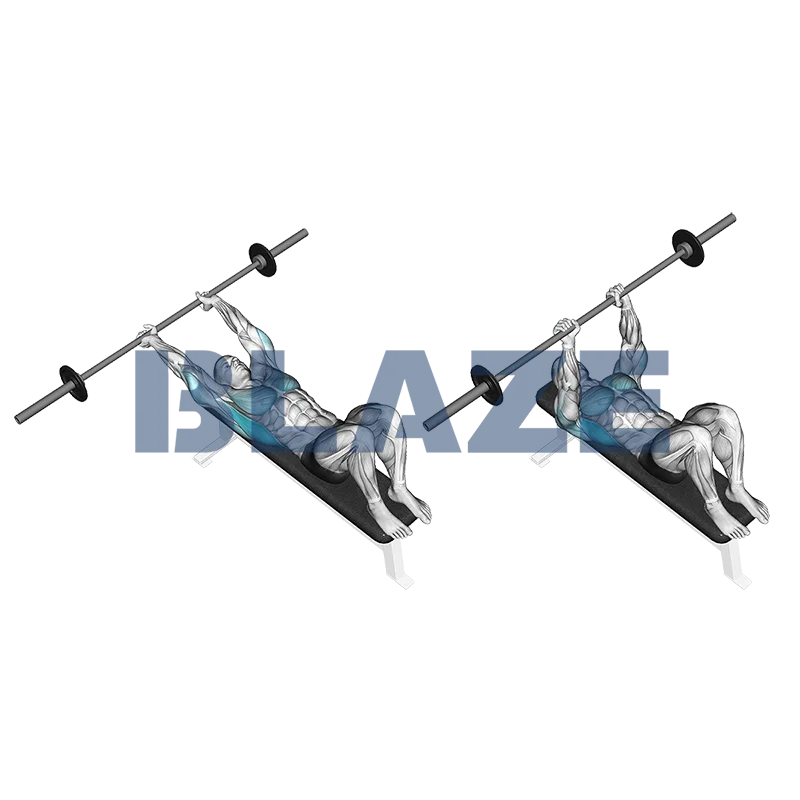
Pullover with barbell (declined)
The barbell declined pullover is an effective exercise that targets multiple muscle groups including the chest, lats, triceps, and core. This movement is beneficial for increasing upper body strength, enhancing muscle definition, and improving overall flexibility. Athletes can profit from this exercise as it promotes a greater range of motion and adds variation to traditional chest and upper body workouts. The decline angle intensifies the workout, making it ideal for building upper body endurance and stability. Incorporating this exercise can lead to improved athletic performance and functional strength.
| Primary muscle group: | Chest |
| Exercise type: | Barbell |
| Exercise goal: | Strength |
| Key metric: | Weight |
Community Averages
Popularity
* Based on data from the Blaze community
Description
- 1Position a loaded barbell on the floor at the head end of a decline bench.
- 2Lie on your back on the decline bench and secure your feet under the foot pads.
- 3Grasp the barbell with a narrow overhand grip and lift it up from above your head, extending your arms.
- 4Inhale and slowly lower the barbell in a semicircular motion, keeping your elbows slightly bent and feeling a stretch under your arms.
- 5Exhale and reverse the motion, pressing the barbell back up over your chest.Repeat the exercise for the recommended number of repetitions.
Tips & Tricks
Correct Grip Width: Use a grip that is slightly wider than shoulder-width. This helps maintain optimal tension on the chest and lats and improves control.
Shoulder and Elbow Position: Focus on keeping your elbows slightly bent and fixed throughout the movement. This reduces undue stress on the elbows and shifts the workload to the chest and lats.
Control the Weight: Avoid using excessively heavy weights. Focus on controlled, slow movements to maximize muscle engagement and minimize the risk of injury.
Body Positioning: Ensure your back stays firmly pressed against the decline bench, and avoid arching your back to maintain good form and protect your spine.
Range of Motion: Aim to lower the barbell until you feel a strong stretch in your chest and lats without compromising form. Going too far down can strain the shoulders.
Breathing Technique: Inhale deeply as you lower the barbell and exhale as you raise it back to the starting position. Proper breathing aids in maintaining rhythm and stability.
Warm-Up and Stretch: Effective warm-ups and stretches for the chest, shoulders, and triceps are crucial to prepare your muscles and optimize performance.
Spotter Assistance: Use a spotter when handling heavier weights to ensure safety and assist in maintaining proper form throughout the exercise.
Focus on Technique: Instead of focusing solely on the number of reps, prioritize perfecting your technique. Consistent, high-quality reps will yield better results than higher volumes with poor form.
Mind-Muscle Connection: Concentrate on feeling the stretch and contraction in your chest and lats throughout the exercise to enhance muscle activation.
Track in the Blaze App
Download Blaze Workout Tracker to log this exercise with sets, reps, and progress tracking.