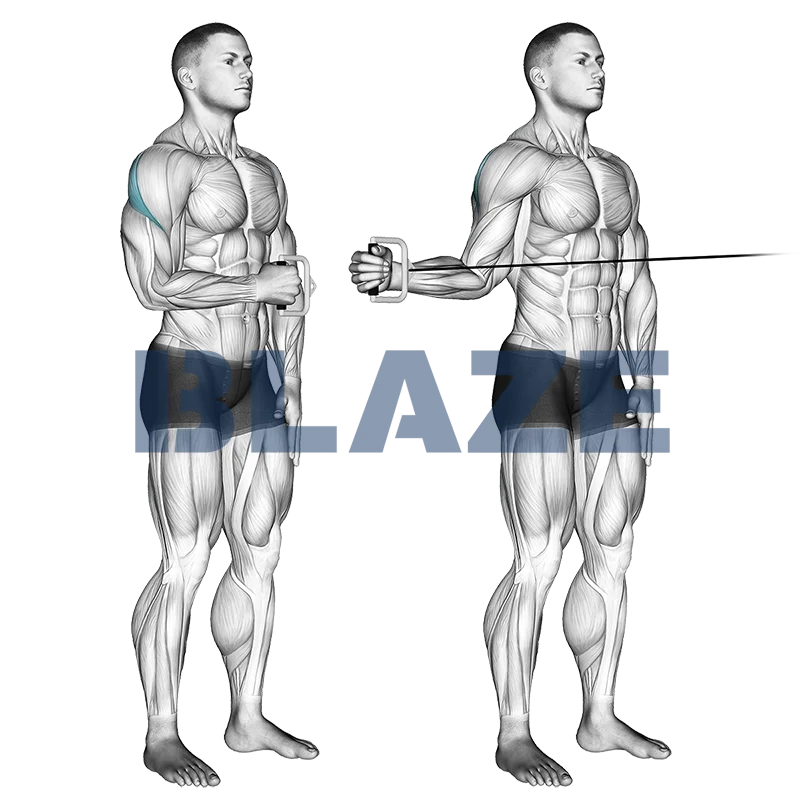
External shoulder rotation with cable
Standing shoulder external rotation with cable is a valuable exercise for athletes aiming to enhance shoulder stability and strength. By focusing on the rotator cuff muscles, particularly the infraspinatus and teres minor, this exercise promotes balanced shoulder functionality. The controlled external rotation aids in improving posture and reducing the risk of shoulder injuries, making it essential for overhead athletes like swimmers, pitchers, and tennis players. Enhanced shoulder durability and strength can lead to better performance and longevity in sports activities.
| Primary muscle group: | Shoulders |
| Exercise type: | Cable |
| Exercise goal: | Strength |
| Key metric: | Weight |
Community Averages
5kg
Avg. weight
10lbs
Avg. weight
Popularity
* Based on data from the Blaze community
Description
- 1Load the cable machine with an appropriate weight and set the pulley to elbow-height. Stand facing the machine with your side towards the pulley, and grab the stirrup handle with your far arm.
- 2Keep your elbow locked by your side and position your forearm across your belly, ensuring that your arm is bent at a 90-degree angle.
- 3Engaging your core, exhale as you pull the cable away from your body by externally rotating your shoulder. Hold this position for a count of two.
- 4Inhale as you slowly return your forearm to the starting position, keeping your elbow locked by your side.
- 5Repeat the exercise for the desired number of repetitions.
- 6Switch sides and repeat the exercise with your opposite arm.
- 7Remember to maintain proper form and control throughout the exercise.
Tips & Tricks
Align Your Upper Arm: When performing this exercise, keep your upper arm close to your body. This helps to focus the movement on your shoulder rotator muscles and reduces the risk of shoulder joint strain.
Use a Light Weight: It's essential to start with a light weight to ensure you are using the correct muscles and maintaining proper form. As this is an isolation exercise targeting the small rotator cuff muscles, too much weight can compromise technique and lead to injury.
Maintain a Neutral Spine: Keep your back straight and avoid leaning to either side or arching your back. This helps in stabilizing your core and ensures that the movement is isolated to the shoulder joint.
Controlled Movements: Perform the exercise slowly and under control, both during the concentric (outwards) and eccentric (return) phases. This maximizes muscle engagement and minimizes the risk of injury.
Elbow Position: Keep your elbow bent at a 90-degree angle throughout the exercise. This ensures that the shoulder, not the elbow or wrist, is driving the movement.
Avoid Jerk Movements: Don’t jerk or hunch your shoulders during the exercise. Smooth, deliberate movements are crucial to properly engaging your rotator cuff muscles.
Breathing Technique: Exhale as you externally rotate the shoulder, and inhale as you return to the starting position. Proper breathing helps stabilize your core and supplies your muscles with necessary oxygen.
Mirror Check: If possible, perform the exercise in front of a mirror. This allows you to ensure that your form and alignment are correct and consistent throughout the exercise.
Keep the Cable Tight: Make sure the cable has tension on it at the start of the exercise. This ensures consistent resistance throughout the range of motion.
Frequency and Volume: Because the rotator cuff muscles are small and easily fatigued, it's typically more effective to focus on higher repetitions with lighter weights than heavy, low-rep sets. This helps build endurance and stability in your shoulder joints.
Track in the Blaze App
Download Blaze Workout Tracker to log this exercise with sets, reps, and progress tracking.