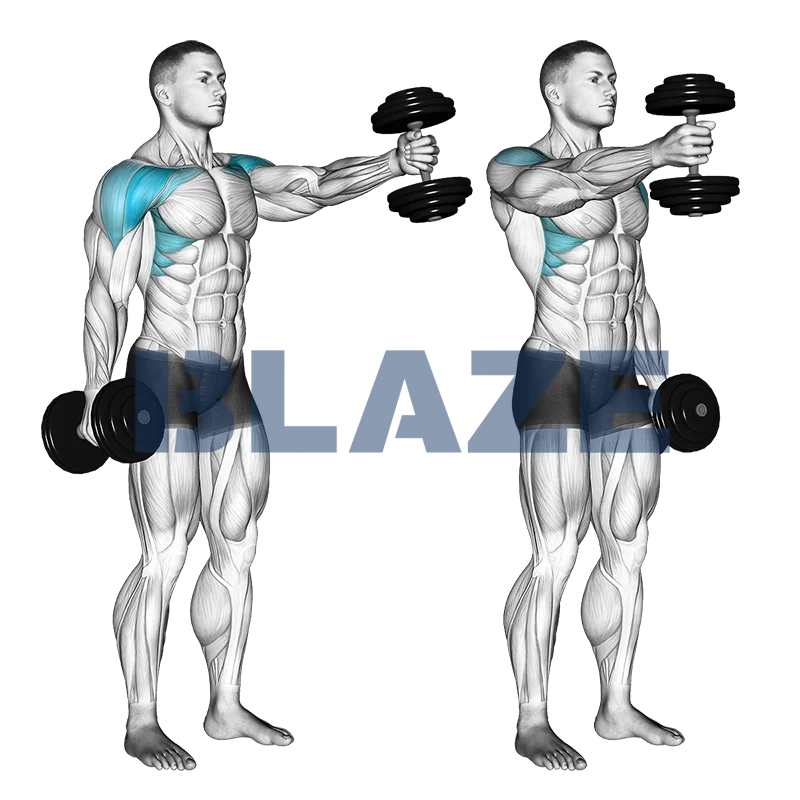
Front raise with dumbbells (alternating)
The dumbbell alternate front raise is a valuable exercise for athletes aiming to enhance upper body strength and stability. This exercise primarily targets the deltoid muscles, with secondary activation of the pectorals, biceps, and trapezius. Athletes benefit from improved shoulder mobility, enhanced muscular endurance, and superior posture, which are crucial for overall performance and injury prevention. Additionally, the alternating motion helps in developing balanced muscle symmetry, making it ideal for athletes looking for comprehensive upper body conditioning.
| Primary muscle group: | Shoulders |
| Exercise type: | Dumbbell |
| Exercise goal: | Strength |
| Key metric: | Weight |
Community Averages
7kg
Avg. weight
16lbs
Avg. weight
Popularity
* Based on data from the Blaze community
Description
- 1Stand holding a dumbbell in each hand, with your elbows slightly bent and the dumbbells resting on the front of your thighs.
- 2Keep your core engaged and maintain a neutral spine throughout the exercise.
- 3Exhale as you raise your right arm in front of you, keeping your elbow slightly bent, until it is at least parallel to the floor.
- 4Hold for a count of two, focusing on contracting your shoulder muscles.
- 5Inhale as you lower your right arm back to the starting position, maintaining control.
- 6Repeat the same movement with your left arm, focusing on maintaining proper form and control.
- 7Continue alternating your arms, raising one after the other once it has been fully lowered.Gradually increase the weight of the dumbbells as you become more comfortable and stronger.
Tips & Tricks
Control Your Movement: Focus on a slow and controlled motion. Avoid using momentum to lift the dumbbells, which ensures you're engaging the intended muscle groups effectively.
Mind Your Posture: Keep your back straight, chest up, and core engaged throughout the exercise. This helps prevent strain on your lower back and maintains proper alignment.
Grip and Wrist Position: Keep a firm but not overly tight grip on the dumbbells. Maintain a neutral wrist position, avoiding bending them too far forward or backward to reduce the risk of injury.
Arm Height: Raise your arms to about shoulder level or slightly above. Going higher can place unnecessary stress on your shoulders and increase the risk of injury.
Focus on the Deltoid: As you lift each dumbbell, concentrate on using your deltoid muscles rather than your traps or other surrounding muscles to maximize the effectiveness of the exercise.
Alternating Style: Performing the raises in an alternating fashion helps maintain balance and ensures both sides are worked equally. This can also assist in minimizing fatigue more effectively than simultaneous raises.
Breathing Technique: Inhale as you lower the dumbbells and exhale as you raise them. Proper breathing helps stabilize your core and maintain rhythm.
Avoid Swinging: To keep the movements strict and isolated to the shoulder muscles, avoid swinging your body or the weights. Stand tall and use only your shoulders to lift.
Weight Selection: Start with a moderate weight that you can control well. Choosing too heavy a weight can compromise form and increase the risk of injury.
Rest Periods: Ensure adequate rest between sets to maintain good form and prevent overexertion. Modified duration of rest based on your fitness goals can help in muscle growth and endurance.
Foot Position: Keep your feet shoulder-width apart to provide a stable base. This will help you maintain balance and proper posture throughout the range of motion.
Track in the Blaze App
Download Blaze Workout Tracker to log this exercise with sets, reps, and progress tracking.