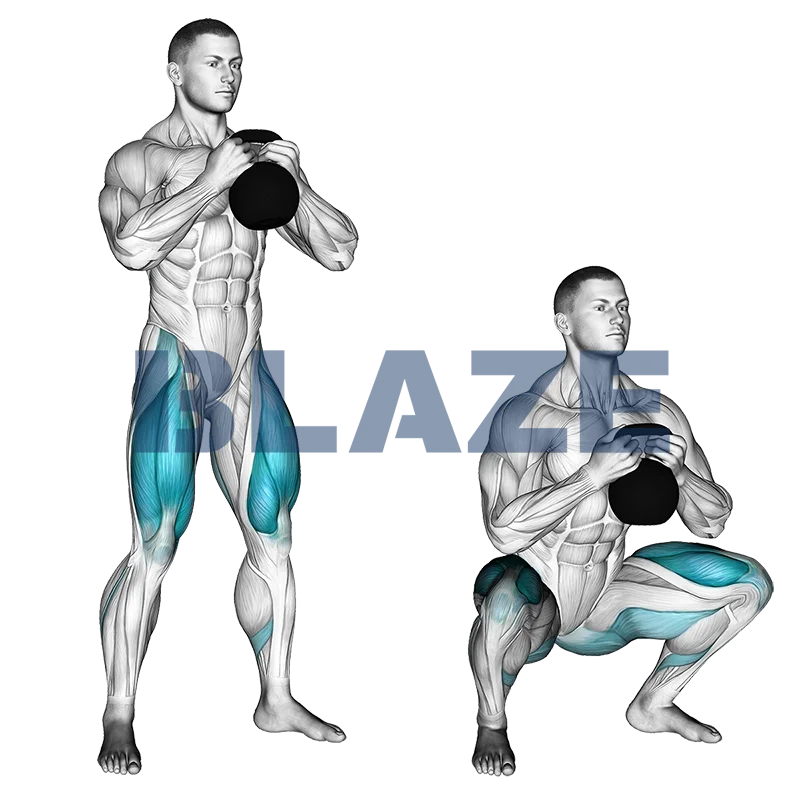
Goblet squat with kettlebell
The goblet squat is a versatile exercise offering numerous benefits, including enhanced core stability, improved lower body strength, and better posture. This exercise primarily targets the quadriceps, glutes, and hamstrings, while also engaging the core and upper back muscles. Athletes can profit significantly from goblet squats as they improve functional movement patterns, enhance athletic performance, and reduce the risk of injury. The exercise's ability to build strength and endurance in key muscle groups makes it an excellent addition to any training regimen.
| Primary muscle group: | Legs |
| Exercise type: | Kettlebell |
| Exercise goal: | Strength |
| Key metric: | Weight |
Community Averages
16kg
Avg. weight
36lbs
Avg. weight
Popularity
* Based on data from the Blaze community
Description
- 1Starting Position: Stand with your feet shoulder-width apart, holding a light kettlebell by the horns close to your chest.
- 2Squat Down: Lower your body into a squat by bending your knees and hips. Your hamstrings should touch your calves. Keep your chest and head up, and your back straight.
- 3Knee Push: At the bottom of the squat, pause and use your elbows to gently push your knees outwards.
- 4Return Up: Straighten your legs to return to the starting position.
- 5Repeat for the desired number of reps.
Tips & Tricks
Maintain an Upright Torso: Keep your chest up and your back straight. Imagine you are trying to keep your sternum pointing forward throughout the movement.
Proper Foot Positioning: Place your feet shoulder-width apart or slightly wider, ensuring your toes are pointing slightly outward. This will help maintain balance and engage the right muscle groups.
Grip the Kettlebell Correctly: Hold the kettlebell close to your chest with both hands, ensuring it's secure. This helps to keep the weight controlled and centered.
Knees Tracking: Ensure your knees are tracking over your toes during the descent. Avoid letting them cave inward, which can increase the risk of injury.
Depth of the Squat: Aim to lower your hips until they are at least parallel with your knees. Go deeper if your flexibility allows, but avoid compromising form.
Engage Your Core: Tighten your core muscles throughout the movement. This will provide better stability and reduce strain on your lower back.
Drive Through Heels: On the ascent, push through your heels rather than your toes. This will activate your glutes and hamstrings more effectively.
Controlled Movement: Perform the exercise in a controlled manner. Avoid bouncing at the bottom of the squat; instead, use a steady pace to maximize muscle engagement.
Breathing Technique: Inhale deeply as you lower into the squat and exhale as you push back up. This helps with maintaining a steady rhythm and proper core engagement.
Progress Gradually: Start with a lighter kettlebell to get the form right and gradually increase the weight as you become more comfortable and confident with the movement.
Track in the Blaze App
Download Blaze Workout Tracker to log this exercise with sets, reps, and progress tracking.