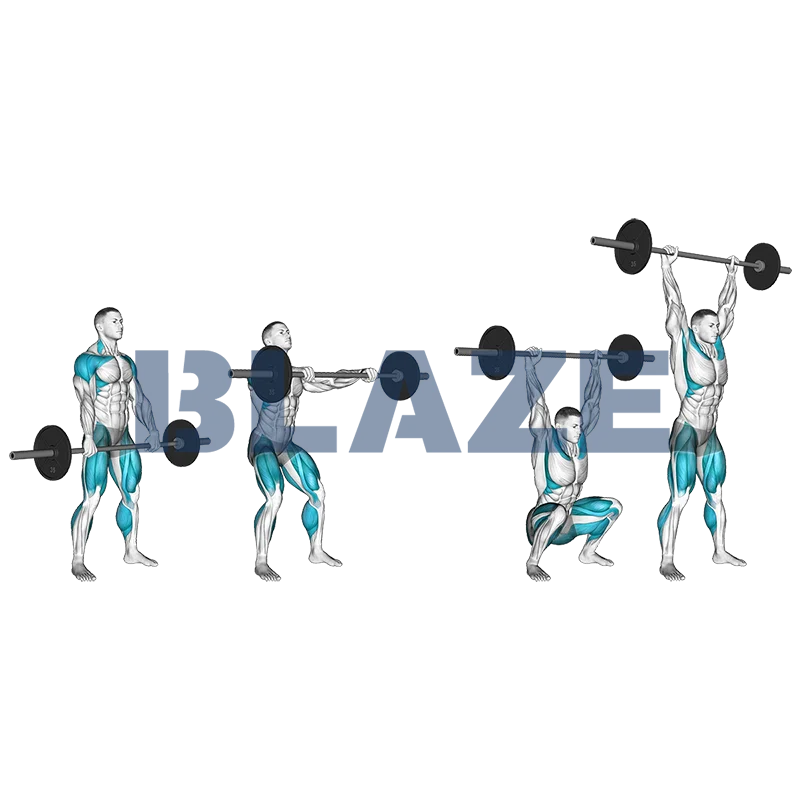
Hang snatch with barbell
The hang snatch with barbell is a dynamic Olympic lift that benefits athletes by enhancing explosive power, speed, and agility. This exercise primarily activates the glutes, quadriceps, hamstrings, deltoids, and traps, while also engaging the core for stability. Athletes profit from the Hang Snatch through improved vertical jump, sprint performance, and overall functional strength. Its compound nature promotes neuromuscular coordination, making it excellent for sport-specific training and injury prevention. Suitable for advanced lifters, it enhances peak athletic performance.
| Primary muscle group: | FullBody |
| Exercise type: | Barbell |
| Exercise goal: | Strength |
| Key metric: | Weight |
Community Averages
Popularity
* Based on data from the Blaze community
Description
- 1Starting Position: Stand with feet shoulder-width apart, toes turned slightly outward. Grip the barbell with a wide, overhand or hook grip. Keep your knees slightly bent, torso inclined forward, spine straight, and head facing forward. Position the bar at hip level.
- 2Initial Pull: Initiate the movement by forcefully extending through your legs and hips.
- 3High Pull: At the peak of your extension, shrug your shoulders and allow your elbows to bend outward.
- 4Catch Phase: Quickly move your feet into a receiving position and pull yourself under the bar, keeping it elevated overhead. Aim to catch the bar in a deep squat with arms fully extended above you.
- 5Stand Tall: Stabilize the bar overhead, then push through your heels to stand up straight.
- 6Lower the Bar: Carefully lower the bar to the ground in a controlled manner.
- 7Repeat the movement for the desired number of repetitions.
Tips & Tricks
Focus on Form: Make sure to keep the bar close to your body throughout the movement. This helps maintain control and optimizes power transfer.
Master the Setup: Start with the barbell at mid-thigh height with a strong grip, maintaining a neutral spine. Proper setup is crucial for effective execution.
Engage Your Core: A strong core ensures stability and helps protect your lower back during the lift. Engage your abdominal muscles throughout the movement.
Drive Through Your Legs: Use your legs to generate power for the lift. Drive through your heels and extend your hips explosively.
Practice the Triple Extension: Work on extending your hips, knees, and ankles simultaneously in a powerful, coordinated motion to generate maximum lift.
Maintain Bar Path: The bar should travel in a straight line as much as possible. Focus on controlling the bar path to avoid unnecessary swaying or swinging.
Controlled Descent: After achieving the snatch position, lower the barbell in a controlled manner. This helps minimize the risk of injury and maintains good form.
Use Proper Footwear: Wear shoes with a flat, stable sole to ensure proper balance and traction during the lift.
Warm-Up Thoroughly: Ensure your muscles are warm and flexible before attempting the hang snatch. Dynamic stretches and mobility exercises can help prepare your body.
Start with Lighter Weights: Begin with lighter weights to perfect your technique before progressing to heavier loads. This reduces the risk of injury and ensures proper form.
Regularly Film Your Lifts: Recording your lifts can help you identify areas for improvement. Analyze footage to correct form and enhance performance.
Seek Feedback: Don't hesitate to ask for feedback from experienced lifters or coaches. Their insights can be invaluable for improving your technique.
Track in the Blaze App
Download Blaze Workout Tracker to log this exercise with sets, reps, and progress tracking.