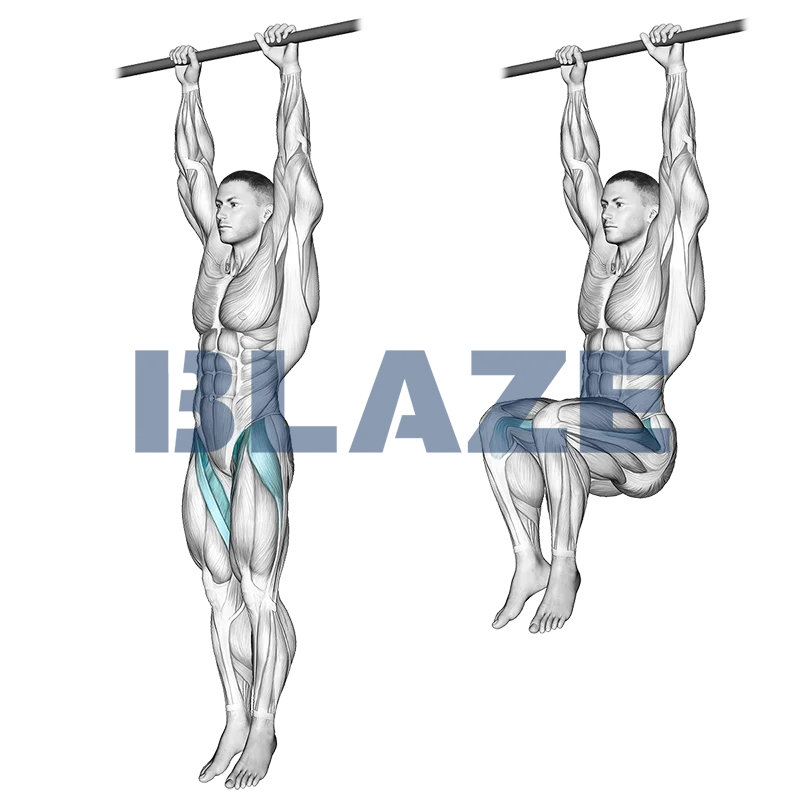
Hanging knee raise
The hanging leg and hip raise is a potent exercise for developing core strength and stability. This movement primarily targets the lower abdominal muscles, hip flexors, and obliques, while also engaging the upper body, including shoulders and grip muscles for stabilization. Its dynamic nature improves overall core conditioning and functional strength. Athletes benefit from enhanced midsection endurance and injury prevention, crucial for performance in sports requiring rotational power, stability, or agility. This exercise aids in sculpting a stronger, more resilient core, benefiting athletic performance and daily activities.
| Primary muscle group: | Legs |
| Exercise type: | Bodyweight |
| Exercise goal: | Strength |
| Key metric: | Repetitions |
Community Averages
12
Avg. reps/set
Popularity
* Based on data from the Blaze community
Description
- 1Hang from a bar using a shoulder-width pronated grip. Your feet must not touch the ground.
- 2Straighten your lower back and try not to arch your back.
- 3Exhale as you slowly raise your knees until your thighs form a 90 degree angle with your calves. Keep your body still and legs together during the motion.
- 4Inhale as you slowly lower your knees to the starting position.
- 5You have completed your first repetition. Repeat the motion in a controlled way and count your reps.
Tips & Tricks
Grip Strength: Ensure your grip is secure on the bar. If grip strength is an issue, consider using lifting straps to maintain your hold.
Controlled Movements: Perform the exercise in a slow and controlled manner. Focus on using your abdominal muscles to lift your knees, not just swinging your legs.
Engage Core: Keep your core tight throughout the movement. Engaging your core will help maintain stability and improve effectiveness.
Avoid Momentum: Prevent your body from swinging by avoiding the use of momentum. This ensures that your abs are doing the work, not the motion of your legs.
Range of Motion: Bring your knees as high as you can comfortably manage while maintaining form. Ideally, your thighs should reach a position parallel to the floor or higher.
Breathing: Exhale as you lift your knees towards your chest and inhale as you lower them back down. Proper breathing helps maintain rhythm and control.
Elbow Position: Avoid locking your elbows completely. Keeping a slight bend in your elbows reduces strain on your joints and engages your muscles more effectively.
Leg Positions: For added challenge, vary your routine by trying different leg positions, such as alternating sides or extending your legs out straight.
Pelvic Tilt: For greater lower abdominal engagement, incorporate a slight posterior pelvic tilt at the top of the movement.
Progress Gradually: If you're a beginner or find the exercise too challenging, start with bent-knee raises before progressing to straight-leg raises as your strength improves.
Consistency: Consistency is key. Regularly include the hanging knee raise in your workout routine to see progress in strength and muscle definition.
Track in the Blaze App
Download Blaze Workout Tracker to log this exercise with sets, reps, and progress tracking.