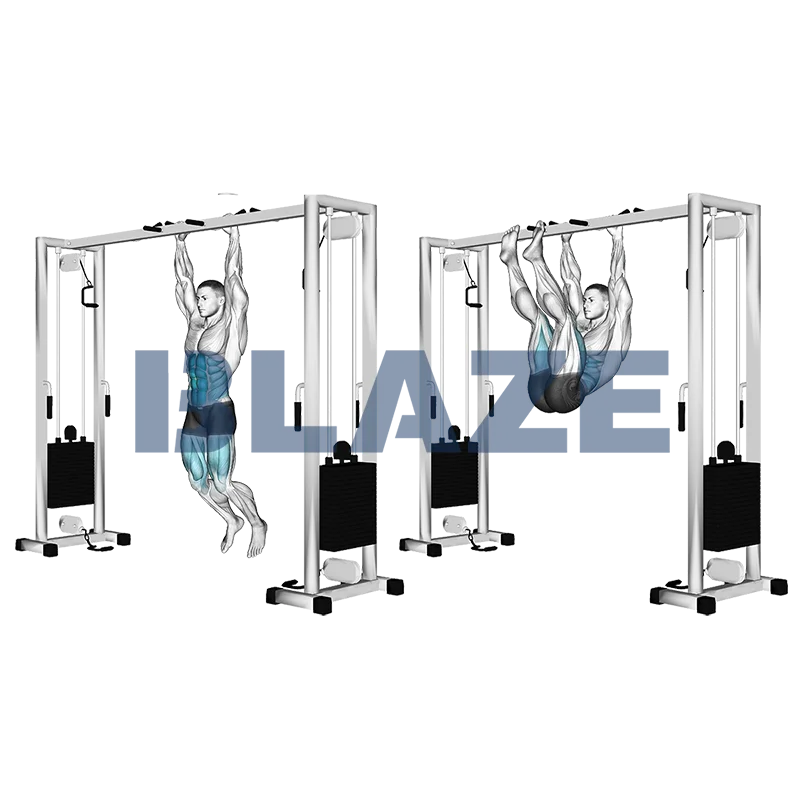
Hanging straight leg and hip raise
The hanging straight leg and hip raise is a powerful core exercise that significantly strengthens the abdominal muscles, particularly the lower abs, while also engaging the hip flexors, obliques, and stabilizing muscles in the shoulders and back. This exercise can enhance an athlete's core stability, improve overall strength, and aid in injury prevention. It’s particularly beneficial for athletes as it enhances explosive power, improves posture, and boosts balance and agility, all critical components in a wide array of sports and physical activities.
| Primary muscle group: | Core |
| Exercise type: | Bodyweight |
| Exercise goal: | Strength |
| Key metric: | Repetitions |
Community Averages
10
Avg. reps/set
Popularity
* Based on data from the Blaze community
Description
- 1Hang from a high bar with your hands shoulder-with apart, your arms fully extended, and your legs hanging straight down.
- 2Straighten your lower back by tilting your pelvis backward.
- 3Slowly raise your legs as high as possible by flexing your hips and abdomen. Exhale.
- 4Hold for a count of two.
- 5Lower your legs to the starting position while inhaling.
- 6Repeat for desired number of repetitions
Tips & Tricks
Warm Up: Always ensure you have warmed up properly before attempting this exercise. Focus on dynamic stretches for your core and hip flexors.
Grip Strength: A strong grip is essential. Consider using grip enhancements like chalk or wrist straps if your grip gives out before your core does.
Controlled Movements: Focus on slow and controlled movements rather than using momentum. This will engage your core muscles more effectively.
Breathing: Exhale as you lift your legs and hips, and inhale as you lower them down. Proper breathing can enhance your performance and stability.
Engage Your Core: Actively engage your core muscles throughout the movement to avoid swinging and to maintain better control.
Leg Position: Keep your legs as straight as possible throughout the exercise. Slightly bending your knees is acceptable if your flexibility doesn't allow perfectly straight legs, but strive for improvement.
Focus on Hips: Ensure that you are lifting your hips as well as your legs to maximize the exercise's effectiveness. This motion targets your lower abs intensely.
Avoid Swinging: Minimize swinging by stabilizing your body. A small amount of movement is normal, but excessive swinging can reduce the exercise's effectiveness.
Starting Point: Begin with a slightly tucked pelvis for a better starting position and enhance engagement of the lower abs right from the get-go.
Leg Height: Aim to get your legs at least parallel to the floor. Lifting them higher engages more of your core, but ensure you can do so without compromising form.
Consistent Practice: Incorporate this exercise into your routine regularly. Progress might be slow, but consistency will yield significant core strength over time.
Listen to Your Body: If you feel any pain (beyond standard muscle fatigue), stop immediately. Assess your form or consider modifying the exercise until you build more strength.
Progressive Overload: Just like any other muscle group, your abs will respond well to progressive overload. Gradually increase the difficulty by adding ankle weights when you become more advanced.
Super Sets: Combine hanging leg raises with other core exercises such as planks or Russian twists for a super set to maximize core activation.
Track in the Blaze App
Download Blaze Workout Tracker to log this exercise with sets, reps, and progress tracking.