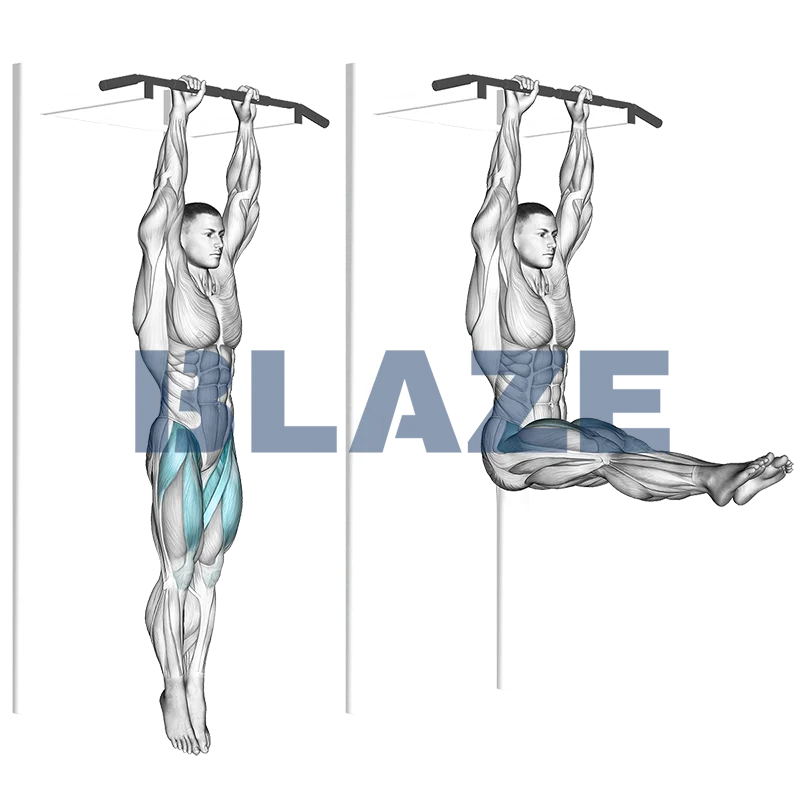
Hanging straight leg raise
The hanging straight leg raise is an effective core exercise targeting the lower abs, hip flexors, and obliques. This exercise improves overall core strength, enhances stability, and increased flexibility in the hip joints. Benefit from improved posture, reduced risk of lower back pain, and enhanced athletic performance. Particularly valuable for athletes in sports requiring explosive lower body movements or strong core stability, such as gymnastics, martial arts, or track and field events. Gain endurance, strength, and a powerful core.
| Primary muscle group: | Legs |
| Exercise type: | Bodyweight |
| Exercise goal: | Strength |
| Key metric: | Repetitions |
Community Averages
9
Avg. reps/set
Popularity
* Based on data from the Blaze community
Description
- 1Grab a secure bar with a shoulder-width pronated grip (overhand grip).
- 2Tilt your pelvis backward to straighten your lower back.
- 3Keep your back and knees straight, and your feet together.
- 4Exhale as you slowly raise your legs by flexing your hips. Hold for two counts.
- 5Inhale as you slowly lower your legs in a controlled manner by extending your hips.
- 6Repeat the exercise.
Tips & Tricks
Warm-up Properly: Start with a dynamic warm-up to prepare your core and hip flexors. Light cardio or dynamic stretching can help.
Grip Strength: Your grip may tire before your abs do. Use chalk or straps if necessary to maintain a firm grip on the bar.
Engage Your Core: Focus on engaging your core muscles throughout the exercise. Imagine pulling your navel toward your spine to keep your abs tight.
Controlled Movements: Avoid swinging your body or using momentum to complete the movement. Perform each leg raise in a slow and controlled manner.
Breathing Technique: Exhale as you raise your legs and inhale as you lower them. Proper breathing can help maintain a steady pace and improve core engagement.
Minimize Leg Bend: Keep your legs as straight as possible to maximize the involvement of your lower abdominal muscles. A slight bend is okay, but strive for straight legs.
Mind Your Range of Motion: Raise your legs as high as you can without compromising form. Ideally, aim to bring your legs parallel to the ground or even higher.
Use Progressions: If the full hanging straight leg raise is too challenging, start with bent knee raises and gradually work towards straight leg raises as your strength improves.
Lower Slowly: The eccentric (lowering) phase is as important as the concentric (raising) phase. Lower your legs slowly to enhance muscle activation and control.
Avoid Swinging: To keep the movement focused on your core, minimize any swinging of your torso. If you start to swing, pause and stabilize before continuing.
Elbow Position: Keep a slight bend in your elbows and make sure they are not flared out too much. This helps maintain a stable hanging position.
Use a Spotter or Assist: If you're new to this exercise, having a spotter or using an assisted pull-up machine can help you get comfortable with the movement.
Consistency is Key: Incorporate the hanging straight leg raise regularly into your core routine. Consistency will lead to better strength and muscle definition over time.
Track in the Blaze App
Download Blaze Workout Tracker to log this exercise with sets, reps, and progress tracking.