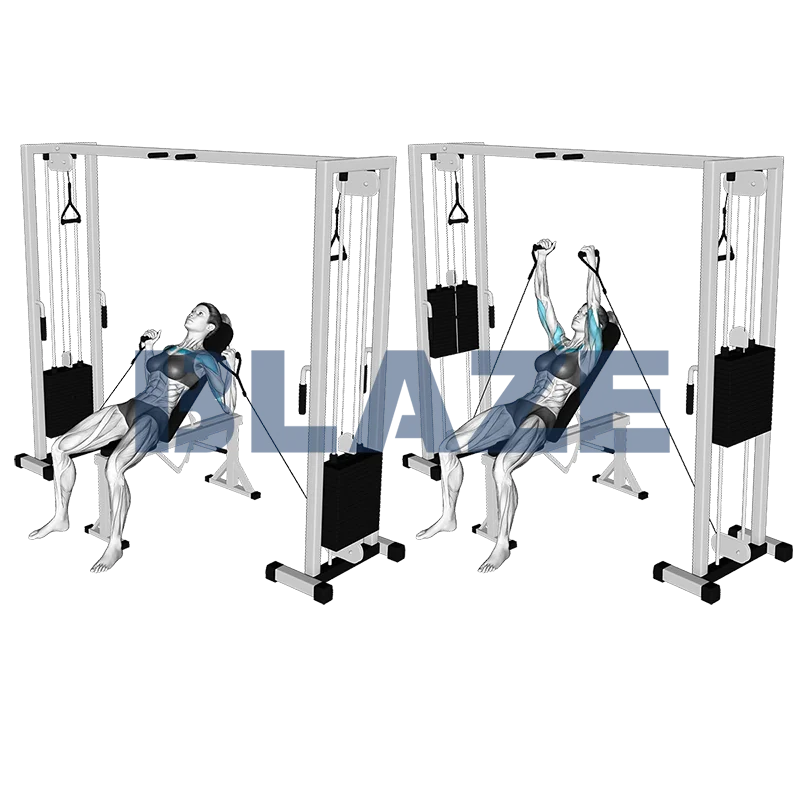
Bench press with cable (inclined)
The cable inclined bench press is a powerful upper body exercise targeting the upper chest, shoulders, and triceps. By using cables, it provides constant tension throughout the movement, enhancing muscle activation and growth. This exercise is beneficial for athletes as it improves upper chest strength and stability, crucial for various sports requiring upper body power. Additionally, the incline position engages the shoulders more intensely, aiding in shoulder strength and endurance, important for activities like swimming, climbing, and overhead sports.
| Primary muscle group: | Chest |
| Exercise type: | Cable |
| Exercise goal: | Strength |
| Key metric: | Weight |
Community Averages
55kg
Avg. weight
122lbs
Avg. weight
Popularity
* Based on data from the Blaze community
Description
- 1Place a bench inclined at a 45 degrees angle between two low cable pulleys.
- 2Grasp both handles and then lie on your back on the bench. Place your feet flat on the floor.
- 3Position the handles to the sides of your chest, with your elbows flexed and slightly tucked into your body.
- 4Exhale as you press the handles upward and inward until they nearly touch at the top of the movement above your head.
- 5Inhale as you lower the handles towards the starting position until you feel a mild stretch in your chest and shoulders.
- 6You have completed your first repetition. Repeat the motion in a controlled way and count your reps.
Tips & Tricks
Positioning: Ensure your bench is set at a 30-45 degree incline. This angle optimally targets the upper chest muscles.
Cable Anchoring: Set the cables to the lowest position. This ensures that the resistance is aligned with the plane of the press, providing constant tension throughout the movement.
Grip and Hand Position: Use a pronated grip (palms facing forward) for this exercise. Your hands should be slightly wider than shoulder-width apart on the handles.
Scapular Retraction: Keep your shoulder blades retracted and pressed against the bench. This helps in maintaining a stable upper body and focuses the workout on your pecs rather than your shoulders.
Controlled Movement: Perform the exercise with slow, controlled movements. Avoid jerking or using momentum to lift the weight. This maximizes muscle engagement and reduces the risk of injury.
Full Range of Motion: Lower the handles until they are at chest level, but do not let them rest or touch your chest. Fully extend your arms while pressing up, but avoid locking the elbows to keep tension on the muscles.
Breathing Technique: Inhale as you lower the handles towards your chest and exhale as you press them back up. Proper breathing aids in maintaining rhythm and control.
Core Engagement: Keep your core muscles engaged throughout the exercise. This not only supports your lower back but also helps in maintaining proper form.
Mind-Muscle Connection: Focus on your pectoral muscles while performing the exercise. Visualizing the muscle contraction can improve the efficiency and effectiveness of the workout.
Progressive Overload: Gradually increase the resistance or weight as you get stronger. This promotes continuous muscle growth and strength gains.
Avoid Overarching: Do not arch your back excessively. Keep your lower back pressed against the bench to prevent unnecessary strain and potential injury.
Track in the Blaze App
Download Blaze Workout Tracker to log this exercise with sets, reps, and progress tracking.