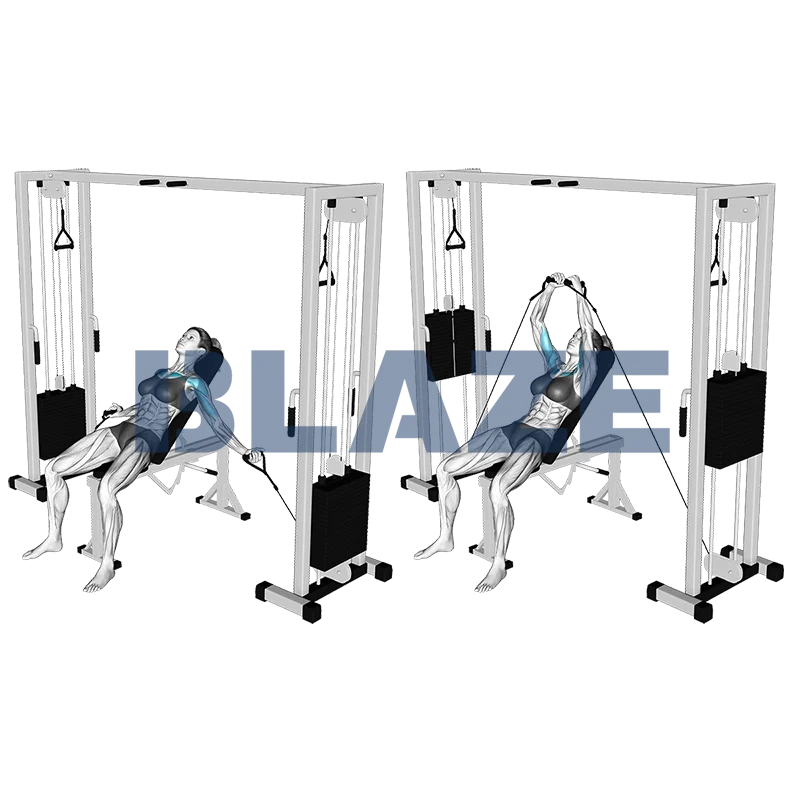
Chest fly with cable (inclined)
The incline chest fly with cable targets the upper chest, deltoids, and triceps. By performing this exercise, athletes can enhance upper body strength, improve muscle definition, and increase overall chest mass. It also promotes better muscle symmetry and stability due to the continuous tension from the cables. Athletes, especially those in sports requiring powerful upper body movements, will benefit from improved performance and reduced injury risk. The incline angle further isolates the upper chest, making it an essential part of a balanced strength training regimen.
| Primary muscle group: | Chest |
| Exercise type: | Cable |
| Exercise goal: | Strength |
| Key metric: | Weight |
Community Averages
24kg
Avg. weight
53lbs
Avg. weight
Rating
* Based on data from the Blaze community
Description
- 1Place a bench inclined at a 45 degree angle between two low cable pulleys.
- 2Lie on your back on the bench, holding one handle in each hand.
- 3Spread your arms out to the sides and slightly bend your elbows.
- 4Rotate your shoulders internally so that your elbows point outwards.
- 5Keep your elbows fixed and press the handles upward and inward in an arc motion until they touch over your chest.
- 6Inhale and bring the handles back to the starting position.
- 7Repeat the exercise.
Tips & Tricks
Proper Setup: Ensure the bench is set at an incline of around 30-45 degrees to effectively target the upper chest muscles.
Mind the Arc: Maintain a smooth, controlled arc throughout the movement. This helps in maintaining tension on the chest muscles and prevents injury.
Grip: Use a neutral grip (palms facing each other) to ensure that your wrists stay straight and to keep the tension on the chest muscles.
Elbow Slightly Bent: Keep your elbows slightly bent throughout the motion. This helps to stabilize the shoulder joint and focus the tension on the chest muscles.
Chest Contraction: Focus on squeezing your chest muscles at the peak of the movement. This enhances muscle engagement and maximizes the effectiveness of the exercise.
Breathing: Exhale as you bring the cables together, and inhale as you return to the starting position. Controlled breathing helps maintain rhythm and control.
Don't Lock Out: Avoid locking out your elbows completely at the top of the movement to keep the tension on the chest muscles rather than transferring it to the joints.
Range of Motion: Ensure a full range of motion, bringing the handles close together at the top to maximize chest contraction, but stop before they touch to keep constant tension.
Slow and Steady: Perform the movement slowly to focus on form and muscle engagement. Rapid or jerky movements can reduce effectiveness and increase injury risk.
Avoid Overextending: Do not let your arms go too far back in the stretched position as it can strain the shoulder joints. Your hands should be in line with your chest or just slightly behind.
Mirror Check: Use a mirror to monitor your form, making sure your arms move symmetrically and you are not compensating with your back or shoulder muscles.
Regular Variation: Incorporate this movement into your routine regularly, but vary the incline angle and combination with other chest exercises to ensure a balanced workout and continuous progress.
Track in the Blaze App
Download Blaze Workout Tracker to log this exercise with sets, reps, and progress tracking.