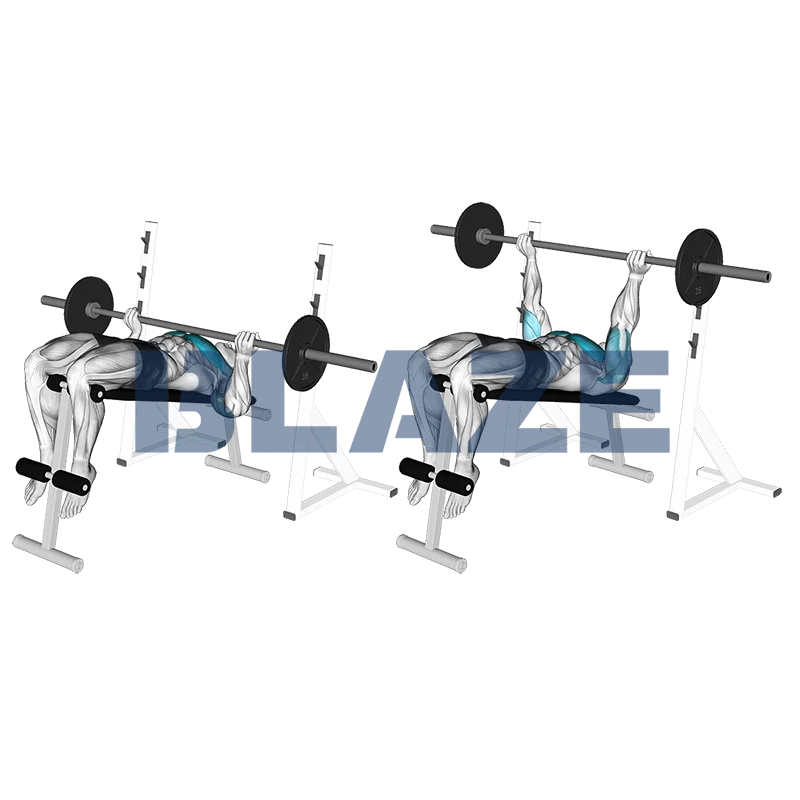
Bench press with barbell and reverse grip (declined)
The barbell declined bench press (reverse grip) is an effective exercise that targets the lower pectoral muscles, triceps, and front deltoids. By using a reverse grip, it shifts the emphasis more towards the upper chest and reduces stress on the shoulders, making it ideal for athletes looking to enhance upper body strength while minimizing injury risk. This variation also engages the biceps as stabilizers, offering a comprehensive upper-body workout. Athletes can benefit from improved chest muscle symmetry, increased pressing power, and enhanced joint stabilization.
| Primary muscle group: | Chest |
| Exercise type: | Barbell |
| Exercise goal: | Strength |
| Key metric: | Weight |
Community Averages
45kg
Avg. weight
100lbs
Avg. weight
Popularity
* Based on data from the Blaze community
Description
- 1Lie with your back on a declined bench. The bar should be on the level of your eyes.
- 2Place your feet firmly on the ground. Grasp the bar with both hands, your hands should be shoulder-width apart. Your palms should be facing you.
- 3Straighten your wrists when holding the barbell and push the bar upwards until your arms are almost fully extended.
- 4Inhale as you lower the barbell to your chest.
- 5Exhale as you press the barbell back up to the starting position.
- 6You have completed your first repetition. Repeat the motion in a controlled way and count your reps.
Tips & Tricks
Hand Position: Ensure your grip is slightly narrower than shoulder width to optimize the engagement of your lower chest and triceps.
Wrist Alignment: Keep your wrists aligned and avoid letting them bend backward, as this can reduce leverage and increase strain on the wrists and forearms.
Controlled Descent: Maintain control during the downward movement. Lower the bar slowly to maximize muscle tension and minimize the risk of injury.
Elbow Path: Focus on keeping your elbows tucked closer to your body, which helps in reducing shoulder strain and emphasizing the lower chest muscles.
Breathing Technique: Inhale deeply as you lower the bar and exhale forcefully as you press it back up. Proper breathing can significantly enhance your lifting performance and stability.
Stabilization: Engage your core muscles and ensure your feet are firmly planted on the floor. This stability helps you exert more force during the pressing motion.
Spotter: Always consider using a spotter, especially when lifting heavy weights. It adds an extra layer of safety and can boost your confidence during the lift.
Warm-Up: Warm up thoroughly with lighter weights before progressing to heavier sets. This prepares your muscles and joints for the workout, decreasing the risk of injuries.
Range of Motion: Ensure full range of motion by lowering the bar until it almost touches your chest and pressing it up until your arms are fully extended without locking the elbows.
Progression: Gradually increase the weight as you become more comfortable and stronger with the movement. Avoid making large jumps in weight to reduce the risk of strain or injury.
Track in the Blaze App
Download Blaze Workout Tracker to log this exercise with sets, reps, and progress tracking.