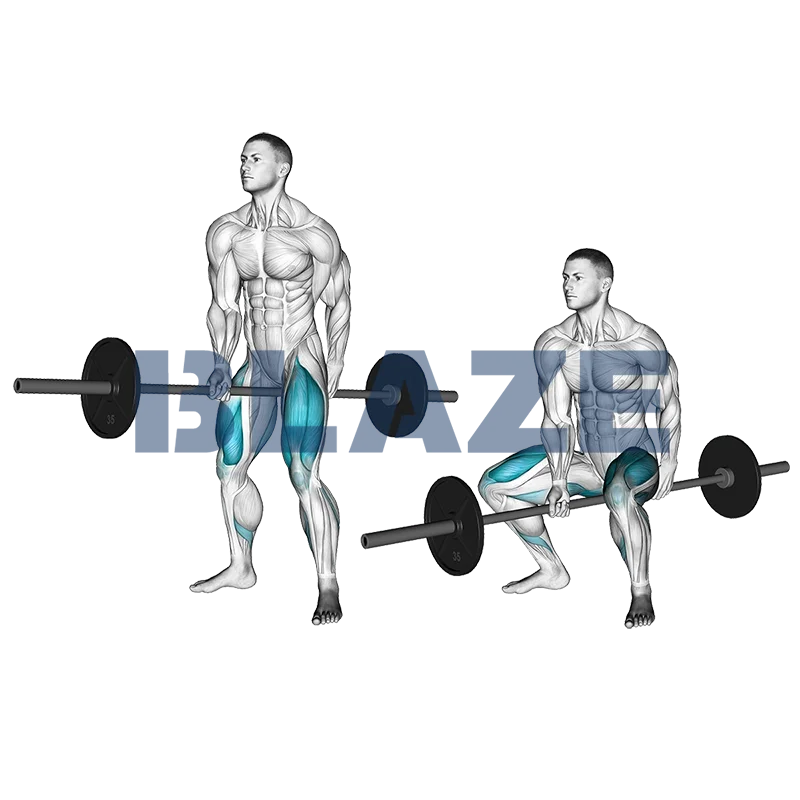
Jefferson squat
The barbell Jefferson squat is a unique and beneficial exercise that targets multiple muscle groups. Primarily, it activates the quadriceps, hamstrings, glutes, and lower back, while also engaging the core and obliques for stabilization. This compound movement enhances lower body strength, improves balance, and boosts core stability. Athletes benefit from the Jefferson Squat by developing unilateral strength, addressing muscle imbalances, and enhancing functional fitness. Its combination of strength and stability elements make it a valuable addition to athletic training programs.
| Primary muscle group: | Legs |
| Exercise type: | Barbell |
| Exercise goal: | Strength |
| Key metric: | Weight |
Community Averages
48kg
Avg. weight
106lbs
Avg. weight
Popularity
* Based on data from the Blaze community
Description
- 1Place a loaded barbell on the floor. Straddle the center of the barbell with your feet shoulder-width apart or wider, and toes slightly pointed outwards.
- 2Squat down and grasp the barbell, placing one hand in front of you and the other hand behind you.
- 3Keeping your chest up and your back straight, inhale as you stand up and lift the barbell between your legs.
- 4While standing, exhale as you squat down until your knees are bent at a 90-degree angle, maintaining a straight back and chest up.
- 5Push through your heels and exhale as you stand back up to the starting position.
- 6Repeat the exercise for the prescribed number of repetitions.
- 7Swap the placement of your hands, placing the hand that was in front behind you and vice versa, and repeat the exercise.
Tips & Tricks
Proper Foot Placement: Experiment with your stance to find what feels most comfortable and stable. Generally, one foot should be slightly ahead of the other. Make sure both feet have a firm grip on the floor.
Bar Handling: Grip the bar firmly with a mixed grip (one hand facing forward and the other hand facing backward). Switch your grip occasionally to ensure balanced muscle development.
Spinal Alignment: Keep your spine neutral throughout the movement. Avoid excessive rounding or arching of your back to prevent injury.
Core Engagement: Engage your core muscles to stabilize your torso and protect your lower back. This also helps generate more power during the lift.
Knee Tracking: Ensure that your knees track in the same direction as your toes. This will help maintain joint integrity and prevent knee injuries.
Controlled Movements: Perform the exercise with control. Avoid jerky or explosive movements, especially when lifting or lowering the barbell.
Depth Matters: Aim to squat down to at least a parallel position where your thighs are parallel to the floor. If your flexibility and strength allow, go deeper while maintaining proper form.
Use Lighter Weights First: Start with lighter weights to master the form. Gradually increase the weight as you become more comfortable and confident with the movement.
Breathing Technique: Inhale deeply as you lower into the squat and exhale forcefully as you push back up. Proper breathing can enhance performance and keep you focused.
Shins and Bar Proximity: Keep the bar close to your shins as you squat down to maintain balance and reduce the risk of injury.
Warm-Up: Perform a proper warm-up that includes dynamic stretches and mobility exercises to prepare your hips, knees, and ankles for the squat.
Consistency and Progress Tracking: Keep track of your weights, sets, and reps. Consistency is key to improving strength and technique in the Jefferson squat.
Track in the Blaze App
Download Blaze Workout Tracker to log this exercise with sets, reps, and progress tracking.