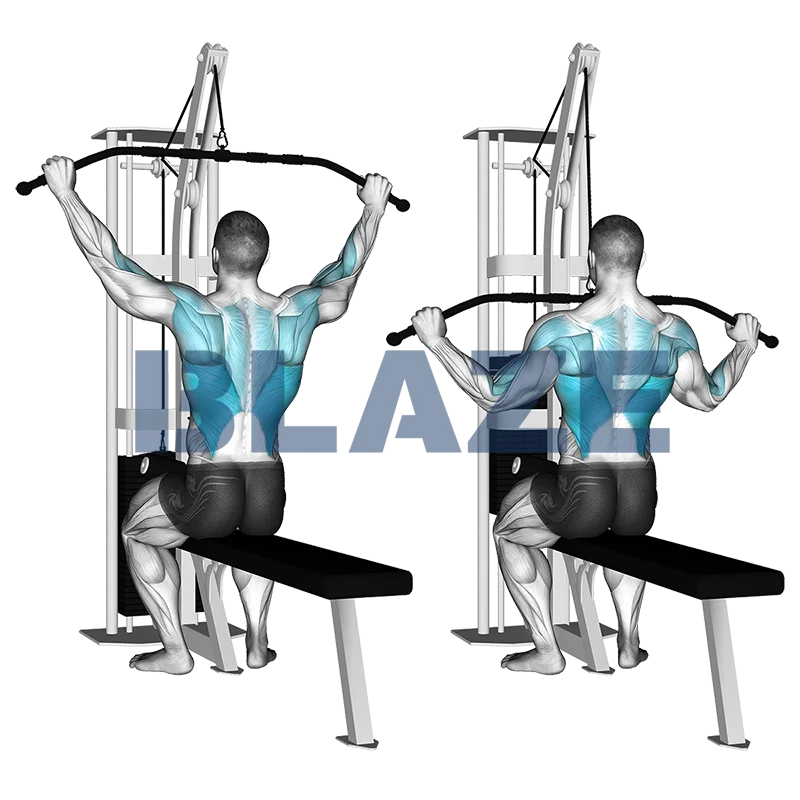
Lat pull down (wide grip)
The cable lat pulldown (wide grip) is an effective exercise for building upper body strength and enhancing muscle definition. This movement primarily targets the latissimus dorsi, but it also engages the biceps, rear deltoids, and upper back muscles. Athletes benefit by developing a powerful and balanced upper body, crucial for activities requiring pulling strength and stability. Additionally, this exercise improves posture and can aid in the prevention of shoulder injuries by bolstering supportive muscles around the joint. A versatile addition to any strength training regimen!
| Primary muscle group: | Back |
| Exercise type: | Cable |
| Exercise goal: | Strength |
| Key metric: | Weight |
Community Averages
45kg
Avg. weight
100lbs
Avg. weight
Popularity
* Based on data from the Blaze community
Description
- 1Choose a weight that you are comfortable with and sit on the lat pull-down machine. Adjust the machine so that your thighs fit under the supports.
- 2Grasp the bar with an overhand grip, with your hands more than shoulder-width apart.
- 3Exhale as you slowly pull the bar down towards your upper chest. Focus on squeezing your shoulder blades together and hold for a count of two.
- 4Inhale as you slowly return the bar to the starting position, keeping your movements controlled.
- 5Repeat this motion for the recommended number of repetitions, keeping proper form and technique throughout the exercise.
Tips & Tricks
Grip Control: Ensure your grip is wide enough to activate your lats effectively but not so wide that it strains your shoulders. A wider grip typically targets the upper part of the lats more intensely.
Elbow Position: As you pull down, focus on bringing your elbows down and back. Avoid letting them flare out to maintain tension on your lats.
Mind-Muscle Connection: Concentrate on contracting your lats as you pull the bar down. This can help enhance muscle activation and growth.
Torso Angle: Keep a slight rearward lean of about 30 degrees to emphasize the lats, but avoid swinging your torso, which can lead to injury and reduce exercise effectiveness.
Controlled Movements: Prioritize a slow, controlled descent to the starting position to maximize muscle tension and control.
Avoid Full Extension: Do not fully extend your arms at the top of the movement to keep constant tension on the lats.
Breathing: Inhale as you let the bar rise and exhale as you pull the bar down. Proper breathing can help maintain core stability and improve performance.
Scapular Movement: Ensure your shoulder blades retract and depress as you pull down. This scapular movement is crucial for proper lat engagement and can help prevent shoulder injuries.
Warm Up: Warm up your shoulder and upper back muscles with dynamic stretches or lighter weight sets to prepare your body for the exercise and reduce the risk of injury.
Avoid Overloading: Ensure the weight allows for full range of motion and proper form. Using too much weight can lead to poor technique and potential injury.
Track in the Blaze App
Download Blaze Workout Tracker to log this exercise with sets, reps, and progress tracking.