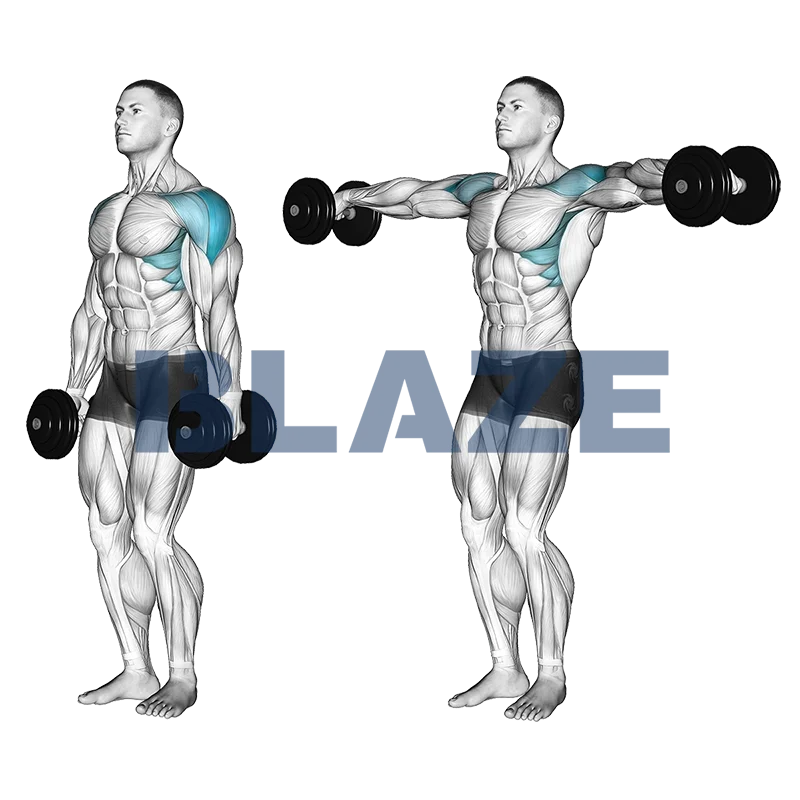
Lateral raise with dumbbells
The dumbbell lateral raise primarily targets the lateral deltoids, providing definition and strength to the shoulders. Additionally, it involves the anterior deltoids, trapezius, and rotator cuff muscles. Benefits include enhanced shoulder width, improved posture, and better shoulder stability, crucial for athletic performance. Athletes profit from this exercise as it contributes to stronger and more balanced shoulder muscles, reducing the risk of injuries and improving overall upper body strength and aesthetics. It's an essential move for building a robust shoulder profile and enhancing athletic capabilities.
| Primary muscle group: | Shoulders |
| Exercise type: | Dumbbell |
| Exercise goal: | Strength |
| Key metric: | Weight |
Community Averages
16kg
Avg. weight
34lbs
Avg. weight
Popularity
* Based on data from the Blaze community
Description
- 1Stand upright and hold a dumbbell in each hand with the dumbbells hanging down by your sides. Keep your elbows slightly bent during the whole exercise.
- 2Exhale as you raise both arms to the sides until your arms form one line with your shoulders.Inhale and lower the dumbbells into the starting position.
- 3You have completed your first repetition. Repeat the motion in a controlled way and count your reps.
Tips & Tricks
Maintain Proper Form: Keep a slight bend in your elbows to reduce the strain on your elbow joints. This will help maintain tension in your shoulder muscles.
Neutral Wrist Position: Keep your wrists in a neutral position-avoid letting them bend forward or backward. This helps to protect your wrists and ensure that the focus remains on your shoulders.
Controlled Movement: Lift and lower the dumbbells slowly and with control. Avoid using momentum to lift the weights, which can reduce the effectiveness of the exercise and increase the risk of injury.
Limit Range of Motion: Raise your arms to shoulder height or just slightly above. Going too high can engage other muscles like the traps and reduce the focus on your deltoids.
Light Weight, High Reps: Use a lighter weight to start with and aim for higher repetitions. This helps to engage the shoulder muscles more effectively and reduces the risk of injury.
Body Position: Keep your back straight and your core engaged throughout the movement to maintain stability and avoid using your lower back to lift the weights.
Breathing Technique: Exhale as you lift the weights and inhale as you lower them. Proper breathing can help you maintain your form and keep your movements controlled.
Steady Feet: Keep your feet shoulder-width apart and avoid shifting your weight or moving your feet during the exercise. This stable base will help you perform the exercise with better control.
Avoid Overreach: Ensure that you are lifting the weights to the side, not forward or backward, to target the lateral deltoid effectively.
Rest and Recovery: Allow your muscles time to recover between sets to prevent overtraining and potential injury.
Track in the Blaze App
Download Blaze Workout Tracker to log this exercise with sets, reps, and progress tracking.