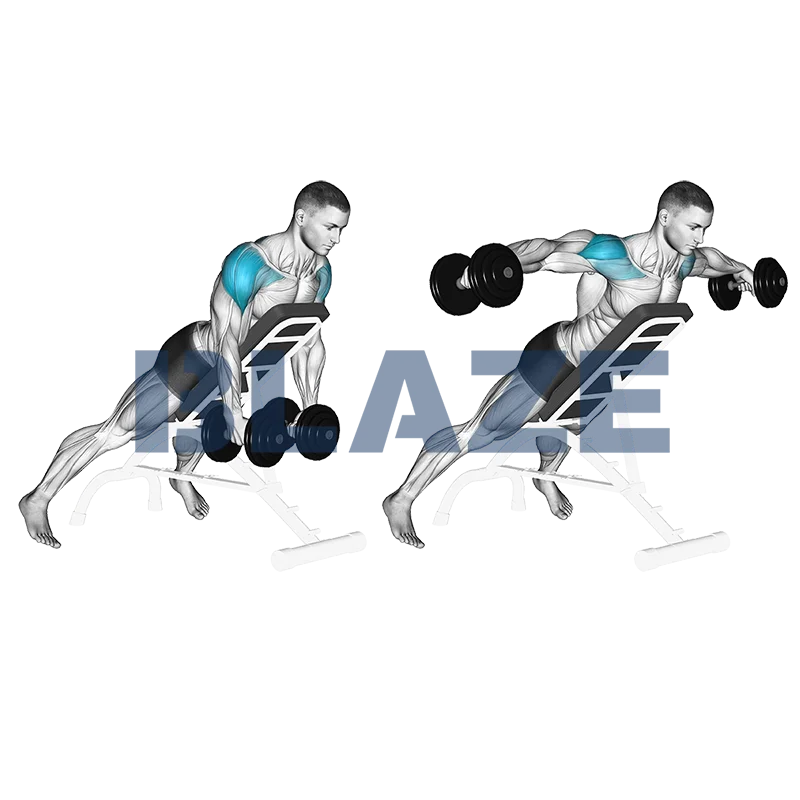
Lateral raise with dumbbells (inclined)
The incline rear lateral raise with dumbbell is a beneficial exercise that targets and strengthens the posterior deltoids, trapezius, and rhomboids. By utilizing an incline bench, this move emphasizes the rear shoulder muscles and upper back, enhancing posture, shoulder stability, and overall upper body strength. Athletes can profit from this exercise as it improves shoulder mobility, reduces the risk of injuries, and balances shoulder muscle development, which is crucial for optimal performance, particularly in sports requiring dynamic upper body movements.
| Primary muscle group: | Shoulders |
| Exercise type: | Dumbbell |
| Exercise goal: | Strength |
| Key metric: | Weight |
Community Averages
19kg
Avg. weight
41lbs
Avg. weight
Popularity
* Based on data from the Blaze community
Description
- 1Adjust bench to a 30 to 45 degree angle. Grab a dumbbell in each hand, sit down on the bench, dumbbells resting on your upper thighs.
- 2Then lie down on the bench with your chest and torso pressed into the bench.
- 3Hold a dumbbell in each hand and let your arms hang down so that they are perpendicular to the inclined part of the bench. This marks your starting position.While you exhale, move your arms backwards by squeezing your shoulder blades. Arms should be slightly bent in the elbows.
- 4Pause shortly once your arms are parallel to the floor. Then return to the starting position.
- 5You have completed your first repetition. Repeat the motion in a controlled way and count your reps.
Tips & Tricks
Engage Your Core: Stabilize your core throughout the movement to maintain proper posture and support your spine. This helps in isolating your shoulder muscles effectively.
Controlled Movement: Focus on slow, controlled movements both on the way up and on the way down. Avoid using momentum to lift the weights as this reduces the effectiveness of the exercise and increases the risk of injury.
Proper Grip: Maintain a firm, yet comfortable grip on the dumbbells. Avoid gripping too tightly as it might lead to unnecessary tension and fatigue in your forearms.
Optimal Incline Angle: Adjust the bench angle to approximately 30-45 degrees to ensure you are targeting the lateral deltoids effectively. Too steep an angle can shift the focus to other muscle groups.
Limit Weight: Start with lighter weights to perfect your form before increasing the load. Remember, this exercise does not require heavy weights to be effective.
Mind-Muscle Connection: Concentrate on engaging your lateral deltoid muscles during the lift. Visualize the muscles working to enhance the efficiency of each rep.
Arm Positioning: Keep a slight bend in your elbows throughout the movement. This helps in reducing strain on your elbow joints and maintaining constant tension on your shoulder muscles.
Breathing Technique: Exhale as you lift the dumbbells to shoulder height, and inhale as you lower them back down. Proper breathing supports overall stability and rhythm.
Range of Motion: Lift the dumbbells to a maximum of shoulder height. Lifting higher can shift stress to your upper traps and reduce effectiveness.
Consistency: Make sure to include this exercise regularly in your routine for balanced shoulder development. Consistency is key in seeing long-term results.
Track in the Blaze App
Download Blaze Workout Tracker to log this exercise with sets, reps, and progress tracking.