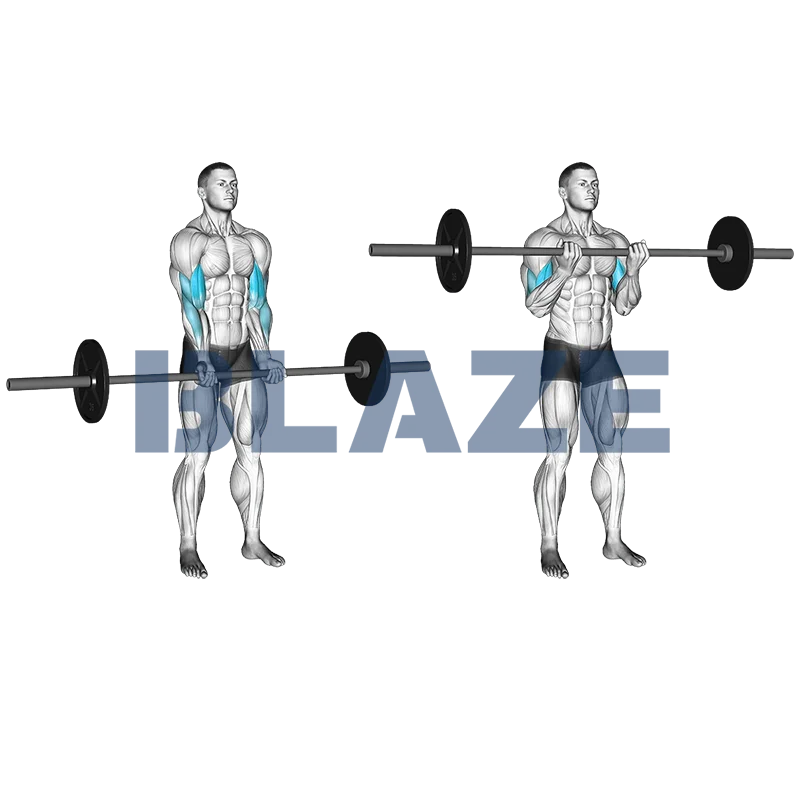
Bicep curl with barbell (close grip)
The barbell standing curl (close grip) primarily targets the biceps brachii, with secondary engagement of the brachialis and brachioradialis. This exercise is excellent for building arm strength and size, as the close grip emphasizes the inner biceps, enhancing muscle peak. Athletes benefit from improved grip strength and forearm stability, which are crucial for various sports. Consistently incorporating this exercise can lead to better functional performance, injury prevention, and overall upper-body strength.
| Primary muscle group: | Arms |
| Exercise type: | Barbell |
| Exercise goal: | Strength |
| Key metric: | Weight |
Community Averages
23kg
Avg. weight
51lbs
Avg. weight
Popularity
* Based on data from the Blaze community
Description
- 1Stand with your feet hip-width apart and slightly bend your knees for stability.
- 2Grasp the barbell with an underhand grip, keeping your palms facing forward. Position your hands under your shoulders and keep your elbows close to your torso.
- 3Exhale and curl the barbell upward in a semicircular motion toward your chin. Focus on using your biceps and avoid swinging the bar. Hold the position briefly once the bar is near your chin.
- 4Inhale and slowly lower the barbell back to the starting position. Prepare for your next repetition.
- 5Repeat these steps for the desired number of reps while maintaining proper form.
Tips & Tricks
Wrist Alignment: Keep your wrists straight and avoid bending them backwards or forwards. This helps to ensure that the pressure remains on the biceps and reduces the risk of wrist injuries.
Elbow Position: Throughout the movement, keep your elbows close to your torso. This minimizes shoulder involvement and ensures maximum engagement of the biceps.
Controlled Movements: Always perform both the lifting and lowering phases of the curl in a slow, controlled manner. This not only prevents the use of momentum but also increases muscle tension and effectiveness.
Grip Width: Use a close grip, typically shoulder-width or narrower. This grip places more emphasis on the inner part of the biceps, which can lead to more balanced upper arm development.
Breathing Technique: Exhale as you curl the barbell up and inhale as you lower it back down. Proper breathing ensures optimal oxygen delivery to your muscles and supports better performance.
Engage Your Core: Keep your core engaged throughout the exercise. This provides better stability and reduces the strain on your lower back.
Avoid Swinging: Avoid using your back or shoulders to swing the barbell up. Focus on isolating your biceps and using only those muscles to complete the movement.
Mind-Muscle Connection: Concentrate on the muscle contraction in your biceps as you lift the barbell. This focus can enhance the effectiveness of the exercise and promote higher muscle activation.
Appropriate Weight: Choose a weight that allows you to perform the exercise with proper form. Too heavy a weight can compromise technique and lead to injury.
Warm Up: Always start with a proper warm-up to get your muscles ready and reduce the risk of injury. Dynamic stretches and lighter sets of curls can prepare your biceps for the heavier work ahead.
Track in the Blaze App
Download Blaze Workout Tracker to log this exercise with sets, reps, and progress tracking.