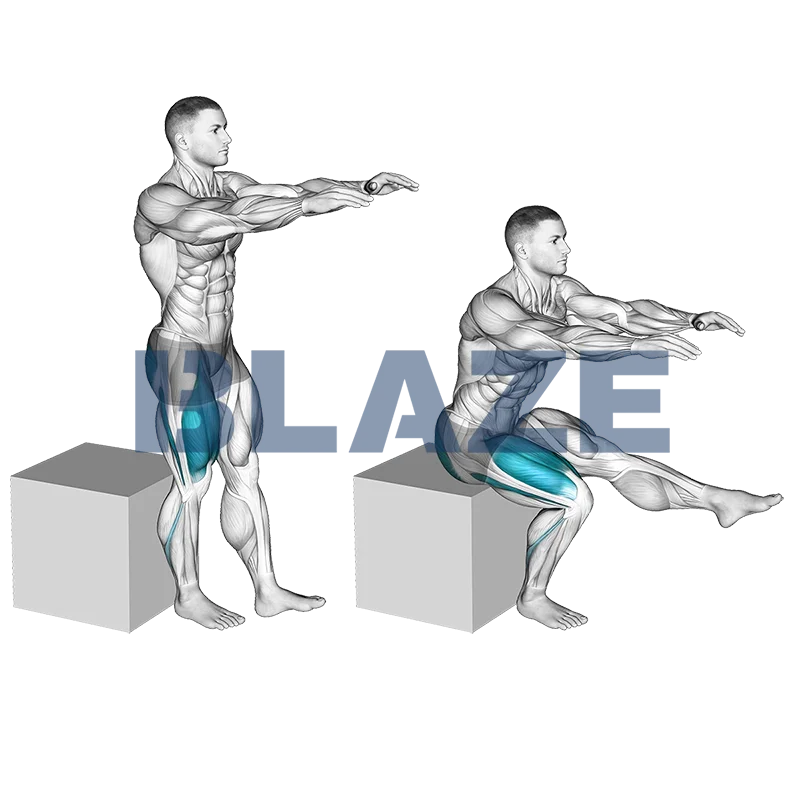
Pistol squat
The pistol squat to box is an advanced lower body exercise that enhances strength, balance, and stability. Key muscles activated include the quadriceps, glutes, hamstrings, and core. By performing the squat on one leg up to a box, athletes can build unilateral strength and correct muscle imbalances. This exercise is beneficial for enhancing athletic performance, improving coordination, and reducing injury risk. Ideal for those looking to boost leg power and stability, it’s a valuable addition to any strength training routine.
| Primary muscle group: | Legs |
| Exercise type: | Bodyweight |
| Exercise goal: | Strength |
| Key metric: | Repetitions |
Community Averages
12
Avg. reps/set
Popularity
* Based on data from the Blaze community
Description
- 1Stand on one leg in front of a box or bench, keeping your non-standing leg hovering in front of you.
- 2Inhale as you slowly squat down on your standing leg, keeping your balance and control.
- 3Lower yourself until your butt touches the box, ensuring you do not sit down or shift your weight onto the box.
- 4Hold the squat position momentarily, then exhale as you stand back up to the starting position.
- 5Complete the prescribed number of repetitions on this leg.
- 6Switch to the opposite leg and repeat the steps for an equal number of repetitions.
Tips & Tricks
Engage Your Core: A strong core is essential for stability and balance during the pistol squat. Keep your core tight throughout the movement.
Use a Box: If you're struggling with full pistol squats, start with a pistol box squat. This allows you to build strength and improve balance gradually.
Elevate Your Heel: Elevating your heel with a small weight plate can help if you have limited ankle mobility, making it easier to maintain balance.
Use Your Arms for Balance: Extend your arms out in front of you as you descend to counterbalance your body and maintain stability.
Control the Descent: Lower yourself slowly and with control to avoid falling or losing balance. This also engages more muscle fibers and increases strength.
Find Your Optimal Foot Position: Experiment with different foot placements to find the position that allows for the best balance and knee tracking.
Use Support: If necessary, hold onto a stable object or use TRX bands for initial support. Gradually reduce assistance as you build strength and balance.
Flexibility is Key: Ensure you have good flexibility in your hip flexors, hamstrings, and ankles. Incorporate stretching and mobility exercises into your routine.
Focus on Breathing: Inhale as you lower yourself and exhale as you push back up. This helps maintain control and provides the body with necessary oxygen.
Practice Single-Leg Strength: Incorporate other single-leg exercises into your routine, such as lunges and Bulgarian split squats, to build the necessary strength for pistol squats.
Consistency is Crucial: Practice regularly and progressively increase the difficulty. Consistent practice will improve muscle memory, strength, and balance.
Track in the Blaze App
Download Blaze Workout Tracker to log this exercise with sets, reps, and progress tracking.