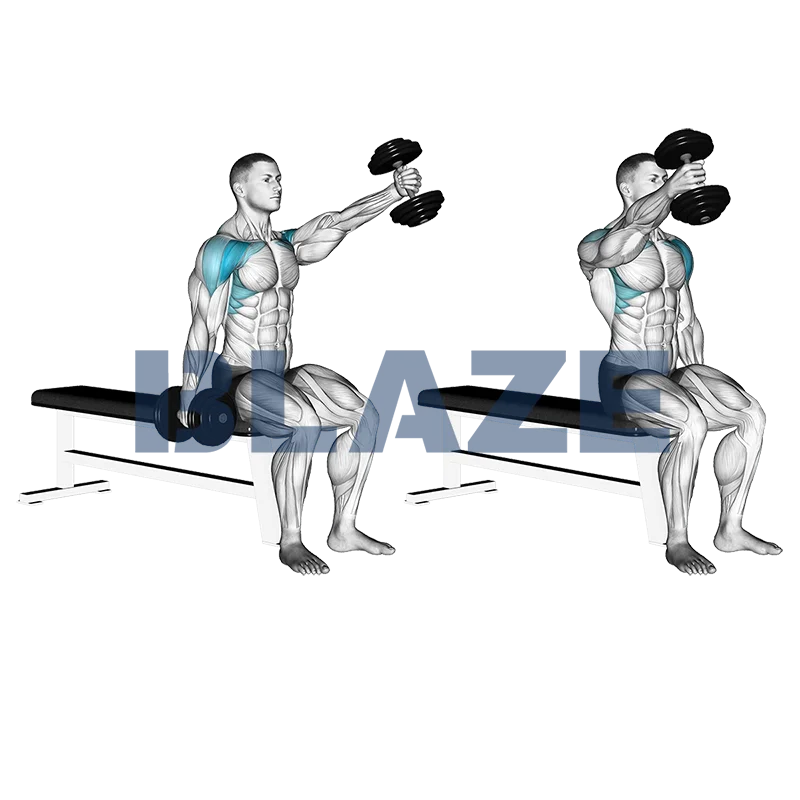
Seated alternating front raise with dumbbells (hammer grip)
The dumbbell seated alternate front raise is a beneficial exercise targeting the anterior deltoids, lateral deltoids, and upper pectorals. By alternating arms, it promotes muscular balance and coordination, helping to correct asymmetries and prevent overuse injuries. This exercise is excellent for athletes seeking to enhance shoulder strength, stability, and aesthetic muscle development. The seated position provides added stability, minimizing momentum and ensuring controlled, effective muscle engagement, making it an ideal addition to upper body strength routines.
| Primary muscle group: | Shoulders |
| Exercise type: | Dumbbell |
| Exercise goal: | Strength |
| Key metric: | Weight |
Community Averages
4kg
Avg. weight
9lbs
Avg. weight
Popularity
* Based on data from the Blaze community
Description
- 1Sit on the edge of a bench with a dumbbell in each hand, positioned by your sides.
- 2Keep your elbows slightly bent and your back straight.
- 3Exhale as you raise one dumbbell forward and upward in a semicircular motion until your arm is a little over horizontal.
- 4Hold this position for a count of two.
- 5Inhale as you lower the dumbbell back to the starting position.
- 6Simultaneously raise your opposite arm forward and upward.
- 7Continue alternating arms, maintaining controlled movements throughout the exercise.
Tips & Tricks
Control Your Movement: Focus on a slow, controlled movement to maximize muscle activation and avoid using momentum.
Adjust Your Weight: Choose a weight that challenges you but allows you to maintain proper form throughout the exercise.
Avoid Swinging: Do not use your body to swing the dumbbells up. Your shoulders should do all the work.
Maintain a Neutral Grip: Keep a hammer grip (palms facing each other) to effectively target your anterior deltoids.
Proper Posture: Sit comfortably on the bench with a straight back and your feet flat on the floor to provide stability.
Even Breathing: Inhale as you lift the dumbbell and exhale as you return it to the starting position to help maintain a rhythm and manage exertion.
Monitor Arm Movement: Lift one arm at a time and ensure both arms move through the same range of motion to maintain balance and symmetry.
Focus on the Target Muscle: Keep a mental focus on your deltoid muscles to reinforce the mind-muscle connection.
Elbows Slightly Bent: Maintain a slight bend in your elbows as you raise the dumbbells to reduce joint strain.
Consistency: Regularly perform the exercise as part of your shoulder routine to build strength and muscle over time.
Track in the Blaze App
Download Blaze Workout Tracker to log this exercise with sets, reps, and progress tracking.