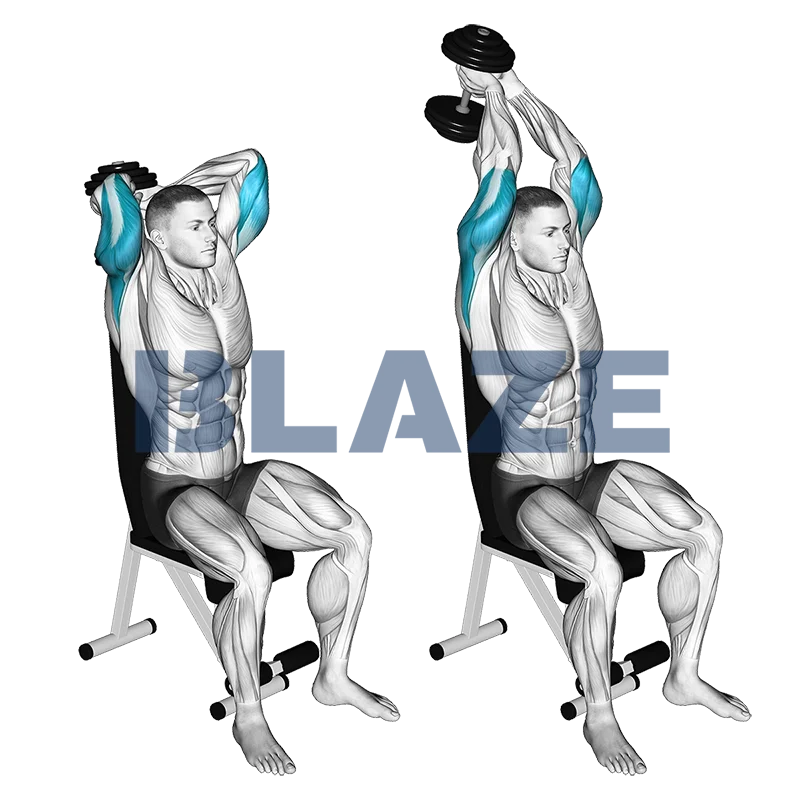
Triceps extension with one dumbbell (seated)
The one arm triceps extension with dumbbell is a fantastic isolation exercise targeting the triceps brachii. Key benefits include improved arm strength, enhanced muscle definition, and greater stability in the shoulder and elbow joints. By focusing on one arm at a time, it ensures muscular balance and symmetry, which is crucial for athletes to prevent injuries. This exercise especially activates the long head of the triceps, making it excellent for athletes looking to boost their performance in pushing movements and upper-body endurance.
| Primary muscle group: | Arms |
| Exercise type: | Dumbbell |
| Exercise goal: | Strength |
| Key metric: | Weight |
Community Averages
14kg
Avg. weight
32lbs
Avg. weight
Popularity
* Based on data from the Blaze community
Description
- 1Sit on a flat bench and rest the dumbbell on your thighs.
- 2Grasp the bar of the dumbbell with both hands, one hand over the other.
- 3Kick the dumbbell up with one knee and rest the dumbbell on your shoulder. Adjust your hand position. Your palms should be facing upwards.
- 4Raise the dumbbell above your head until your arms are almost fully extended.
- 5Inhale as you slowly lower the dumbbell until it touches your back.
- 6Exhale as you raise the dumbbell up to the starting position.
- 7You have completed your first repetition. Repeat the motion in a controlled way and count your reps.
Tips & Tricks
Choose the Right Weight: Always select a weight that challenges you but allows you to maintain proper form throughout the exercise. If you’re new to this exercise, start with a lighter weight to get used to the movement.
Maintain a Neutral Spine: Keep your back straight and avoid arching or rounding your spine. Sit on a bench with back support if needed to help maintain proper posture.
Grip and Hand Placement: Hold the dumbbell with both hands under the top weight plate. Ensure your palms are facing upward, and your thumbs are wrapped around the handle for a secure grip.
Elbow Position: Keep your elbows close to your head throughout the exercise. Avoid letting them flare out to the sides as this can reduce the effectiveness of the workout and put undue stress on your shoulder joints.
Controlled Movement: Lower the dumbbell slowly behind your head, and then extend your arms to lift it back to the starting position. Avoid using momentum; focus on slow, controlled movements to engage the triceps fully.
Breathing Technique: Exhale as you press the dumbbell up, and inhale as you lower it. Proper breathing helps stabilize your core and maintain good form.
Range of Motion: Aim for a full range of motion. Lower the dumbbell as far as comfortably possible without straining your elbows. This maximizes muscle engagement and ensures effective triceps activation.
Keep Shoulders Stable: While performing the exercise, ensure your shoulders remain stable and do not elevate or hunch. This reduces the risk of injury and keeps the focus on your triceps.
Warm-Up: Always warm up your muscles before starting with heavy weights. Light cardio or dynamic stretches can help prepare your muscles and joints for the exercise.
Pay Attention to Pain: If you experience pain (as opposed to muscle fatigue) during the exercise, stop immediately and reassess your form. Pain might indicate improper technique or an underlying injury.
Consistency: To build strength and muscle definition, incorporate this exercise into your regular routine and progressively increase the weight as your triceps become stronger.
Track in the Blaze App
Download Blaze Workout Tracker to log this exercise with sets, reps, and progress tracking.