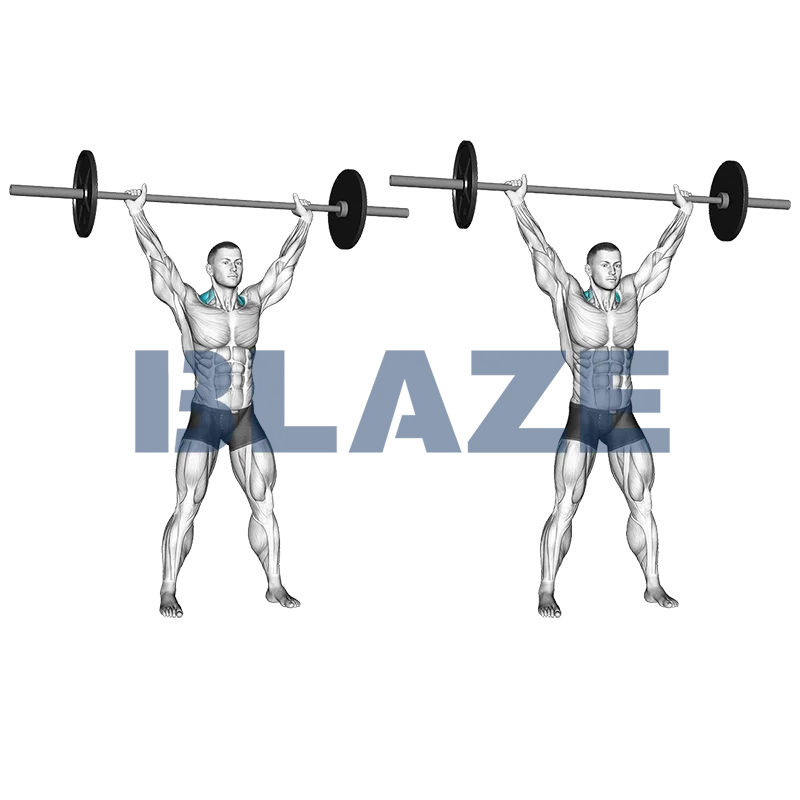
Overhead shrug with barbell
The barbell overhead shrug is a powerful exercise that targets the upper traps, deltoids, and stabilizes the scapula. By elevating the shoulders while holding a barbell overhead, this movement enhances shoulder stability and upper body strength. Athletes benefit from improved posture, increased overhead lifting capacity, and greater resilience against shoulder injuries. This exercise is particularly useful for Olympic lifters, CrossFit athletes, and anyone looking to strengthen their upper back and shoulder girdle.
| Primary muscle group: | Back |
| Exercise type: | Barbell |
| Exercise goal: | Strength |
| Key metric: | Weight |
Community Averages
31kg
Avg. weight
68lbs
Avg. weight
Popularity
* Based on data from the Blaze community
Description
- 1Stand with your feet shoulder-width apart and grip the barbell with both hands slightly wider than shoulder-width.
- 2Lift the barbell to shoulder height, ensuring your palms face forward and your elbows are directly under your wrists.
- 3Press the barbell overhead until your arms are fully extended, keeping your elbows straight and back neutral.
- 4Exhale as you shrug your shoulders upwards as high as possible, engaging your upper trapezius muscles.
- 5Hold the shoulder shrug for a count of two, then inhale as you slowly lower your shoulders and the barbell back to the starting position.
- 6Repeat the movement for the prescribed number of repetitions, maintaining proper form throughout.
Tips & Tricks
Warm-Up Properly: Ensure your shoulders and upper body are adequately warmed up before attempting this exercise. Incorporate dynamic stretches and mobility drills targeting the shoulders and upper back.
Grip and Hand Position: Use a grip slightly wider than shoulder-width to maintain stability and control. This setup helps in isolating the trapezius muscles effectively.
Neutral Spine: Maintain a neutral spine throughout the movement. Avoid arching your back to prevent unnecessary strain on the lower back.
Controlled Movement: Perform the movement in a slow and controlled manner. This ensures better muscle engagement and reduces the risk of injury.
Breathing Technique: Exhale as you lift your shoulders towards your ears and inhale as you return them to the starting position. Proper breathing can aid in maintaining focus and control.
Elbow Position: Keep your elbows fully extended but not locked. This allows the shrugging motion to target the trapezius muscles effectively.
Avoid Overloading: Start with a manageable weight to learn the movement pattern correctly. Gradually increase the weight as your strength and proficiency improve.
Engage Core Muscles: Keep your core tight throughout the exercise to stabilize your body and support your lower back.
Range of Motion: Lift your shoulders as high as possible to maximize muscle activation. Focus on the full range of motion without compromising form.
Mind-Muscle Connection: Concentrate on feeling the contraction in your trapezius muscles. This mental focus can enhance muscle activation and overall effectiveness of the exercise.
Regular Variation: Incorporate different variations of shrugs, such as dumbbell shrugs or cable shrugs, to challenge your muscles and prevent adaptation.
Rest and Recovery: Allow adequate time for recovery between sessions targeting the same muscle group. Overtraining can lead to fatigue and increased risk of injury.
Track in the Blaze App
Download Blaze Workout Tracker to log this exercise with sets, reps, and progress tracking.