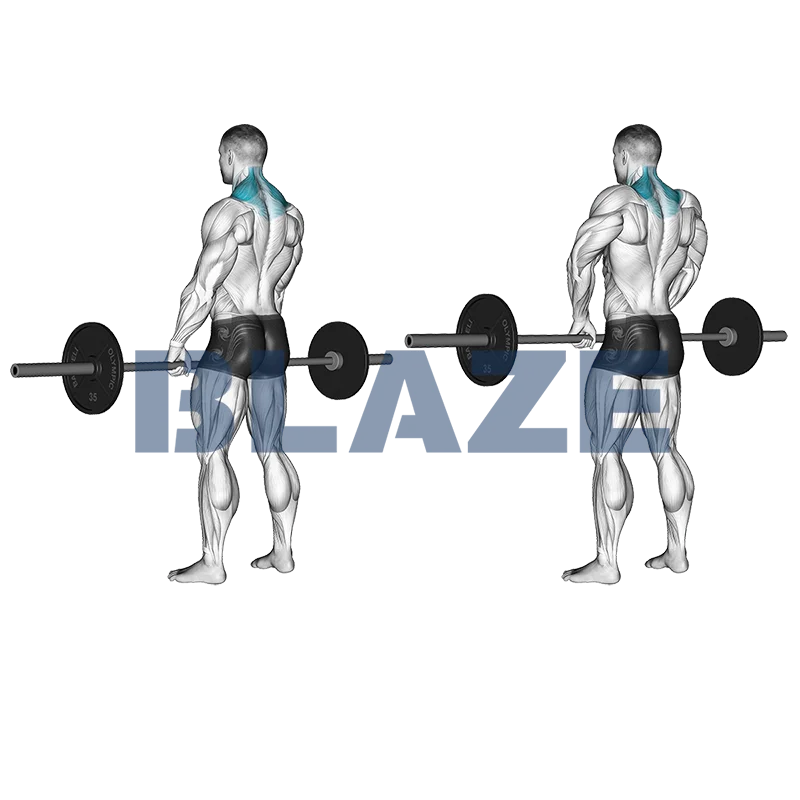
Shrug with barbell
The barbell shrug is an effective exercise primarily targeting the trapezius muscles, while also engaging the deltoids and upper back. Performing this exercise can enhance shoulder strength, improve posture, and reduce the risk of injuries by fortifying the muscles that stabilize the upper body. Athletes can benefit from the Barbell Shrug as it bolsters performance in sports requiring strong shoulder and neck muscles, such as weightlifting, swimming, and basketball. This exercise increases muscle mass and endurance in the traps, contributing to overall upper body power.
| Primary muscle group: | Back |
| Exercise type: | Barbell |
| Exercise goal: | Strength |
| Key metric: | Weight |
Community Averages
59kg
Avg. weight
130lbs
Avg. weight
Popularity
* Based on data from the Blaze community
Description
- 1Stand with your feet shoulder-width apart, gripping a barbell with a shoulder-width pronated grip (palms facing your body).
- 2Keep your back straight and core engaged to maintain good posture throughout the exercise.
- 3Exhale as you slowly lift your shoulders straight up towards your ears, raising the barbell.
- 4At the peak of the movement, hold for a count of two and squeeze your trapezius muscles.
- 5Inhale as you slowly lower your shoulders and the barbell back down to the starting position.
- 6Repeat the movement for the desired number of repetitions.
Tips & Tricks
Grip Width: Use a grip that is slightly wider than shoulder-width to ensure balance and stability.
Neck Position: Keep your neck in a neutral position; do not crane your head forward or look up.
Shoulder Movement: Focus on moving your shoulders straight up and down. Avoid rolling them forward or backward.
Mind-Muscle Connection: During the exercise, concentrate on squeezing your trapezius muscles at the top of the shrug to maximize contraction.
Control the Weight: Perform the movement in a slow and controlled manner. Avoid using momentum to lift the barbell.
Proper Breathing: Inhale as you prepare and exhale as you shrug your shoulders up. Inhale again as you lower them back down.
Start Light: Begin with a lighter weight to perfect your form before progressively adding more weight.
Avoid Overextension: Don't over-lift the shoulders. Maintaining a natural range of motion is key to preventing injury.
Wrist Position: Keep your wrists straight and strong; do not let them flex or extend.
Foot Placement: Stand with your feet about shoulder-width apart for better balance and support.
Use Straps if Necessary: If your grip strength is limiting your performance, consider using lifting straps to help you hold onto the bar.
Regular Stretching: Incorporate regular stretching of the shoulder and neck muscles to maintain flexibility and prevent stiffness.
Track in the Blaze App
Download Blaze Workout Tracker to log this exercise with sets, reps, and progress tracking.