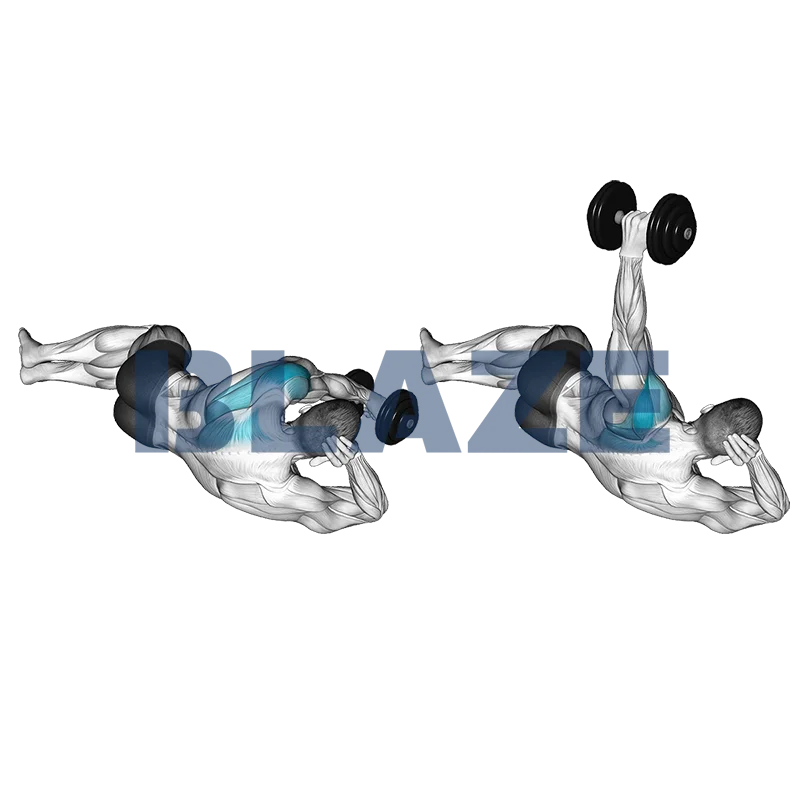
Side lying dumbbell rear delta raise
The dumbbell lying on floor rear delt raise primarily targets the rear deltoids, upper back, and trapezius muscles. This exercise enhances shoulder stability, improves posture, and minimizes the risk of shoulder injuries. Athletes benefit by developing balanced shoulder strength and enhanced upper back support, crucial for performance in sports requiring robust upper body function and endurance. Additionally, it helps counteract the effects of prolonged sitting and hunching, making it ideal for overall shoulder health and mobility.
| Primary muscle group: | Shoulders |
| Exercise type: | Dumbbell |
| Exercise goal: | Strength |
| Key metric: | Weight |
Community Averages
7kg
Avg. weight
16lbs
Avg. weight
Popularity
* Based on data from the Blaze community
Description
- 1Lie on the floor on your right side with a dumbbell placed in front of you. Support your head with your right hand.
- 2Grasp the dumbbell with your left hand using a neutral grip (palm facing downward). Ensure your elbow is either straight or slightly flexed.
- 3Keeping your elbow fixed and your body still, exhale as you raise the dumbbell upward until it is almost vertical.
- 4Hold this position for a count of two.
- 5Inhale and gradually lower the dumbbell back towards the starting position, stopping just before it touches the floor.
- 6Repeat for the prescribed number of repetitions.
- 7Switch sides and repeat the exercise with your right arm.
Tips & Tricks
Choose the Right Weight: Start with a lighter weight to ensure you can maintain proper form throughout the exercise. It's better to prioritize form over the amount of weight lifted.
Stable Starting Position: Make sure you are lying on your side with your legs securely stacked on top of each other. Keep your body in a straight line to maintain stability.
Slow and Controlled Movements: Perform the raise slowly to engage the rear delts effectively. Avoid using momentum which can lead to fatigue and reduced muscle engagement.
Complete Range of Motion: Lift the dumbbell fully until your arm is nearly perpendicular to the floor. This ensures maximum engagement of the rear deltoid muscle.
Focus on the Rear Delts: Concentrate on using your rear delt to lift the weight rather than letting other muscles, such as the traps, take over.
Breathing Technique: Exhale as you lift the dumbbell and inhale as you lower it. Proper breathing can help you maintain control and provide more oxygen to your muscles.
Adjust the Angle if Needed: If you experience discomfort or feel the exercise too intensely in your shoulder joint, experiment with slightly changing the angle of your lift.
Consistency Over Intensity: Aim to consistently perform the exercise with good form rather than trying to lift heavier weights too soon. This helps prevent injury and promotes muscle growth more effectively.
Engage Your Core: Keep your core engaged throughout the exercise to maintain balance and support your lower back.
Adding Variation: Once comfortable with the basic move, you can add a pause at the top of the movement for increased resistance and muscle engagement.
Track in the Blaze App
Download Blaze Workout Tracker to log this exercise with sets, reps, and progress tracking.