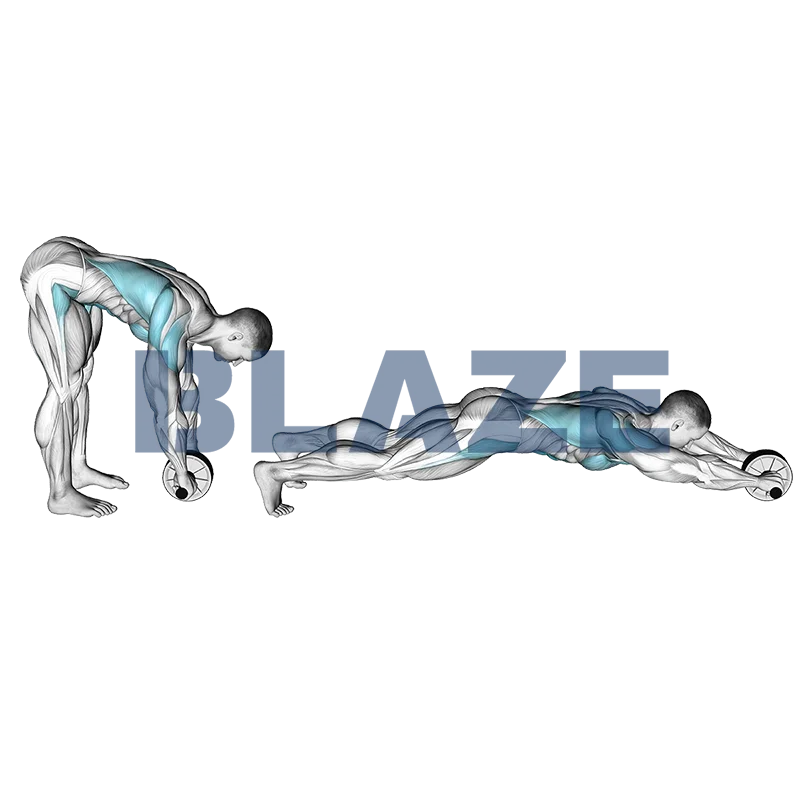
Standing ab wheel roller
Standing wheel rollouts are excellent for building core strength and stability. This exercise primarily activates the abdominal muscles, including the rectus abdominis and obliques, and also engages the lower back, shoulders, and arms for stabilization. Athletes benefit from improved overall core strength, which enhances balance and performance in various sports. The exercise aids in preventing injuries by strengthening stabilizing muscles, and it can contribute to better posture and movement efficiency in dynamic athletic activities.
| Primary muscle group: | Core |
| Exercise type: | Bodyweight |
| Exercise goal: | Strength |
| Key metric: | Repetitions |
Community Averages
8
Avg. reps/set
Popularity
* Based on data from the Blaze community
Description
- 1Stand with an ab wheel in your hands, using a pronated (overhand) grip.
- 2Flex your hips and lower the ab wheel to the floor in front of your feet.
- 3Lean forward slightly so that the ab wheel supports your weight.
- 4Keep your elbows slightly bent and inhale as you slowly roll the wheel forward without allowing your lower back to sag.
- 5Extend as far as you can go while maintaining control, then hold for a count of two.
- 6Exhale as you slowly roll the wheel back to the starting position.
- 7Repeat the movement for the desired number of repetitions.
Tips & Tricks
Master the Basics First: Start with kneeling ab wheel rollouts to build core strength before progressing to the standing variation. It's crucial to feel comfortable and confident in your form.
Warm Up Properly: Ensure your body is warmed up, particularly your core muscles, shoulders, and lower back. This will help prevent injury and improve performance.
Engage Your Core: Throughout the movement, keep your core tightly contracted. This engagement helps protect your lower back and ensures you target the correct muscles.
Maintain a Neutral Spine: Avoid letting your lower back sag. Keeping a neutral spine throughout the exercise helps prevent strain and enhances effectiveness.
Controlled Movements: Roll out and back slowly and under control. Fast movements can jeopardize your form and increase the risk of injury.
Full Extension: Aim for a full extension where your body is almost parallel to the ground. However, only extend as far as you can while maintaining good form.
Breathe Properly: Inhale during the rollout and exhale as you roll back. Proper breathing aids in maintaining core stability.
Use a Full Range of Motion: Ensure you're using your full range of motion but never at the cost of form. Extend as far as you can while still feeling in control.
Avoid Using Momentum: Rely on your muscles rather than momentum to bring yourself back up. This maximizes muscle engagement and effectiveness.
Progress Gradually: If standing rollouts are too challenging, start with a partial range and gradually increase the distance as your strength and technique improve.
Strengthen Supporting Muscles: Incorporate exercises like planks, dead bugs, and other core stability exercises to build the strength needed for advanced variations.
Use a Padded Surface: Performing the exercise on a padded surface can enhance comfort, especially for your knees if you regress to the kneeling version.
Track in the Blaze App
Download Blaze Workout Tracker to log this exercise with sets, reps, and progress tracking.