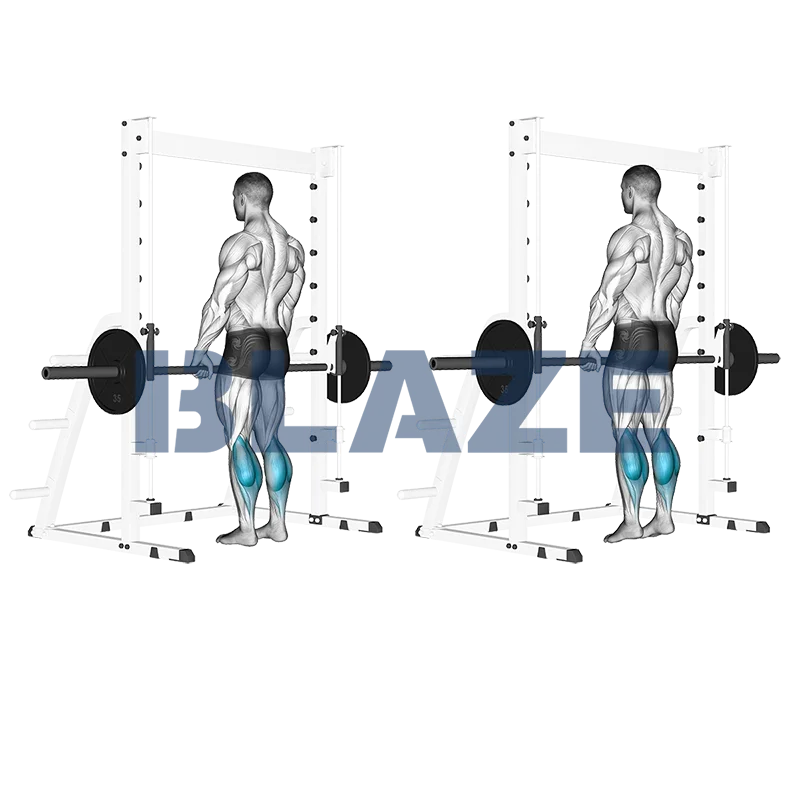
Standing calf raise on Smith machine
The Smith machine standing calf raise is a beneficial exercise for strengthening and building the calf muscles, particularly the gastrocnemius and soleus. By performing this movement, athletes can improve lower leg strength, enhance explosive power, and stabilize the ankles, which are crucial for activities requiring running, jumping, and sudden directional changes. This exercise also contributes to better balance and overall athletic performance, making it a valuable addition to any athlete's training regimen.
| Primary muscle group: | Legs |
| Exercise type: | Machine |
| Exercise goal: | Strength |
| Key metric: | Weight |
Community Averages
39kg
Avg. weight
85lbs
Avg. weight
Popularity
* Based on data from the Blaze community
Description
- 1Setup: Place a block or weight plate below the bar on the Smith machine to stand on. Adjust the bar to match your height. Load the bar with the desired weight.
- 2Positioning: Step onto the plate with the balls of your feet. Position the bar on the back of your shoulders and grip it with both hands facing forward.
- 3Starting Position: Rotate the bar to unrack it. This is your starting position.
- 4Execution: Raise your heels as high as possible by pushing off the balls of your feet. Flex your calves at the top of the movement. Keep your knees extended throughout.
- 5Contraction & Descent: Hold the top position for a second. Slowly lower your heels back to the starting position while breathing in.
- 6Repetitions: Repeat the movement for the recommended amount of repetitions.
Tips & Tricks
Proper Foot Positioning: Ensure that your toes are pointed forward and your heels are slightly hanging off the edge of the platform. This maximizes the range of motion and engages the calf muscles fully.
Controlled Movements: Focus on a slow and controlled tempo. Avoid bouncing or using momentum to lift the weight. This ensures that your calf muscles are doing the work and reduces the risk of injury.
Full Range of Motion: Lower your heels as far as comfortably possible before raising them. A complete range of motion will help in fully engaging and stretching the calf muscles.
Engage Core Muscles: Keep your core tight and engaged throughout the movement to maintain stability and balance. This also helps in preventing any strain on your lower back.
Avoid Locking Knees: Keep a slight bend in your knees throughout the exercise. Locking your knees can transfer stress to the joints rather than focusing on the calf muscles.
Use Appropriate Weight: Start with a lighter weight to master the form before progressing to heavier weights. Using too much weight can compromise your form and increase the risk of injury.
Breathing Technique: Inhale as you lower your heels and exhale as you raise them. Proper breathing helps in maintaining rhythm and control during the exercise.
Foot Stance Variations: Experiment with different foot stances – try toes pointing slightly inward or outward – to target different areas of the calf muscles for more comprehensive development.
Progress Gradually: Gradually increase the weight over time as your strength improves. Overloading too quickly can lead to injury and hamper your progress.
Listen to Your Body: If you experience any discomfort or pain (other than typical muscle fatigue), stop immediately and reassess your form or consult a professional. Calf strains are common if the exercise is performed incorrectly.
Track in the Blaze App
Download Blaze Workout Tracker to log this exercise with sets, reps, and progress tracking.