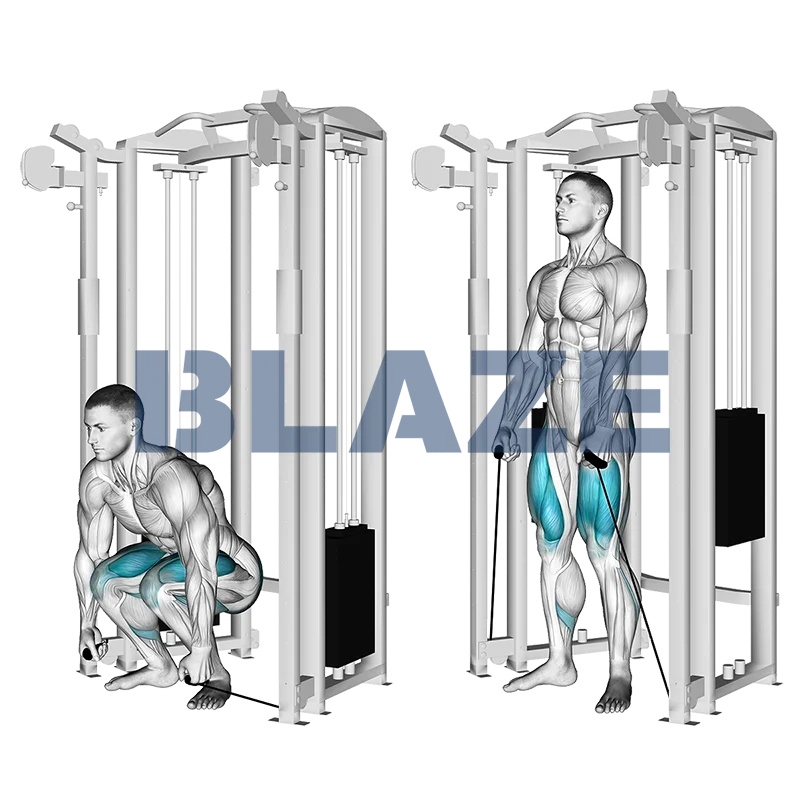
Deadlift with cable
Cable deadlifts are a versatile exercise that offer numerous benefits, including improved posture, core strength, and overall muscle endurance. They primarily target the glutes, hamstrings, lower back, and core, making them excellent for developing lower body strength and stability. Athletes can profit from Cable Deadlifts as they mimic the natural movements used in many sports, enhancing functional strength and reducing the risk of injury. The exercise also enables better control and range of motion compared to traditional deadlifts, making it ideal for both beginners and advanced lifters.
| Primary muscle group: | Legs |
| Exercise type: | Cable |
| Exercise goal: | Strength |
| Key metric: | Weight |
Community Averages
68kg
Avg. weight
150lbs
Avg. weight
Popularity
* Based on data from the Blaze community
Description
- 1Setup Position: Stand with feet shoulder-width apart next to the cable machine. Keep your back straight and bend your legs while leaning forward. Grab each handle by your side with fully extended arms, ensuring the cables are next to your midfoot.
- 2Initiate Lift: Exhale and push through your feet while starting to extend your legs. Lift the cables, maintaining a flat back.
- 3Mid Lift Position: Once the cable passes your knees, continue driving through your hips while extending your legs until you are standing fully upright. Ensure your torso is in line with your body without leaning back.
- 4Lowering Phase: Inhale and begin lowering the cable by bending your legs and lowering your torso while keeping a flat back.
- 5Return to Start: Return to the starting position, resting the cables at the bottom for 1 second before beginning your next repetition.
Tips & Tricks
Maintain a Neutral Spine: Always keep your back straight and maintain a neutral spine to prevent injuries. Avoid rounding your back as you lift.
Use Your Lower Body: Engage your glutes, hamstrings, and quads throughout the movement. Your lower body should be the primary source of power, not your lower back.
Grip Handle Correctly: Ensure you have a firm grip on the handle with your hands shoulder-width apart. This will help in maintaining stability throughout the lift.
Hinge at the Hips: Initiate the movement by hinging at the hips rather than squatting down. This will ensure that you target the correct muscle groups.
Control the Movement: Maintain control throughout the entire range of motion, both on the way up and down. Avoid jerking the weight to maintain form and prevent injury.
Engage Core: Keep your core engaged to provide stability and support for your spine. This will help you maintain proper alignment throughout the exercise.
Breath Properly: Exhale as you lift, and inhale as you lower the weight back down. Proper breathing helps in maintaining rhythm and control.
Keep Shoulders Back: Pull your shoulders back and down. This helps in keeping your upper back engaged and prevents rounding of the shoulders.
Focus on Form Over Weight: Don’t rush to lift heavier weights. Prioritize perfecting your form before increasing the load to prevent injuries and ensure muscle engagement.
Moderate Weight: Start with a moderate weight until you are comfortable with the movement. Gradually increase the weight as your form and strength improve.
Track in the Blaze App
Download Blaze Workout Tracker to log this exercise with sets, reps, and progress tracking.