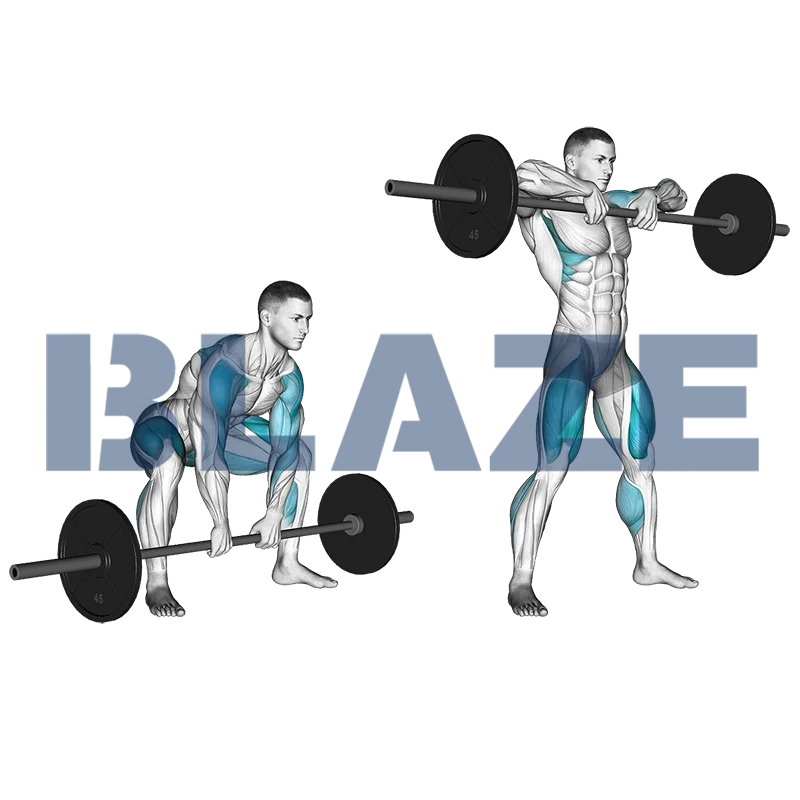
Sumo deadlift high pull with barbell
The Sumo deadlift high pull is a dynamic exercise that targets multiple muscle groups, providing a comprehensive workout. Key benefits include improved cardiovascular fitness, enhanced full-body strength, and increased workout efficiency. The exercise primarily activates the quads, hamstrings, glutes, trapezius, and deltoids. Athletes can profit from SDHP due to its ability to develop explosive power, improve coordination, and boost overall athletic performance, making it ideal for sports requiring strength and speed.
| Primary muscle group: | FullBody |
| Exercise type: | Barbell |
| Exercise goal: | Strength |
| Key metric: | Weight |
Community Averages
54kg
Avg. weight
118lbs
Avg. weight
Popularity
* Based on data from the Blaze community
Description
- 1Position Your Feet: Stand with your feet in a wide stance, toes turned out at a 45-degree angle, and shins against the barbell.
- 2Set Your Hips: Drop your hips and bend your knees into a squat position.
- 3Grip the Barbell: Using an overhand grip, grasp the barbell with your hands shoulder-width apart.
- 4Initiate the Lift: Drive your heels into the floor and stand up straight, extending your hips fully.
- 5Pull the Barbell: Once standing, bend your elbows and pull the barbell up to just below your chin.
- 6Lower the Barbell: Lower the barbell back to the floor in a controlled manner.
- 7Repeat: Repeat the motion for the desired number of repetitions.
Tips & Tricks
Start Light: Begin with lighter weights to master the technique before gradually increasing the load. This will help avoid unnecessary strain and injuries.
Proper Stance: Ensure your feet are wider than shoulder-width apart, with toes slightly pointed outwards. This stance helps engage the inner thighs and ensures a stable base.
Engage Core: Keep your core tight throughout the movement. A strong core will support the lower back and maintain proper form.
Flat Back: Maintain a neutral spine with a flat back. Avoid rounding your back to prevent injuries and ensure better lifting mechanics.
Elbows High and Outside: As you pull the barbell upwards, lead with your elbows and keep them higher than your wrists. This ensures you’re targeting the right muscle groups.
Coordinate Hip and Arm Movement: Make sure that the power comes from your hips, and follow through with your arms. Both movements should be fluid and well-coordinated.
Control the Descent: Lower the barbell back down in a controlled manner to avoid any jerking motions that could lead to injury.
Breathing: Exhale as you pull the barbell up, and inhale as you lower it back down. Proper breathing techniques contribute to better stability and performance.
Check Your Range of Motion: Ensure you complete the full range of motion, pulling the bar up to about shoulder height and returning it to the starting position. This maximizes muscle engagement and effectiveness.
Mind the Knees: When pulling the bar up, make sure your knees stay in line with your toes and do not collapse inward. This helps prevent knee strain and maintains proper form.
Practice Grip Strength: A strong grip helps in maintaining control over the barbell. Consider including grip-strengthening exercises in your routine.
Warm Up Properly: Always ensure you and your clients are properly warmed up before attempting this exercise. Dynamic stretches and light cardio can effectively prepare the muscles.
Track in the Blaze App
Download Blaze Workout Tracker to log this exercise with sets, reps, and progress tracking.