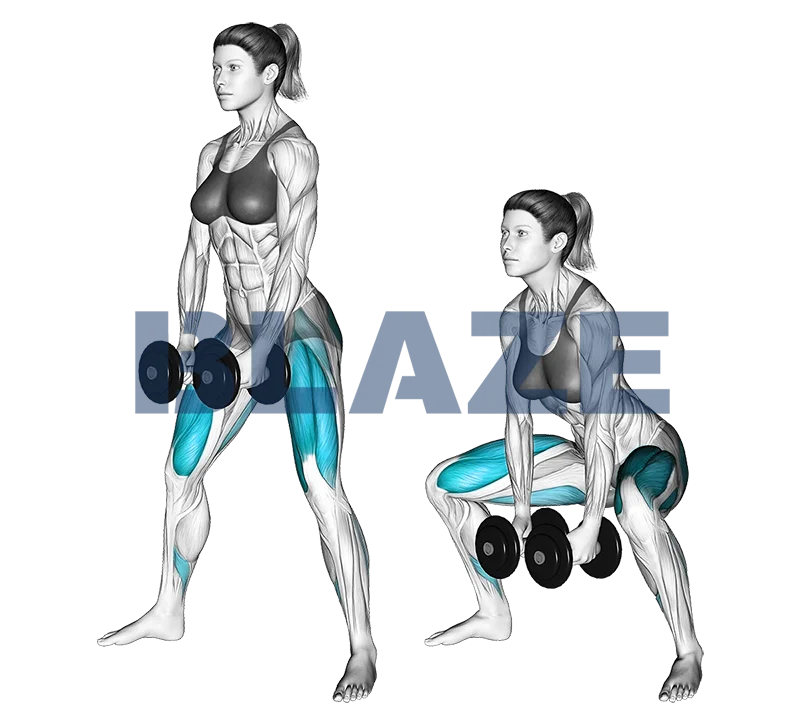
Sumo squat with dumbbells
Dumbbell Sumo squats offer numerous benefits, particularly for enhancing lower body strength and stability. This exercise primarily targets the quadriceps, hamstrings, glutes, and inner thigh muscles, while also engaging the core for stability. Athletes profit from incorporating Dumbbell Sumo Squats into their routine as it boosts muscle power, enhances balance, and improves overall lower body endurance. The wider stance and added weight from the dumbbell also help in developing stronger hip adductors, which are crucial for lateral movements in various sports.
| Primary muscle group: | Legs |
| Exercise type: | Dumbbell |
| Exercise goal: | Strength |
| Key metric: | Weight |
Community Averages
39kg
Avg. weight
85lbs
Avg. weight
Popularity
* Based on data from the Blaze community
Description
- 1Place a barbell on the back of your shoulders and hold it with both hands, gripping each side securely.
- 2Stand with your feet wider than shoulder-width apart, adopting a sumo or plié stance.
- 3Point your toes and knees outward at a 30 to 45-degree angle.
- 4Keep your head up, back straight, and body upright.
- 5Inhale as you squat by simultaneously flexing your hips and knees. Lower yourself until your thighs are at least parallel to the floor.
- 6Exhale as you return to a standing position.
- 7Repeat the motion for the desired number of repetitions.
Tips & Tricks
Foot Placement: Ensure that your feet are placed wider than shoulder-width apart with your toes pointed slightly outwards. This position helps to engage your inner thigh muscles more effectively.
Grip and Hold: Hold a single dumbbell with both hands, ensuring a firm grip. Let the dumbbell hang down between your legs while keeping your arms fully extended.
Maintain Posture: Keep your chest up and back straight throughout the movement. Avoid rounding your back to prevent strain and injury.
Core Engagement: Engage your core muscles to help stabilize your body and protect your spine. This also helps in maintaining balance during the squat.
Controlled Movement: Lower yourself slowly and under control. Don't just drop into the squat position. This not only maximizes muscle engagement but also ensures safety.
Knee Alignment: Make sure your knees track over your toes and do not cave inward. This alignment is crucial for joint health and to avoid injuries.
Full Range of Motion: Aim to lower yourself until your thighs are at least parallel to the floor. If you have good flexibility and control, you can go deeper, but ensure you're not compromising form.
Breathing Technique: Inhale as you lower into the squat and exhale as you push yourself back up to the starting position. Proper breathing helps in maintaining stamina and focus.
Eye Focus: Keep your eyes focused on a fixed point straight ahead. This helps in maintaining your balance and posture.
Progression Safely: Start with a lighter dumbbell to master the form before gradually increasing the weight. This prevents overloading your muscles and joints too quickly.
Track in the Blaze App
Download Blaze Workout Tracker to log this exercise with sets, reps, and progress tracking.