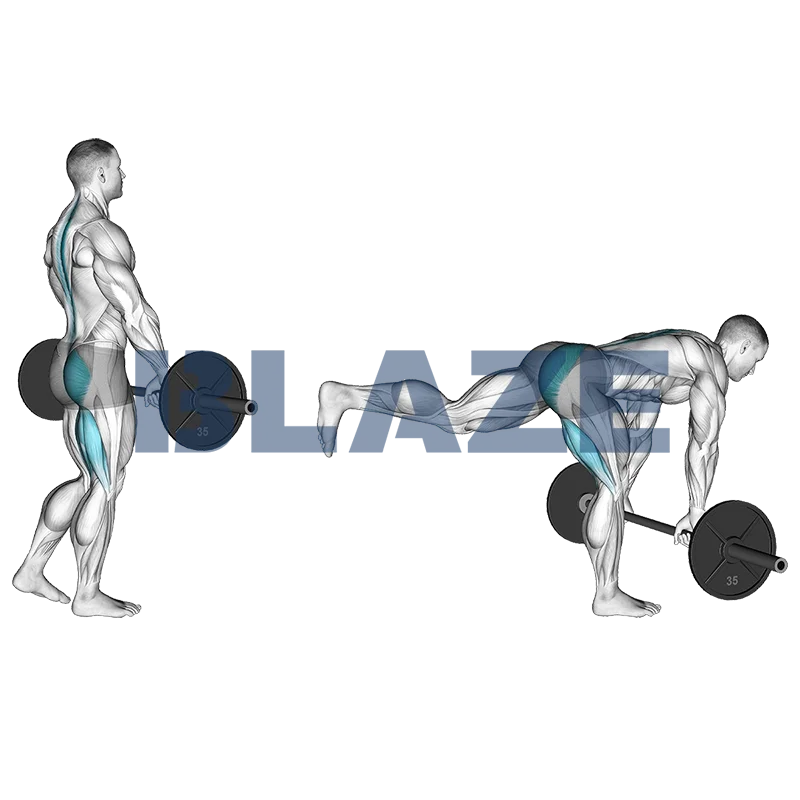
Deadlift with one leg and barbell
The barbell single leg deadlift effectively targets the glutes, hamstrings, lower back, and core, bolstering stability and balance. This exercise aids in strengthening posterior chain muscles, crucial for powerful athletic movements. Athletes benefit from enhanced unilateral strength, reducing muscle imbalances and lowering injury risk. Improved proprioception and core stability translate to better performance in running, jumping, and agility-based sports. Adding this exercise to a regimen can boost overall functional fitness and athletic prowess.
| Primary muscle group: | Legs |
| Exercise type: | Barbell |
| Exercise goal: | Strength |
| Key metric: | Weight |
Community Averages
14kg
Avg. weight
30lbs
Avg. weight
Rating
* Based on data from the Blaze community
Description
- 1Starting Position: Stand with your feet hip-width apart and your knees slightly bent. Hold a weight in one hand, and let it hang naturally by your side. The opposite foot will be the working leg.
- 2Engage Core: Tighten your core and maintain a straight line from your head to your heel throughout the movement.
- 3Hinge at the Hip: Push your non-working leg back as far as possible while hinging at the hip. Your torso should lower towards the ground while keeping your back flat. Imagine balancing a cup of water on your back.
- 4Foot Placement: Keep a slight bend in your standing knee and ensure your foot arch doesn’t collapse. Maintain three points of contact with the ground - big toe, little toe, and heel.
- 5Hand and Grip: Wrap your thumb around the handle securely; avoid using a false grip.
- 6Maintain Balance: Consider lightly holding onto a rack with your free hand or initiate the movement with both feet on the ground for assistance.
- 7Return to Start: Drive through your entire foot to stand back up, bringing your non-working leg forward to rejoin your standing leg. Focus on using your quads to power the movement.
- 8Repeat the motion for the desired number of repetitions.
Tips & Tricks
Maintain Core Stability: Engaging your core throughout the movement helps to stabilize your body and prevent injury. Keep your abs tight and your back straight.
Focus on Balance: The single-leg deadlift challenges your balance. Keep your gaze fixed on a point in front of you to help maintain stability.
Controlled Movement: Perform the exercise slowly and with control. Avoid rapid or jerky motions to minimize the risk of strain or injury.
Hip Hinge: Ensure you're hinging at the hips, not at the waist. Push your hips back as you bend forward to lower the barbell.
Neutral Spine: Maintain a neutral spine throughout the exercise. Avoid rounding or arching your back, which can lead to injury.
Foot Position: Keep your standing foot firmly planted with a slight bend in the knee. This helps provide a stable base of support.
Mind-Muscle Connection: Focus on engaging the hamstrings and glutes of your standing leg. This ensures you're targeting the correct muscles.
Avoid Overstretching: Only lower the barbell as far as your flexibility and strength allow. Overstretching can lead to poor form and injury.
Practice Without Weights: If you're a beginner, practice the movement without any weights first. This helps you get used to the balance and form required for the exercise.
Gradual Progression: Start with a lighter weight to master the movement, and gradually increase the weight as you become more comfortable with the exercise.
Breathing Technique: Inhale as you lower the barbell and exhale as you return to the starting position. Proper breathing helps maintain core stability.
Footwear: Wear shoes with a flat and firm sole to enhance your balance and provide proper support.
Track in the Blaze App
Download Blaze Workout Tracker to log this exercise with sets, reps, and progress tracking.