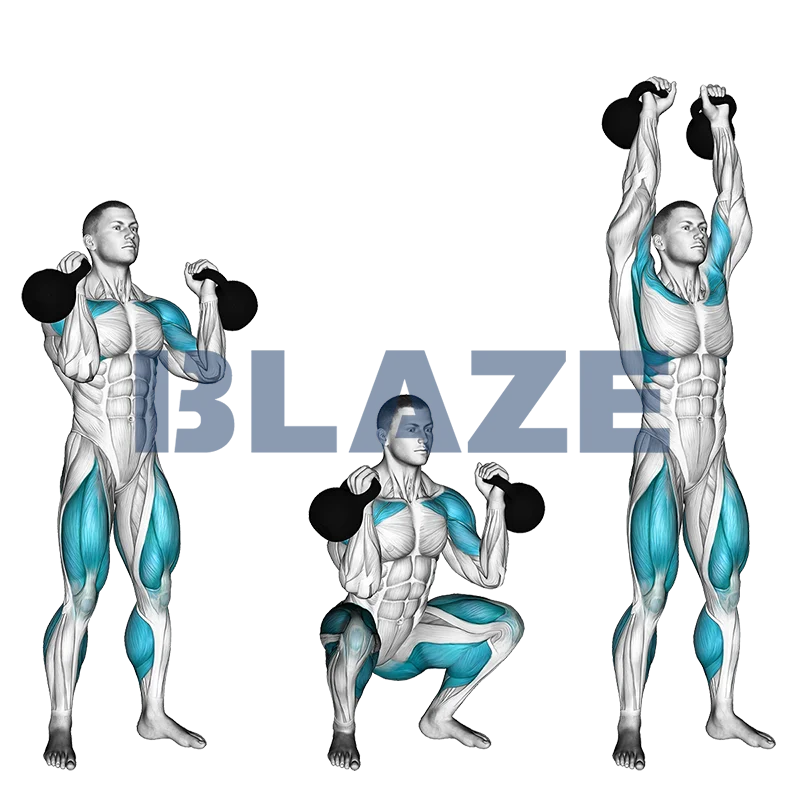
Thruster with kettlebells
The kettlebell thruster is a powerful full-body exercise that combines a front squat and an overhead press. This movement activates multiple muscle groups, including the quads, glutes, hamstrings, core, shoulders, and triceps, offering a comprehensive workout. Athletes can profit from the Kettlebell Thruster as it enhances strength, endurance, and cardiovascular fitness simultaneously. The dynamic motion boosts coordination and flexibility, making it beneficial for functional fitness and athletic performance. Its efficiency and intensity are perfect for time-constrained workouts.
| Primary muscle group: | FullBody |
| Exercise type: | Kettlebell |
| Exercise goal: | Strength |
| Key metric: | Weight |
Community Averages
18kg
Avg. weight
41lbs
Avg. weight
Popularity
* Based on data from the Blaze community
Description
- 1Grab a kettlebell and stand tall, placing the weight at shoulder level with your elbow bent and the kettlebell resting against your forearm and bicep (rack position).
- 2Position your feet hip-width apart, with your toes pointing slightly out. Keep your free arm to the side for balance.
- 3Pull your shoulders back, engage your abs, and take a deep breath.
- 4Lower yourself into a squat, keeping your thighs parallel to the floor and pushing through your heels.
- 5As you rise back up, continue the motion by pressing the kettlebell over your head until your elbow is fully extended. Exhale near the top.
- 6Lower the kettlebell to shoulder height, take another deep breath, and descend for the next repetition.
- 7Switch hands and repeat the exercise for the same number of reps on the other side.
Tips & Tricks
Engage Your Core: Keep your core engaged throughout the movement to stabilize your spine and maintain balance.
Neutral Spine: Ensure that your back stays neutral, avoiding excessive arching or rounding.
Rack Position: Hold the kettlebells in the rack position against your chest, with elbows close to your body.
Inhale During Squat: Inhale as you lower into the squat to maintain intra-abdominal pressure.
Exhale and Drive: Exhale as you stand up and push the kettlebells overhead, coordinating your breath with the movement.
Stable Base: Keep your feet shoulder-width apart for a stable base and to enhance balance.
Smooth Squat: Squat down in a smooth and controlled manner to ensure knee alignment and prevent injury.
Explosive Drive: As you stand up, drive explosively through your heels to propel the kettlebells overhead.
Avoid Flaring: Keep your elbows from flaring out to maintain control over the kettlebells and protect your shoulders.
Start Light: Begin with lighter kettlebells to master the form before progressing to heavier weights.
Consistent Progression: Gradually increase the weight as you build strength and confidence in the movement.
Synchronization: Make sure the squat and the press are synchronized; the upward movement should be one continuous motion.
Wrist Stability: Keep your wrists straight and aligned with your forearms to avoid strain.
Avoid Overextension: Do not overextend your lower back when pressing the kettlebells overhead. Keep your ribcage down and engaged.
Stretch Post-Workout: Incorporate shoulder and hip stretches post-workout to maintain flexibility and prevent tightness.
Track in the Blaze App
Download Blaze Workout Tracker to log this exercise with sets, reps, and progress tracking.