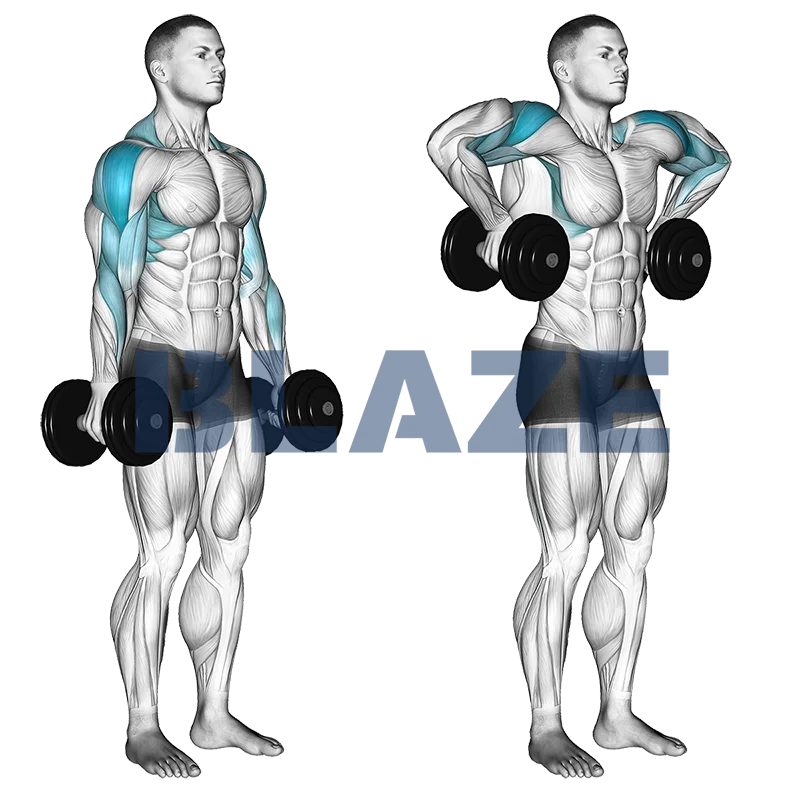
Shoulder raise with dumbbells
Dumbbell shoulder raises are a superb exercise for enhancing shoulder strength and stability. Primarily targeting the deltoid muscles, they also engage the trapezius, upper pectorals, and even the serratus anterior, contributing to a well-rounded upper body workout. For athletes, this exercise is invaluable for improving shoulder mobility, preventing injuries, and boosting overall performance in sports requiring upper body strength. Additionally, the isolated muscle activation aids in muscular endurance and symmetry, making it a must-add to any training regimen.
| Primary muscle group: | Shoulders |
| Exercise type: | Dumbbell |
| Exercise goal: | Strength |
| Key metric: | Weight |
Community Averages
22kg
Avg. weight
48lbs
Avg. weight
Popularity
* Based on data from the Blaze community
Description
- 1Starting Position: Stand erect with a dumbbell in each hand, palms facing your torso, and arms fully extended at your sides.
- 2Lift: Inhale deeply, then exhale as you elevate your shoulders as high as possible. Your arms should remain extended and straight; avoid using your biceps.
- 3Hold: Hold the contraction at the top of the lift for one second to maximize the muscle engagement.
- 4Lower: Slowly lower the dumbbells back to the original position by relaxing your shoulders.
- 5Repetition: Repeat the lifting and lowering motion for the recommended number of repetitions.
Tips & Tricks
Maintain Proper Posture: Stand tall with your feet shoulder-width apart. Engage your core to prevent your back from arching.
Controlled Movement: Avoid using momentum to lift the weights. Perform the movement slowly and in a controlled manner to maximize muscle engagement and reduce the risk of injury.
Weight Selection: Choose weights that challenge you but still allow you to maintain proper form. It's better to start lighter and increase the weight gradually as you build strength.
Arm Positioning: Keep a slight bend in your elbows throughout the movement to reduce strain on your joints. Your wrists should remain straight, not bent or curled.
Breathing: Exhale as you lift the weights and inhale as you lower them. Coordinating your breath with your movements can improve performance and endurance.
Avoiding Shoulder Shrugging: Focus on activating the shoulder muscles without lifting your shoulders toward your ears. This ensures that the deltoid muscles are doing the work rather than the traps.
Use the Full Range of Motion: Lift the dumbbells to shoulder height or just slightly above. Going too high can put unnecessary stress on your shoulder joints.
Mirror for Feedback: If possible, perform the exercise in front of a mirror to monitor your form. This can help you make real-time adjustments and avoid bad habits.
Alternate Variations: Mix up your routine by incorporating both front and lateral raises to target different parts of the shoulder muscles for balanced development.
Warm Up and Cool Down: Always include a good warm-up before starting and a cool-down after your workout to reduce the risk of injury and promote muscle recovery.
Track in the Blaze App
Download Blaze Workout Tracker to log this exercise with sets, reps, and progress tracking.