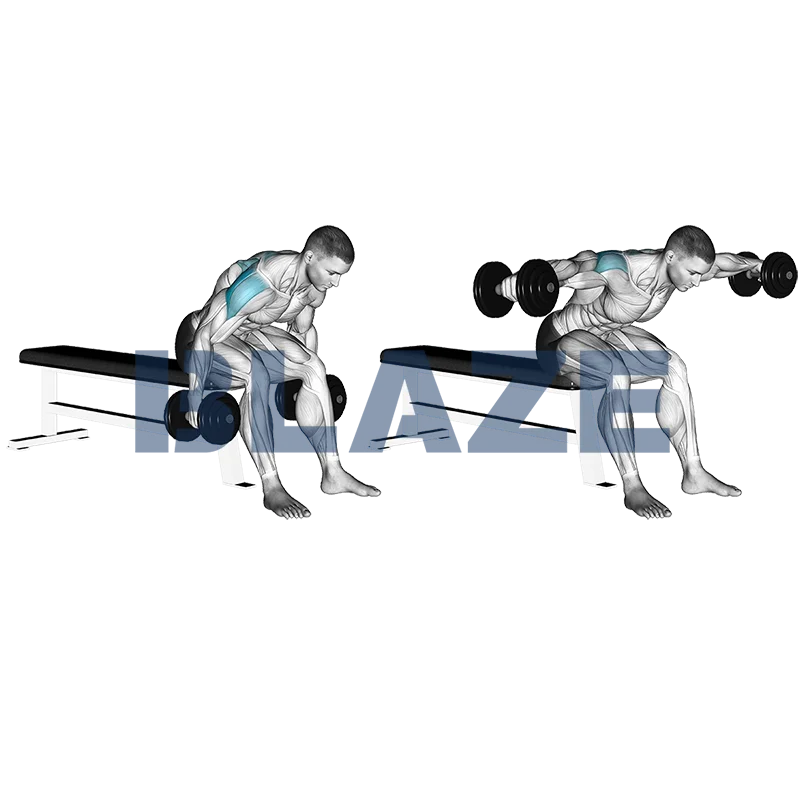
Rear fly with dumbbells
The dumbbell rear fly is a beneficial exercise primarily targeting the posterior deltoids, upper back, and shoulders. By strengthening these muscles, the exercise enhances posture, reduces the risk of shoulder injuries, and improves overall upper body stability. Athletes profit from the Dumbbell Rear Fly as it enhances scapular stability and shoulder mobility, which are crucial for optimal performance in various sports. Additionally, it aids in balancing muscle groups, mitigating the imbalance from dominant chest muscles, and promotes injury prevention.
| Primary muscle group: | Back |
| Exercise type: | Dumbbell |
| Exercise goal: | Strength |
| Key metric: | Weight |
Community Averages
17kg
Avg. weight
37lbs
Avg. weight
Popularity
* Based on data from the Blaze community
Description
- 1Sit at the end of a bench holding a pair of dumbbells with your palms facing each other (neutral grip).
- 2Lean forward until your torso is close to horizontal and allow your arms to hang down by your feet.
- 3Keep your arms slightly bent and your elbows perpendicular to your torso.
- 4Exhale and raise your arms out to the sides, ensuring your elbows reach shoulder height.
- 5Hold this position for a count of two.
- 6Inhale and lower your arms back to the starting position in a controlled manner.
- 7Repeat the motion for the desired number of repetitions.
Tips & Tricks
Maintain Proper Posture: Ensure your back maintains its natural arch. Avoid rounding your shoulders or curving your back forward to prevent injury and maximize muscle engagement.
Control the Movement: Focus on slow, controlled movements. This will help keep the tension on your muscles throughout the exercise and improve muscle activation.
Avoid Using Momentum: Prevent any swinging or jerking motions by keeping your movements deliberate and steady. This will enhance the effectiveness of the exercise and reduce the risk of injury.
Engage Your Core: Keep your core tight throughout the exercise to maintain balance and further stabilize your position.
Align Your Hands and Shoulders: Make sure that your hands are in line with your shoulders as you lift the dumbbells. This helps to properly target the rear delts.
Keep Your Elbows Slightly Bent: Keep a slight bend in your elbows to maintain tension on the deltoid muscles and protect your joints.
Exhale as You Lift: Exhale as you raise the dumbbells and inhale as you lower them. This can help you maintain a rhythm and keep your core braced.
Choose Appropriate Weight: Use a weight that allows you to complete your reps with good form. If you are struggling to maintain form, consider reducing the weight.
Use a Full Range of Motion: Focus on lifting through your complete range of motion to ensure that you are fully engaging the target muscles.
Focus on the Muscle: Visualize your rear delts working as you lift the weights. This mind-muscle connection can help improve your form and effectiveness of the exercise.
Track in the Blaze App
Download Blaze Workout Tracker to log this exercise with sets, reps, and progress tracking.