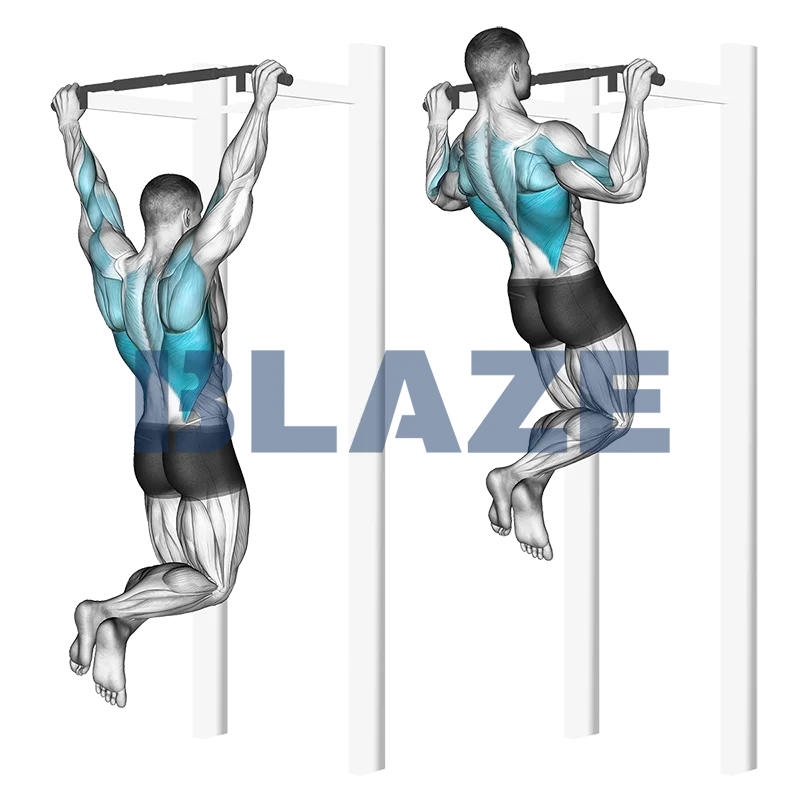
Pull up front
The pull up is a powerful bodyweight exercise that targets various upper body muscles, especially the latissimus dorsi, biceps, and trapezius. It significantly enhances back strength, improves grip, and develops overall upper body muscle endurance. Athletes gain from pull-ups by building functional strength, improving upper body stability, and enhancing performance in sports requiring upper body coordination and power. This exercise also aids in improving posture and spinal alignment, reducing the risk of injuries.
| Primary muscle group: | Back |
| Exercise type: | Bodyweight |
| Exercise goal: | Strength |
| Key metric: | Repetitions |
Community Averages
7
Avg. reps/set
Popularity
* Based on data from the Blaze community
Description
- 1Grasp the bar with a slightly wider than shoulder-width pronated grip.
- 2Hang with your arms and shoulders fully stretched. Your feet must not touch the ground.
- 3Exhale as you pull your whole body up until your chin rises above the bar. Hold for one second.
- 4Inhale as you lower your body until your arms and shoulders are fully stretched and you have reached your starting position.
- 5You have completed your first repetition. Repeat the motion in a controlled way and count your reps.
Tips & Tricks
Engage Your Core: Keep your core tight and engaged throughout the exercise to maintain stability and improve form.
Full Range of Motion: Aim to bring your chin above the bar and lower yourself until your arms are fully extended. This ensures that you are working your muscles through their entire range.
Controlled Movements: Avoid swinging or using momentum. Focus on smooth, controlled movements to maximize engagement of your back and arm muscles.
Grip Width: Experiment with different grip widths to target various parts of your back. A wider grip places more emphasis on your lats, while a narrower grip can engage your biceps more.
Breath Control: Exhale as you pull yourself up and inhale as you lower yourself. Proper breathing can help you maintain rhythm and reduce fatigue.
Progressive Overload: Increase difficulty gradually. Once you can perform multiple pull-ups with good form, add weight using a dip belt or weighted vest to continue challenging your muscles.
Warm-Up Properly: Engage in a thorough warm-up that includes shoulder mobility exercises to prepare your joints and muscles for the workout.
Use Assisted Variations: If you are unable to perform bodyweight pull-ups, use resistance bands or an assisted pull-up machine to build strength progressively.
Focus on Muscle Activation: Concentrate on using your back muscles, not just your arms. Visualize your shoulder blades coming together as you lift.
Include Eccentric Training: Lower yourself as slowly as you can. The eccentric (lowering) phase helps to build strength and muscle.
Track in the Blaze App
Download Blaze Workout Tracker to log this exercise with sets, reps, and progress tracking.