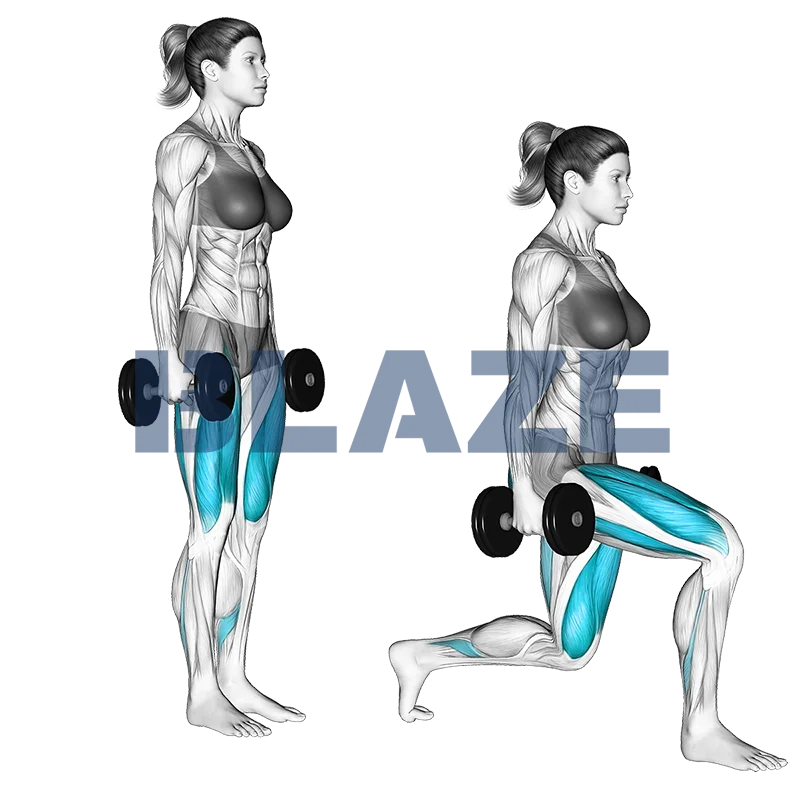
Lunge or split squat with dumbbells
The dumbbell split squat is a powerful unilateral exercise that targets the quads, glutes, and hamstrings. This move also engages the core, enhancing stability and balance. Athletes benefit from improved lower body strength, symmetry, and injury prevention. The unilateral nature of the split squat helps correct muscle imbalances and enhances coordination. By incorporating this exercise into their routine, athletes can enhance their performance in sports requiring leg strength, agility, and power.
| Primary muscle group: | Legs |
| Exercise type: | Dumbbell |
| Exercise goal: | Strength |
| Key metric: | Weight |
Community Averages
25kg
Avg. weight
56lbs
Avg. weight
Popularity
* Based on data from the Blaze community
Description
- 1Hold a dumbbell in each hand and stand upright with the dumbbells hanging by your sides.
- 2Inhale as you take a large step forward with one leg and bend the knee of that leg until there is a 90 degree angle between your thigh and your calf. The knee of your other (back) leg should almost touch the floor.
- 3Exhale as you drive back up with your front leg and step back into the standing position.
- 4You have completed your first repetition.
- 5Repeat the same motion with your opposite leg. Keep alternating the leg with each lunge.
Tips & Tricks
Maintain Proper Posture: Keep your upper body straight, with shoulders back and relaxed, and chin up. Picking a point to focus on in front of you can help you maintain balance.
Engage Your Core: Engage your core muscles throughout the movement to maintain stability and support your lower back.
Focus on Form, Not Speed: Perform the exercise slowly and with control rather than rushing through it. This ensures proper muscle engagement and reduces the risk of injury.
Step Size: Adjust your step size based on your height. A longer step works the glutes and hamstrings more, while a shorter step targets the quadriceps.
Parallel Knees: Ensure your front knee doesn’t extend past your toes and your back knee is kept slightly bent at the bottom of the movement. This keeps the tension in the right muscles and protects your joints.
Equal Weight Distribution: Distribute your weight evenly between the front and back legs. This balanced approach maximizes muscle engagement and stability.
Neutral Spine: Keep your spine neutral without leaning too far forward or backward. This prevents undue strain on your back and maximizes the effectiveness of the exercise.
Grip the Dumbbells Firmly: Hold the dumbbells securely but not too tight. This helps in maintaining balance without causing unnecessary strain in your forearms.
Breathing Technique: Inhale as you lower yourself into the lunge and exhale as you push back up to standing position. Proper breathing can aid in better performance and focus.
Start Light: Begin with lighter weights and gradually increase as you become more comfortable and your strength improves. This approach minimizes the risk of injury and helps in perfecting your form.
Shoes with Good Support: Wear shoes that provide good support and cushioning to help maintain balance and reduce the risk of slipping.
Track in the Blaze App
Download Blaze Workout Tracker to log this exercise with sets, reps, and progress tracking.