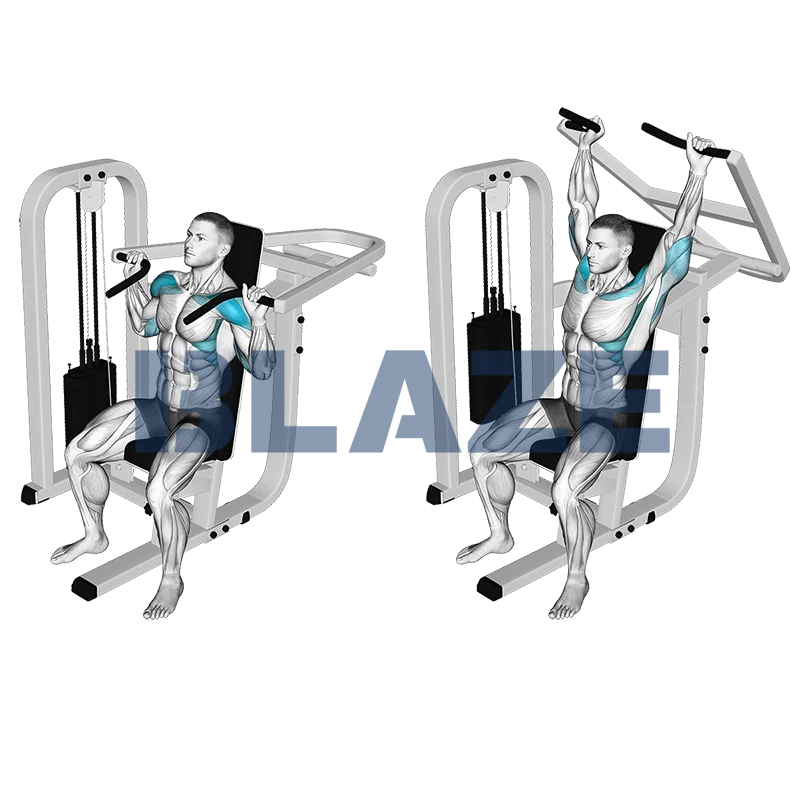
Overhead press on machine
The Smith machine seated shoulder press is a strength training exercise providing numerous benefits, especially for athletes. It primarily targets the deltoids, specifically the anterior and medial heads, while also engaging the triceps and upper chest. This exercise aids in building shoulder strength and stability, essential for various sports requiring upper body prowess. By using the Smith machine, it ensures proper form and reduces the risk of injury. Athletes profit from enhanced shoulder endurance, improved lifting performance, and greater upper body power.
| Primary muscle group: | Shoulders |
| Exercise type: | Machine |
| Exercise goal: | Strength |
| Key metric: | Weight |
Community Averages
39kg
Avg. weight
86lbs
Avg. weight
Popularity
* Based on data from the Blaze community
Description
- 1Sit Down: Position yourself on the Shoulder Press Machine and select your desired weight.
- 2Position Your Hands: Grab the handles to your sides, keeping your elbows bent and aligned with your torso. This is your starting position.
- 3Press Up: Exhale as you lift the handles, fully extending your arms. Hold the contraction at the top for one second.
- 4Lower Down: Inhale while slowly lowering the handles back to the starting position.
- 5Repeat: Perform the exercise for the recommended amount of repetitions.
Tips & Tricks
Align the Bench and Bar: Ensure the bench is positioned so the bar lines up directly over your shoulders for vertical pressing. This alignment helps in effective targeting of the shoulder muscles.
Foot Placement: Keep your feet flat on the ground, about shoulder-width apart. This stable base supports your balance and prevents strain on your lower back.
Grip Position: Use a shoulder-width grip. Too wide or too narrow can shift the emphasis away from your shoulders and onto other muscle groups.
Warm-Up Properly: Start with a lighter weight to warm up your shoulder joints and muscles. This reduces the risk of injury and prepares your body for heavier lifts.
Grip Technique: Keep your wrists straight and aligned with your forearms to avoid unnecessary strain. Use a firm grip but don’t over-tighten to up your control and maintain comfort.
Breathing Pattern: Inhale deeply before lowering the bar and exhale as you press it overhead. Proper breathing can stabilize your core and improve lift efficacy.
Head Position: Keep your head neutral, facing forward. Avoid tilting your head back which can strain your neck and disrupt your form.
Engage Your Core: Tighten your core muscles throughout the movement to support your spine and improve stability.
Controlled Movement: Execute the lift with a controlled pace, especially on the eccentric (lowering) phase. This not only increases muscle engagement but also minimizes injury risks.
Avoid Locking Your Elbows: Do not fully lock your elbows at the top of the press. Keeping a slight bend maintains muscle tension and reduces joint strain.
Track in the Blaze App
Download Blaze Workout Tracker to log this exercise with sets, reps, and progress tracking.