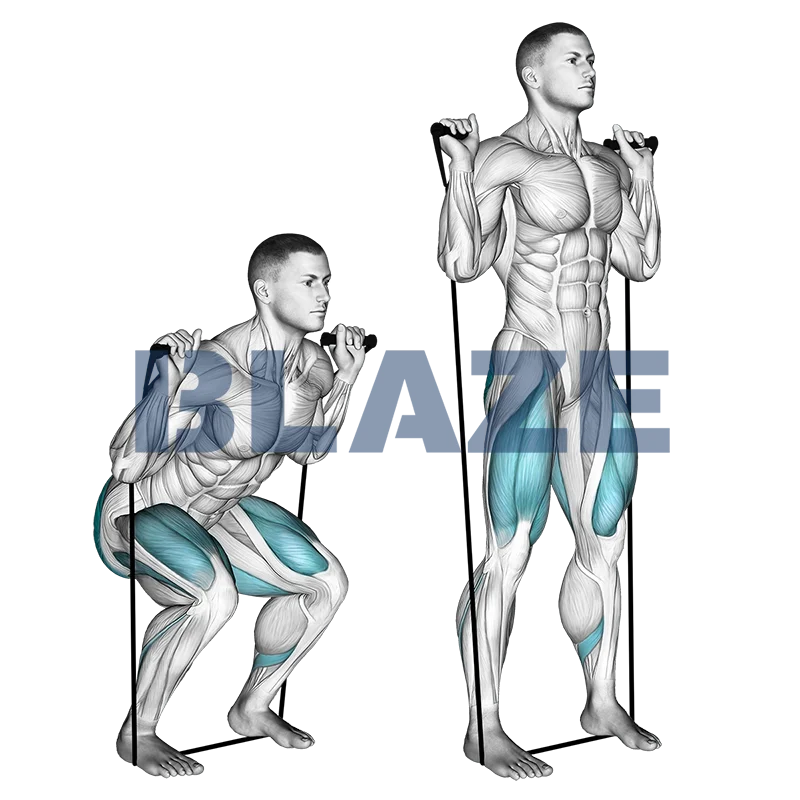
Squat with band
The squat with band exercise offers numerous advantages, especially for athletes. It significantly enhances lower body strength by targeting key muscles including the gluteus maximus, quads, hamstrings, and calves. The added resistance from the band engages stabilizing muscles, improving balance and coordination. Athletes can benefit from increased power, explosiveness, and injury prevention due to the enhanced muscle activation and joint stability. This exercise also aids in improving form and posture, making it a valuable addition to any athletic training regimen.
| Primary muscle group: | Legs |
| Exercise type: | Band |
| Exercise goal: | Strength |
| Key metric: | Repetitions |
Community Averages
16
Avg. reps/set
Popularity
* Based on data from the Blaze community
Description
- 1Set Up: Stand with your feet shoulder-width apart and place both feet in the middle of an exercise band. Grasp each side of the band with your hands, ensuring the band is evenly split between both sides of your body.
- 2Grip and Position: Hold the handles of the bands with a pronated grip (palms facing forward). The handles should be positioned next to your face. This is your starting position.
- 3Lowering Phase: Slowly bend your knees and lower your body, ensuring your thighs become parallel to the floor. Exhale as you descend.
- 4Rising Phase: Push through the heels of your feet to rise back up to the starting position, exhaling as you do so.
- 5Repetition: Repeat the motion for the recommended amount of repetitions.
Tips & Tricks
Band Position: Ensure the resistance band is placed just above your knees. This helps to activate the glutes and adds an extra challenge to your squat.
Maintain Band Tension: Keep tension on the band throughout the movement to engage your outer thigh muscles effectively. Avoid allowing your knees to collapse inward.
Feet Placement: Position your feet shoulder-width apart. Make sure your toes are pointing slightly outward to align with the direction your knees will travel.
Core Engagement: Keep your core engaged to support your lower back. This helps in maintaining good posture and balance throughout the exercise.
Knee Alignment: As you squat, ensure your knees are tracking over your toes. This prevents unnecessary strain on your knee joints and targets the correct muscle groups.
Depth Control: Aim to squat down until your thighs are parallel to the floor. Going too low or too shallow can reduce the effectiveness of the exercise.
Slow and Controlled Movement: Perform the squat slowly and with control. This maximizes muscle engagement and reduces the risk of injury.
Breathing Technique: Inhale as you lower into the squat and exhale as you push up to the starting position. Proper breathing aids in maintaining rhythm and strength.
Progressive Resistance: Start with a lighter band if you are a beginner. Gradually increase the resistance as you become more comfortable and stronger in the movement.
Consistent Practice: Regularly incorporate squats with a band into your workout routine to see the best results in terms of strength and muscle development.
Track in the Blaze App
Download Blaze Workout Tracker to log this exercise with sets, reps, and progress tracking.