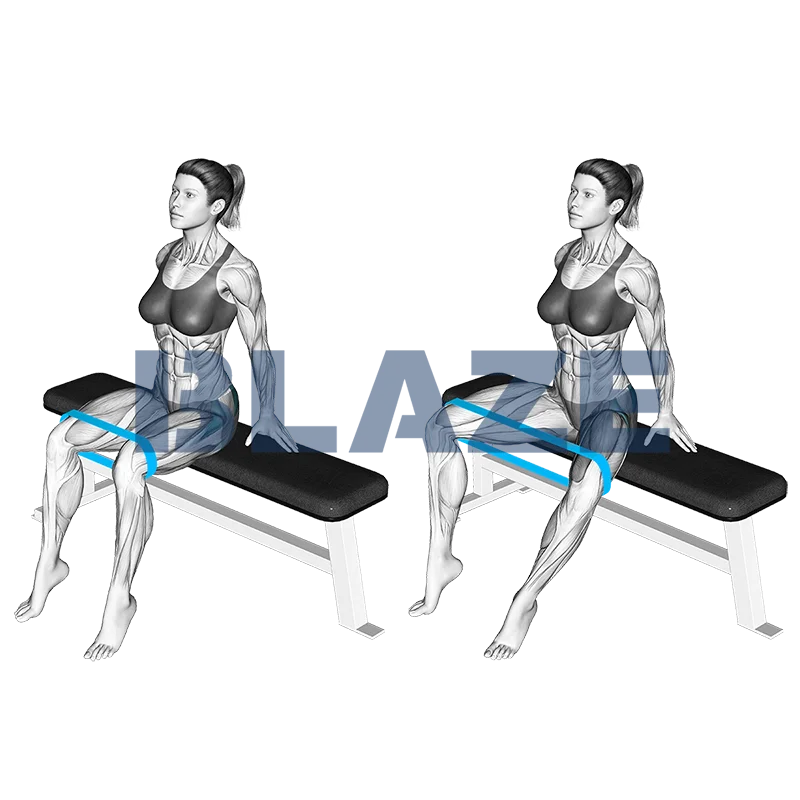
Hip abductor seated with band
The resistance band seated hip abduction targets the gluteus medius, gluteus minimus, and hip abductor muscles. This exercise benefits athletes by improving hip stability and strength, which is essential for activities involving lateral movements and agility. Enhanced hip strength can lead to better performance in sports like soccer, basketball, and tennis. Additionally, it can aid in injury prevention, particularly in the knee and lower back, by promoting proper alignment and muscular balance. The resistance band's variable tension allows for progression and customization to meet individual fitness levels.
| Primary muscle group: | Legs |
| Exercise type: | Band |
| Exercise goal: | Strength |
| Key metric: | Repetitions |
Community Averages
18
Avg. reps/set
Popularity
* Based on data from the Blaze community
Description
- 1Setup: Sit on a chair or bench with your back straight and feet flat on the ground.
- 2Band Placement: Place a resistance band around your thighs, just above your knees.
- 3Engage Core: Tighten your core muscles to maintain a straight back throughout the exercise.
- 4Open Legs: Slowly open your legs, pushing against the resistance of the band until you feel a slight stretch in your outer hips.
- 5Pause: Hold the position for a moment to maximize the stretch.
- 6Return: Slowly bring your legs back to the starting position while resisting the band's pull.
- 7Repeat: Perform the exercise for the desired number of repetitions.
- 8Breathe: Remember to breathe consistently, avoiding breath-holding during the movement.
Tips & Tricks
Proper Band Placement: Make sure to place the resistance band just above your knees. This placement ensures that you target the right muscles efficiently.
Maintain Upright Posture: Sit up straight with your chest open and shoulders back. Avoid slouching to ensure proper muscle engagement and prevent strain on your lower back.
Stay Focused on Form: Control the movement, ensuring slow and deliberate motions. Avoid using momentum to spread your legs outward.
Engage Your Core: Keep your core tight throughout the exercise. This helps in stabilizing your body and enhancing the effectiveness of the exercise.
Adjust Resistance: Use a resistance band that challenges you but still allows you to perform the exercise with good form. If it's too easy or too hard, switch to a different band strength.
Consistent Breathing: Inhale deeply through your nose as you bring your legs together, and exhale through your mouth as you spread them apart. Consistent breathing helps in maintaining rhythm and endurance.
Foot Placement: Keep your feet flat on the ground, and ensure they are pointing straight ahead. This helps in maintaining proper alignment and balance.
Gradual Progression: Start with a few sets and reps that you can manage comfortably. Gradually increase the number of sets and reps as your strength and endurance improve.
Use a Mirror: If possible, perform the exercise in front of a mirror to ensure proper alignment and form. This visual feedback can be incredibly helpful in avoiding common mistakes.
Track in the Blaze App
Download Blaze Workout Tracker to log this exercise with sets, reps, and progress tracking.