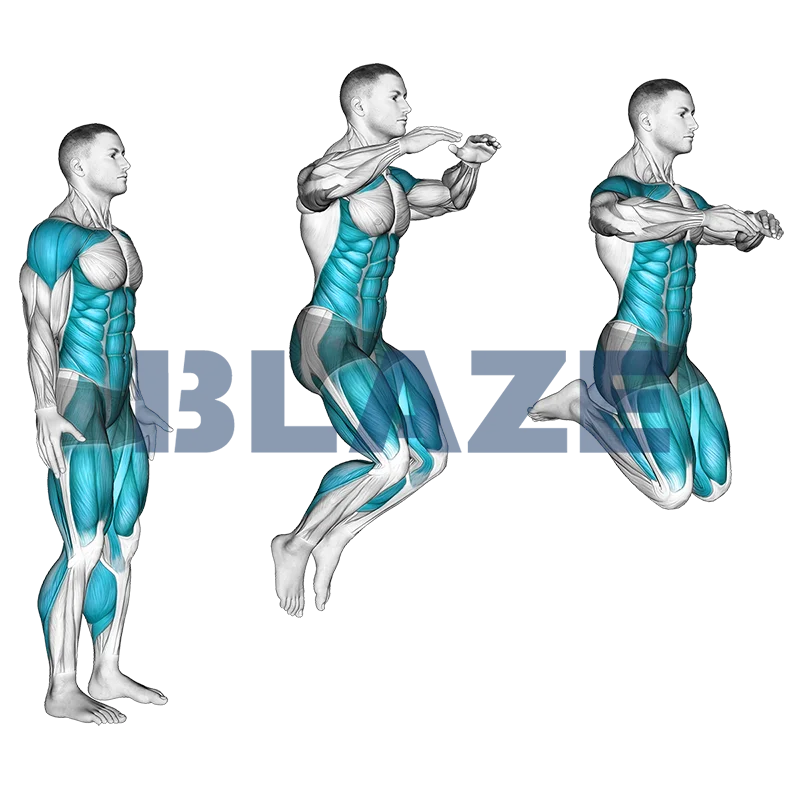
Double leg butt kick plyometrics
The double leg butt kick is a beneficial plyometric exercise that enhances cardiovascular endurance, agility, and coordination. It primarily targets the hamstrings, glutes, and lower back, making it an effective workout for strengthening and toning these muscles. Athletes, particularly runners and sprinters, can profit from this exercise as it improves the explosive power and flexibility needed for rapid, powerful leg movements. Additionally, it helps to prevent injuries by reinforcing the muscles involved in hip extension and knee flexion.
| Primary muscle group: | Legs |
| Exercise type: | Bodyweight |
| Exercise goal: | Strength |
| Key metric: | Repetitions |
Community Averages
9
Avg. reps/set
Popularity
* Based on data from the Blaze community
Description
- 1Start Position: Stand with your feet shoulder-width apart and knees slightly bent.
- 2Squat Preparation: Quickly lower yourself into a short squat by flexing your hips and knees.
- 3Jump Extension: Immediately push through your legs to jump straight up, aiming for maximum vertical height.
- 4Tuck Mid-Air: While in the air, flex your knees to bring your heels up towards your buttocks.
- 5Landing: Land softly with your knees partially bent, using your legs to absorb the impact.
- 6Reset Position: Return to the starting position to prepare for the next repetition.
- 7Repeat the sequence for the desired number of repetitions.
Tips & Tricks
Warm-Up Properly: Ensure your muscles are warmed up to reduce the risk of injury. A good warm-up can include light jogging and dynamic stretches.
Stay Light on Your Feet: Focus on making your movements quick and light. Land softly on the balls of your feet to minimize impact on your joints.
Engage Your Core: Keep your core muscles tight throughout the exercise. This will enhance stability and form, making your movements more effective.
Keep a Steady Rhythm: Maintain a consistent pace. It’s not about how high you jump but how consistently you can perform the motion over time.
Focus on Form: Ensure your knees are bent slightly upon takeoff and landing. This reduces unnecessary strain on your joints and makes the exercise more effective.
Monitor Your Breathing: Breathe naturally and consistently. Exhale as you jump and inhale as you land to maintain a steady airflow and avoid fatigue.
Use Arms for Momentum: Swing your arms naturally. This helps maintain balance and can give you added momentum to perform the exercise more efficiently.
Progress Gradually: If you're new to plyometrics, start with fewer reps and shorter durations. Increase intensity gradually as your fitness level improves.
Cool Down and Stretch: After completing your workout, cool down with some light activity and stretch your muscles to prevent stiffness and soreness.
Listen to Your Body: Pay attention to how your body feels. If you experience pain (not to be confused with the normal discomfort of a workout), stop and assess before proceeding.
Track in the Blaze App
Download Blaze Workout Tracker to log this exercise with sets, reps, and progress tracking.