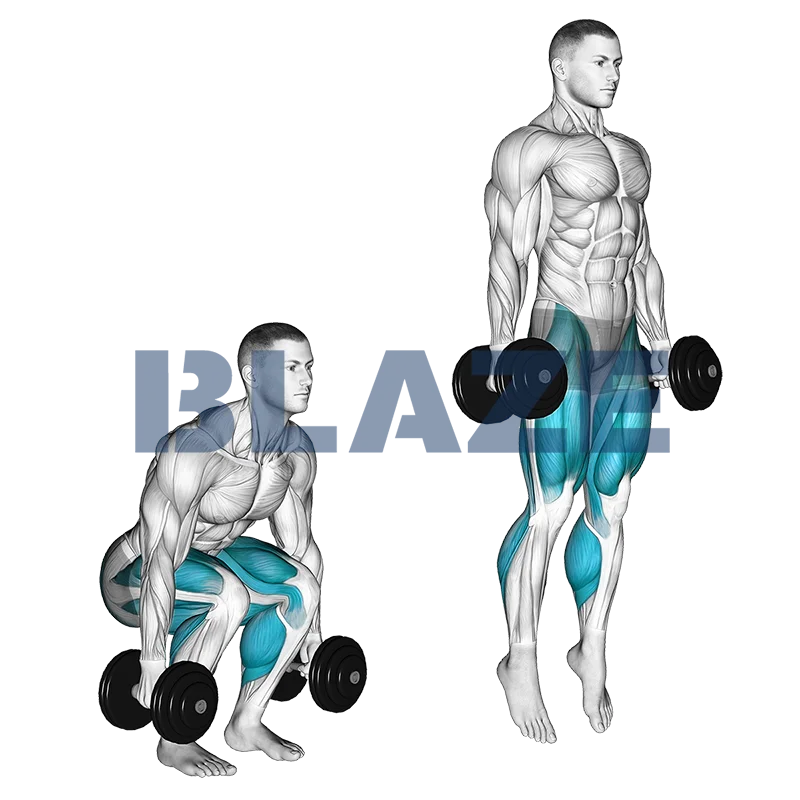
Plyometric jump squat with dumbbells
The dumbbell jumping squat is a dynamic exercise offering numerous benefits. It primarily targets the quadriceps, hamstrings, glutes, calves, and core muscles, effectively enhancing lower body strength and power. This explosive movement boosts cardiovascular fitness and improves overall athletic performance by increasing jumping ability, agility, and coordination. Athletes profit from this exercise due to its capacity to develop rapid muscle contractions, crucial for sports requiring quick bursts of strength and speed. Incorporating this exercise into training regimens can elevate athletic prowess and resilience.
| Primary muscle group: | Legs |
| Exercise type: | Dumbbell |
| Exercise goal: | Strength |
| Key metric: | Weight |
Community Averages
20kg
Avg. weight
43lbs
Avg. weight
Popularity
* Based on data from the Blaze community
Description
- 1Starting Position: Stand with your feet slightly wider than shoulder-width apart, toes pointed slightly out, and knees slightly bent. Hold a dumbbell in each hand with your arms hanging down by your sides, palms facing your thighs.
- 2Setup: Keep your neck neutral and maintain a straight back to ensure proper form.
- 3Descent: Push your hips and buttocks backward to begin descending into a squat. Lower yourself until your upper legs are at or just below parallel to the floor.
- 4Jump: Once at the bottom, powerfully push through your heels to jump upwards, keeping your arms fully extended by your sides.
- 5Landing: Land softly on the balls of your feet to complete one repetition.
- 6Repetition: Quickly propel yourself upwards into another jump immediately after landing.
- 7Completion: Repeat the motion for the recommended number of repetitions while maintaining proper form.
Tips & Tricks
Start Light: Begin with lighter weights to ensure you have proper form and to minimize the risk of injury. As you get more comfortable, you can gradually increase the weight.
Maintain Proper Form: Keep your chest up, back straight, and core engaged. Your knees should not extend past your toes during the squat to protect your joints.
Controlled Movement: Though it’s a jump squat, focus on controlled movements. Ensure you land softly and absorb the impact with your muscles rather than your joints.
Breathing Technique: Inhale as you lower into the squat and exhale explosively as you jump. Proper breathing will help maintain your stamina and core stability.
Warm-Up: Before performing plyometric exercises, make sure to warm up properly. Dynamic stretches and light cardio can prepare your muscles and joints for the high-intensity movement.
Spacing: Ensure you have enough space around you to move freely. This will help you perform the exercise without any accidental injuries or disturbances.
Footwear Matters: Wear well-cushioned athletic shoes that provide good support to minimize the impact on your feet and knees.
Progress Gradually: Incorporate this exercise into your routine slowly. It’s a high-impact move, and your body needs time to adapt.
Focus on Quality Over Quantity: It's better to do fewer reps with proper form than to rush through many. Quality movements lead to better results and reduce the risk of injury.
Cool Down: After your workout, ensure you cool down with some static stretching to help your muscles recover and reduce soreness.
Track in the Blaze App
Download Blaze Workout Tracker to log this exercise with sets, reps, and progress tracking.