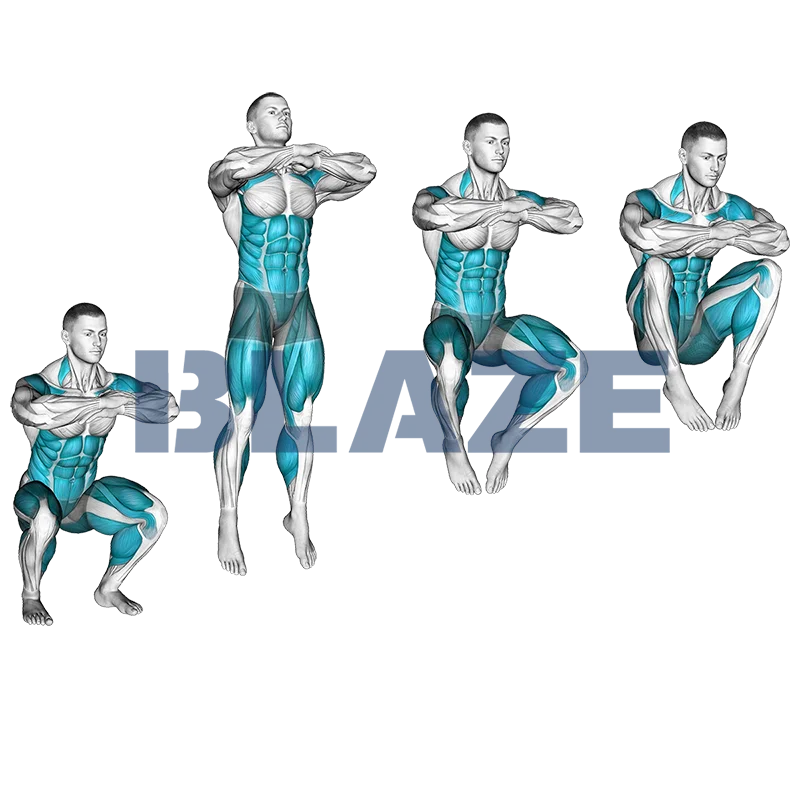
Plyometric knee tuck jump
The knee tuck jump is a plyometric exercise that offers multiple benefits. It primarily targets the quadriceps, hamstrings, glutes, calves, and core muscles. By engaging these muscle groups, the exercise improves leg strength, explosive power, and coordination. Athletes can particularly profit from incorporating Knee Tuck Jumps into their routines as it enhances vertical leap, agility, and cardiovascular endurance. This exercise is excellent for sports requiring sudden bursts of speed and jumping ability, such as basketball, volleyball, and football.
| Primary muscle group: | Legs |
| Exercise type: | Bodyweight |
| Exercise goal: | Strength |
| Key metric: | Repetitions |
Community Averages
Popularity
* Based on data from the Blaze community
Description
- 1Starting Position: Stand with your feet shoulder-width apart and knees slightly bent. Hold your hands in front of you, fingertips touching at chest height, with palms facing down.
- 2Quarter Squat: Rapidly dip down into a quarter squat position, keeping your back straight and core engaged.
- 3Explosion: Immediately explode upward by extending your legs forcefully, driving your knees upward toward your chest.
- 4Knee Tuck: Aim to touch your knees to your palms as you jump, bringing them as close to chest level as possible.
- 5Landing: As you descend, re-extend your legs and prepare for landing. Absorb the impact by bending your knees slightly upon touching the ground.
- 6Reset: Return to the starting position and prepare for the next repetition.
- 7Repeat for the desired number of repetitions, ensuring proper form with each jump.
Tips & Tricks
Warm Up Properly: Start with a dynamic warm-up to get your blood flowing and muscles primed. Jumping jacks, high knees, or light jogging are great options.
Focus on Form: Keep your core engaged and your back straight throughout the movement. Avoid leaning forward or backward to maintain balance.
Use Your Arms: Swing your arms upward to help generate momentum and power for the jump. This can also help you achieve greater height.
Land Softly: When you land, do so on the balls of your feet with your knees slightly bent. This soft landing will reduce the impact on your joints.
Breathing Technique: Exhale as you jump and inhale as you prepare for the next jump. Proper breathing can help you maintain stamina and control.
Progress Gradually: If you’re new to plyometrics, start with lower-intensity jumping exercises and gradually increase the height and intensity of your knee tuck jumps.
Footwear Matters: Wear supportive, cushioned footwear to absorb impact and provide the necessary support for your feet and ankles.
Surface Choice: Perform this exercise on a soft, flat surface like a gym mat or grassy area to minimize impact stress on your joints.
Incorporate Rest: Allow for adequate rest between sets to avoid fatigue, which can lead to poor form and increase the risk of injury.
Monitor Knee Alignment: Ensure your knees stay in line with your toes when you jump and land to avoid putting unnecessary strain on your knees.
Track in the Blaze App
Download Blaze Workout Tracker to log this exercise with sets, reps, and progress tracking.