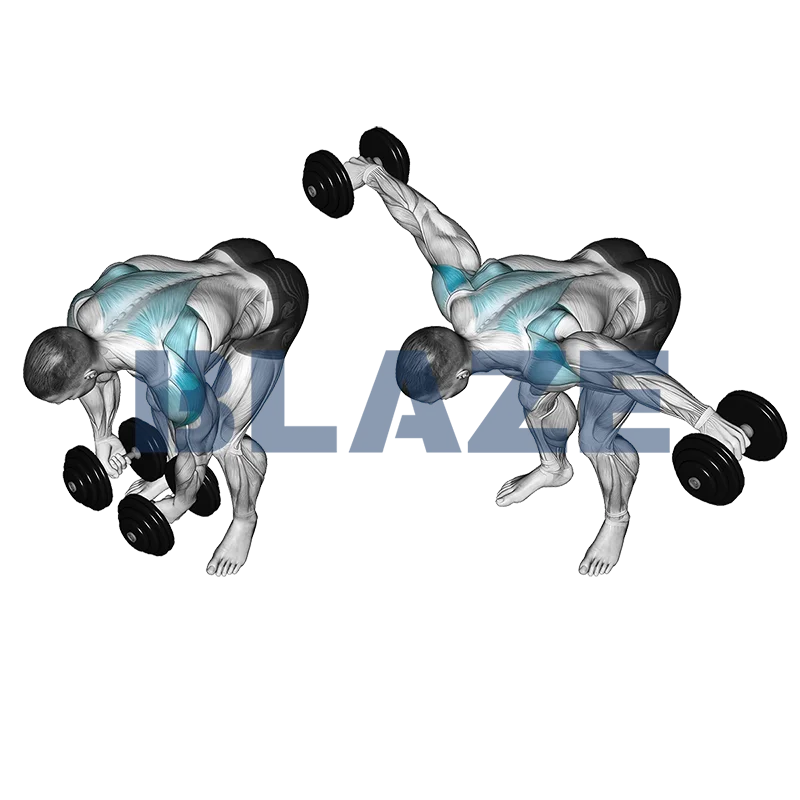
Bent over lateral raises with dumbbells
| Primary muscle group: | Back |
| Exercise type: | Dumbbell |
| Exercise goal: | Strength |
| Key metric: | Weight |
Community Averages
20kg
Avg. weight
45lbs
Avg. weight
Popularity
* Based on data from the Blaze community
Description
- 1Start by holding a dumbbell in each hand, with your arms hanging in front of you and your palms facing inwards.
- 2Bend at the hips and knees, lowering your torso until it is parallel to the floor. Make sure to keep your back straight.
- 3While keeping your elbows slightly bent, raise both arms out to the sides until the dumbbells are level with your shoulders. Exhale while performing this movement.
- 4Hold this position for a count of two.
- 5Inhale as you lower the dumbbells back to the starting position in a controlled manner.
- 6Repeat the exercise for the desired number of repetitions.
Tips & Tricks
Maintain Proper Form: Keep your knees slightly bent and your back straight. Avoid arching your back to prevent injury and ensure you're targeting the right muscles.
Engage Your Core: Tighten your core muscles to help maintain stability and proper posture throughout the exercise.
Control the Movement: Avoid swinging the weights. Lift and lower the dumbbells in a slow, controlled manner to maximize muscle engagement and reduce the risk of injury.
Breath Consistently: Inhale as you lower the weights and exhale as you lift them. Consistent breathing helps maintain rhythm and ensures adequate oxygen delivery to your muscles.
Choose the Right Weight: Start with a lighter weight to master the form and then gradually increase the weight to avoid compromising your posture or movement control.
Avoid Overextension: Only lift your arms until they are parallel to the ground. Lifting higher can put unnecessary strain on your shoulder joints.
Neutral Head Position: Keep your head in line with your spine, looking down at the ground. This helps maintain proper form and reduce neck strain.
Activate the Right Muscles: Focus on using your rear deltoids and upper back rather than letting your traps or lower back take over the movement.
Warm Up Beforehand: Ensure your shoulders and back are warmed up before performing this exercise. This can prevent strains and improve muscle efficiency.
Rest and Recovery: Allow adequate rest between sets and listen to your body. Overworking muscles without proper recovery can lead to injury.
Track in the Blaze App
Download Blaze Workout Tracker to log this exercise with sets, reps, and progress tracking.